
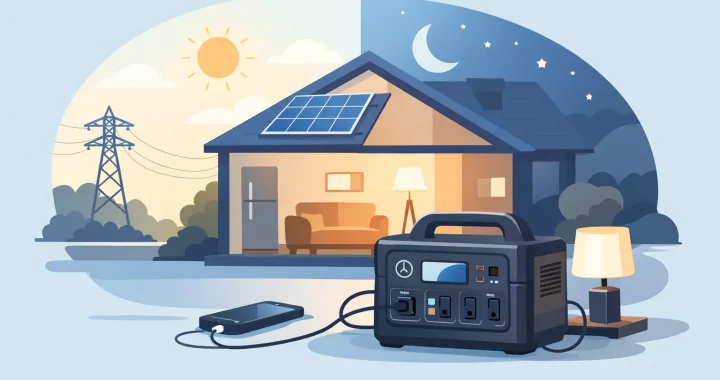
The lights go out, the Wi-Fi drops, and suddenly the question is not whether backup power matters – it is whether you chose enough of it. A portable power station for home backup can keep the essentials running without fuel storage, engine noise, or the maintenance that comes with a gas generator. For many households, that makes it one of the most practical ways to prepare for outages caused by storms, grid issues, or planned utility shutoffs.
What makes these systems appealing is not just convenience. It is control. You can place one indoors, power devices immediately, recharge from the wall, your vehicle, or solar panels, and avoid the hassle of pulling a generator out of the garage in bad weather. But the right setup depends on what you actually need to keep on.
What a portable power station for home backup does well
A portable power station is essentially a large rechargeable battery paired with an inverter and multiple output ports. It can run everything from phones and routers to refrigerators, CPAP machines, laptops, lights, and in some cases higher-draw appliances like microwaves or window AC units. The best fit for home backup is usually a unit with a pure sine wave inverter, enough battery capacity to cover several hours or overnight use, and recharging options that give you flexibility during a longer outage.
The biggest advantage is simplicity. There is no gasoline, no oil, and no pull-start engine. If you lose power at night, you can plug in your critical devices right away. For apartment dwellers, homeowners with limited storage, and families who want a quieter backup option, that matters.
That said, a portable power station is not automatically a whole-home solution. If your goal is to run central air, electric water heating, or every circuit in the house, you are in a different category of backup planning. Portable systems are strongest when you focus on essential loads and choose capacity with realistic expectations.
Start with your outage plan, not the product page
Most people shop by battery size first. That is understandable, but it is not the best place to start. A better approach is to define what has to stay powered during an outage and for how long.
For some homes, that list is short: refrigerator, phone charging, internet, a few lights, and a fan. For others, it may include a CPAP machine, modem, laptop, sump pump, or backup power for medication refrigeration. The gap between those two situations is large, and so is the right power station size.
Think in terms of both running wattage and battery capacity. Running wattage tells you what the unit can power at one time. Battery capacity, usually listed in watt-hours, tells you roughly how long it can keep those devices running. If you only look at one of those numbers, you can end up with a system that is strong in the wrong way.
A unit with a large battery but a weak inverter may store plenty of energy but fail to start your appliance. A unit with strong output but modest battery capacity may run a refrigerator for a short period but not long enough to cover the outage. Home backup is always a balance between output, storage, and recharge speed.
How to size a portable power station for home backup
If you want a small emergency unit, something in the lower capacity range may be enough for phones, tablets, lights, routers, and laptops. That works well for short outages and communication needs.
Once you want refrigeration, medical devices, or all-night coverage, you typically need more capacity. A mid-size to large portable power station is often the better match for households that want to keep food cold, maintain internet access, charge devices, and support a few comfort items. If you are trying to bridge repeated outages or overnight periods, expansion batteries can become especially valuable.
This is also where appliance startup matters. Refrigerators, freezers, and pumps often require a surge above their normal running wattage. A power station that handles continuous output comfortably but also supports startup surges gives you a much better chance of trouble-free operation.
For families comparing options, the most useful question is not, “What is the biggest unit I can buy?” It is, “What combination of battery capacity, output, and recharge gives me reliable coverage for my actual risks?” That answer will look different in a hurricane-prone area than it will in a region dealing with occasional winter outages.
Battery chemistry and why LiFePO4 matters
Not all portable power stations are built around the same battery chemistry. For home backup, LiFePO4 has become a strong choice because it offers a longer cycle life, better thermal stability, and dependable long-term value for people who expect to use their system more than once or twice.
That matters for preparedness buyers. A backup unit might sit charged for weeks, then power your home essentials during an outage, then recharge and do it again the next month. You want a battery platform that is built for repeat use, not just occasional novelty.
LiFePO4 systems are often heavier than some alternatives, so there is a portability trade-off. But for home backup, durability and lifespan usually matter more than shaving off a few pounds. If the unit is going to live in a closet, utility room, garage, or RV storage bay until you need it, long-term reliability is the priority.
Recharge speed changes the value of backup power
A power station is only as useful as your ability to recharge it during an extended outage. This is where many buyers underestimate the difference between models.
Fast AC charging can restore a unit quickly before a storm arrives or between outage windows. Solar charging adds resilience when the grid is down for longer periods, especially if you have portable panels ready to deploy. Vehicle charging can help in a pinch, though it is generally slower and better viewed as a supplemental option.
If you live in an area with repeated storm impacts, recharge speed is not a nice extra. It is part of the backup equation. A larger battery with painfully slow recharging may leave you exposed during multi-day disruptions. A system with flexible, faster charging options can recover and stay useful.
What people often get wrong
The most common mistake is trying to power too much. During an outage, essentials first is the smarter strategy. Refrigeration, communications, lights, fans, and medical equipment usually deliver more practical value than trying to run every convenience item in the house.
Another mistake is ignoring where the power station will be used. Indoor-safe battery backup is one of the clearest advantages over gas generators, but size and weight still matter. If the system needs to move between rooms, travel in an RV, or go from home to a jobsite, portability should be part of the buying decision.
Some buyers also overlook outlet mix. A unit may have the battery size you want, but if it does not provide enough AC outlets, USB ports, or regulated DC outputs for your setup, you may end up juggling adapters and power strips during an emergency.
Who benefits most from this type of backup
A portable power station for home backup makes the most sense for households that want immediate, quiet, low-maintenance power for critical needs. That includes homeowners preparing for storm outages, apartment residents who cannot use fuel-based equipment indoors, RV owners who want one system for both travel and emergency use, and families supporting devices that cannot afford downtime.
It is also a practical fit for people who are not ready for a permanently installed backup system. You can start with a capable unit, add solar panels or expansion batteries later, and build a more resilient setup over time. That flexibility is a major advantage for buyers who want readiness now without overcommitting.
For shoppers comparing established brands and configurations, this is where a focused retailer can help narrow the field. Thundervolt Power centers its lineup around practical backup use, with systems designed for real appliance loads, flexible recharging, and expandable capacity where it makes sense.
The best choice is the one you can trust under pressure
When the power fails, specs stop being abstract. What matters is whether your refrigerator stays cold, your phone stays charged, your internet comes back, and your household can function with less disruption. A good backup setup does not need to power everything. It needs to cover the essentials reliably, recharge in a way that fits your situation, and stay ready for the next outage.
Preparedness is rarely about buying the biggest unit on the page. It is about choosing a system that matches your home, your risks, and the devices you cannot afford to lose when the grid is not stable.
