
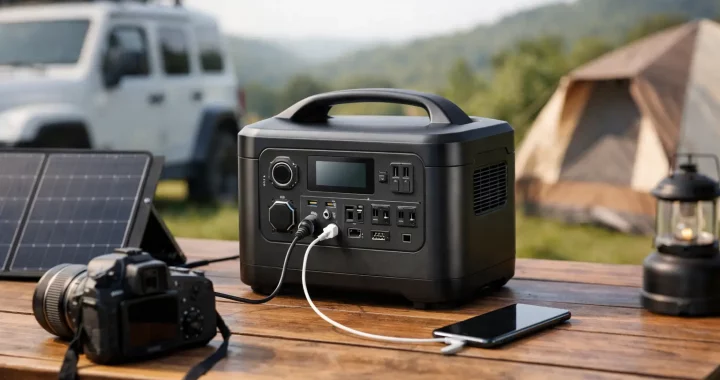
When the grid drops in the middle of a storm, specs stop being abstract. What matters is whether your power station starts fast, runs the devices you care about, and recharges without turning the process into a project. That is the real lens for an Aferiy power station review – not just capacity on paper, but how well these units hold up for backup power, travel, and daily use.
Aferiy has built a name around high-capacity portable power stations aimed at people who want quiet, fuel-free backup without stepping into overly complex systems. For many buyers, that means one question: can Aferiy cover the gap between small grab-and-go battery packs and loud gas generators? In many cases, yes. But the right answer depends on what you need to run, how long you need it, and whether portability or runtime matters more.
Aferiy power station review: what stands out
Aferiy units tend to appeal to practical buyers for a simple reason. They usually combine solid battery capacity, pure sine wave output, multiple ports, and LiFePO4 battery chemistry in a package that feels built for real backup use rather than occasional gadget charging.
That battery chemistry matters. LiFePO4 is widely favored for longer cycle life, better thermal stability, and stronger long-term value than older lithium-ion formulations. If you are buying for outages, RV weekends, or regular off-grid use, that is more than a technical footnote. It affects how confidently you can rely on the system over time.
Another strength is output flexibility. Aferiy models commonly include AC outlets, USB-A, USB-C, DC outputs, and car ports, which makes them useful for mixed loads. You can charge phones and laptops while also powering a router, CPAP, mini fridge, or work tools, assuming the inverter rating supports the load.
The practical appeal is clear: quieter operation than gas, no fuel storage, no engine maintenance, and much easier indoor-safe use when ventilation rules make fuel generators a poor fit. For homeowners and families building a backup plan, that alone puts Aferiy in the right conversation.
Where Aferiy performs well in real use
The strongest case for Aferiy is mid-range to high-capacity backup. If your goal is to keep essentials running during a short outage, many Aferiy power stations are well suited to the job. Lights, phones, tablets, routers, laptops, fans, televisions, and medical devices with modest draw are generally realistic use cases.
For RV travel and camping, Aferiy also makes sense if quiet power matters. You can run personal electronics, small appliances, and some cooking devices within the unit’s inverter limit. That said, heavy resistive loads change the equation fast. A coffee maker, electric kettle, microwave, or space heater can drain even a large battery sooner than many buyers expect.
On jobsites, Aferiy can be useful for lighter-duty cordless tool charging, laptops, test equipment, and mobile office setups. It is less ideal if your day revolves around sustained high-draw saws, compressors, or multiple power tools running back to back. In that environment, runtime and surge handling become critical.
Battery capacity, inverter size, and the real buying question
The biggest mistake buyers make is focusing on just one number. A large watt-hour rating sounds reassuring, but it only tells part of the story. You also need enough inverter output to start and run your devices.
Here is the practical way to think about it. Battery capacity tells you how much energy is stored. Inverter wattage tells you what the power station can deliver at one time. If you have plenty of stored energy but not enough inverter headroom, the unit still will not run your appliance.
That is why an Aferiy power station review has to be tied to your load profile. For home backup, some users need a station for communications, charging, lighting, and refrigeration support. Others want to add a sump pump, window AC, or kitchen appliances. Those are different purchase decisions.
As a rule, Aferiy becomes more compelling when your power plan is defined clearly. If you know your refrigerator startup surge, your CPAP wattage, or your router and modem load, you can size the station much more accurately. If you are guessing, you risk buying either too small or paying for more capacity than you will ever use.
Charging speed and solar readiness
Charging performance is one of the more important differences between good and frustrating portable power stations. Aferiy models often support multiple charging methods, including wall charging, car charging, and solar input. That flexibility is useful because backup power is only as good as your ability to refill it.
Wall charging is usually the fastest and easiest option for most households. If your unit can recover a meaningful percentage of its battery in a few hours, it becomes much more practical during repeated outages or frequent travel use.
Solar compatibility is a major advantage, but expectations need to stay realistic. Solar charging depends on panel size, weather, angle, and time of day. It works best as part of a plan, not as wishful thinking after the power is already out. For off-grid users and RV owners, Aferiy’s solar-ready design can be a strong selling point. For emergency buyers, solar adds resilience, but only if you have enough panel input to make a difference.
Portability versus power
This is one of Aferiy’s main trade-offs. The more capacity and inverter output you buy, the less portable the unit becomes. That is not a brand-specific flaw. It is the reality of battery power.
Smaller stations are easy to move, store, and deploy. Larger ones are much better at serious backup, but they can be heavy enough that placement matters. If you expect to move your station between the garage, the RV, the backyard, and a second floor room, weight and handle design should matter almost as much as battery specs.
For some buyers, the better move is not simply buying the largest model available. It may be choosing the unit that covers your core loads reliably while staying manageable enough to use often. A power station that is too heavy to reposition quickly may be less useful than a slightly smaller one that gets used without hassle.
How Aferiy compares on value
Aferiy generally competes well when buyers want strong feature sets without jumping straight into premium pricing territory. You often get the core specifications people now expect – LiFePO4 chemistry, pure sine wave inverter, multiple outputs, and solar charging support – at a price point that feels more attainable than some top-tier competitors.
That does not automatically make every model the best buy. Value depends on how much usable output, battery capacity, charging speed, and expandability you are getting for the price. Some users will prioritize a lower cost per watt-hour. Others care more about recharge time, app controls, or the ability to add expansion batteries.
If you are comparing brands, Aferiy tends to make the most sense for buyers who want dependable backup capability and modern battery chemistry without paying extra for features they may not use. If your priorities are advanced ecosystem controls or very large expandable systems, your decision may lean elsewhere.
Who should buy an Aferiy power station
Aferiy is a strong fit for homeowners preparing for outages, RV travelers who want quiet energy, campers who need more than phone charging, and families supporting essential electronics or light medical equipment. It is also a practical option for users who want cleaner indoor-safe backup than gas generators can offer.
It is less ideal for buyers expecting all-day support for high-draw heating devices, whole-home backup, or heavy-duty contractor loads without careful planning. In those cases, you may need a larger class of system, expansion capacity, or a different backup strategy altogether.
For many people, the sweet spot is essential-load coverage. That means refrigeration support, communication devices, lights, fans, laptops, and selected appliances during outages or while away from shore power. In that role, Aferiy can be a dependable part of a readiness plan.
Final take on this Aferiy power station review
Aferiy gets a lot right where it counts: stable battery chemistry, useful output variety, quiet operation, and practical backup capability for real household and mobile scenarios. The brand’s main strength is not novelty. It is giving buyers a cleaner, simpler path to reliable portable power.
The trade-offs are the same ones you should expect in this category. Bigger capacity means more weight. Higher-draw appliances still demand careful sizing. Solar helps, but only when your setup is built for it. If you match the model to your actual loads instead of shopping by headline specs alone, Aferiy can be a very solid choice.
If preparedness is the goal, the best power station is the one sized for the devices you truly need and ready before the weather turns.
