
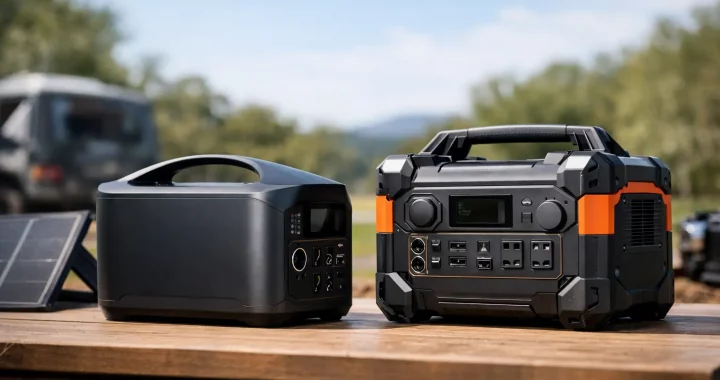
Power station comparisons usually get reduced to one number – watt-hours, inverter size, or price. That misses the point. In a real Aferiy vs Fossibot decision, the better choice depends on what you need to keep running, how long you need it to run, and whether you are buying for outages, travel, or daily off-grid use.
If you are shopping for dependable portable power, both brands are in the conversation for a reason. They are built around the same core promise: quieter, cleaner backup energy than a gas generator, with enough output to handle anything from phones and laptops to refrigerators, power tools, and some higher-draw appliances. The differences show up in the details, and those details matter when the grid is down.
Aferiy vs Fossibot at a glance
Aferiy tends to appeal to buyers who want straightforward backup power with solid capacity, practical output options, and a setup that does not feel overly complicated. Many shoppers looking at Aferiy are trying to cover the basics first – food preservation during an outage, device charging for the family, CPAP support overnight, and enough inverter headroom for common household gear.
Fossibot often stands out with high-output models, strong fast-charging capability, and systems aimed at users who expect heavier loads or longer runtimes. That can make Fossibot especially attractive for RV users, jobsite applications, or households that want a portable solution that starts getting closer to whole-room or multi-device backup.
That does not mean one brand is always entry-level and the other is always premium. It means their strongest cases can feel different. Aferiy often fits buyers who want a balanced, dependable system without overbuying. Fossibot often fits buyers who know they need more overhead from the start.
Start with your use case, not the logo
The biggest mistake in comparing portable power stations is shopping by brand before shopping by scenario. A unit that looks excellent on paper can still be the wrong fit if it misses your actual runtime or surge needs.
For home backup, focus first on what has to stay on. A refrigerator, modem, lights, phones, a fan, and small medical devices create a very different load profile than a microwave, space heater, sump pump, or window AC. If your goal is outage readiness, battery capacity and inverter output need to be sized together. A large battery with limited output can run for a long time but still fail to start the appliance you care about most.
For RV and camping use, charging flexibility matters just as much as raw capacity. You may want solar input, vehicle charging, and fast wall charging before a trip. Noise level, portability, and outlet mix also matter more when you are moving the unit or sharing power across several smaller devices.
For work and off-grid use, consistency matters. You need stable AC output, enough surge handling for tool startup, and a battery chemistry that can take repeated cycles without falling off quickly. In this kind of use, build quality and recharge speed often become more important than advertised peak power.
Battery capacity and output: where the real comparison starts
In any Aferiy vs Fossibot comparison, capacity and output should be read together. Watt-hours tell you roughly how much energy is stored. Continuous wattage tells you how much the inverter can deliver at one time. Neither number means much alone.
Aferiy models often make sense for buyers who want enough stored power to cover essentials without moving into oversized, harder-to-store equipment. That can be a smart middle ground for apartment dwellers, homeowners building a basic emergency kit, or families that want backup for communication, refrigeration, and overnight essentials.
Fossibot models can be compelling if your loads are more demanding or less forgiving. If you plan to run a full-size fridge, coffee maker, electric cooler, or several devices at once, the extra inverter room on some Fossibot systems can make daily use less restrictive. You spend less time managing what has to be unplugged before something else can turn on.
Still, higher output is not a free win. Bigger systems usually weigh more, take up more storage space, and cost more. If your real need is just emergency essentials and modest weekend use, paying for extra output you rarely use may not improve your preparedness much.
Charging speed and solar performance
Fast recharging is one of the most practical differences buyers notice after purchase. It is easy to care about battery size before a storm. It is just as important to care about how quickly you can refill that battery between outages or on limited sun.
Aferiy generally appeals to buyers who want charging options that are reliable and easy to understand. For many people, that means plugging into the wall, topping off before weather events, and using solar as a useful supplement rather than the only recharge path.
Fossibot often gets attention from shoppers who want more aggressive recharge performance. Faster AC charging can be a serious advantage if you have a narrow weather window, limited generator backup, or a travel schedule where you only have a short time to recharge before moving again.
Solar charging deserves a realistic look. Both brands can be part of a solar generator setup, but solar results depend on panel size, sunlight conditions, input limits, and charging losses. If solar is central to your plan, the better question is not whether Aferiy or Fossibot supports solar. The better question is how much solar input your specific model accepts and how that lines up with your actual daily power use.
Portability, noise, and day-to-day usability
Portable power is not just about emergency backup. It is also about whether the system is practical enough to use often. That starts with weight and handling.
Aferiy can be a strong fit if you want a system that is easier to move from closet to kitchen, garage to backyard, or home to campsite. If the unit is too heavy or awkward for regular use, many owners end up treating it as a last-resort device instead of an everyday resilience tool.
Fossibot may be worth the extra size if your priority is capability first. A heavier station can still be the right call if it saves you from needing multiple smaller units, especially for RV travel or backup of larger appliances.
Both brands offer a major advantage over gas generators where indoor-adjacent use is concerned: quiet operation and no fuel storage. That matters during overnight outages, in campgrounds, and in neighborhoods where noise becomes part of the problem.
Expandability and future-proofing
Not every buyer needs expansion batteries. But if your energy needs are likely to grow, this is where the comparison can shift.
Aferiy may be enough if you are buying for a defined use case and want a self-contained system. If your plan is simple and stable, a fixed-capacity power station can be easier to budget for and easier to manage.
Fossibot can make more sense for buyers who want room to scale. If you expect longer outages, larger appliance support, or a gradual move toward more serious off-grid capability, expandable platforms can protect you from replacing the whole system later.
This is one of those areas where it depends. Expandability sounds great, but it only pays off if you realistically expect to use it. Otherwise, you may be better served by choosing a well-sized standalone unit and keeping the setup simple.
Which is better for home backup?
If your main concern is storm season, grid instability, or keeping a few critical loads alive during an outage, Aferiy can be a very practical choice. It aligns well with households that want dependable backup without turning the purchase into a major electrical project.
If your outage plan includes more appliances, longer runtimes, or less tolerance for load management, Fossibot may be the better fit. It can give you more breathing room when several essentials need power at the same time.
For many customers, the right answer comes down to whether they are backing up essentials or backing up convenience too. Essentials usually point to balanced systems. Convenience usually pushes you toward more output and more stored energy.
Which is better for RV, camping, and off-grid use?
Aferiy works well for travelers who want quiet, clean power for lights, device charging, portable fridges, fans, and occasional appliance use. It makes sense when mobility and practicality matter as much as top-end output.
Fossibot often has the edge for users with bigger RV loads, longer stays, or more demanding daily consumption. If you are running more from your battery bank and want to recharge quickly between stops, that added performance can be worth the trade-off in size and price.
At Thundervolt Power, this is where many buyers realize the best portable power station is rarely the one with the biggest spec sheet. It is the one that matches your routine closely enough that you can trust it before, during, and after the power goes out.
A good buying decision here is not about picking a winner on paper. It is about choosing the system you will actually rely on when the weather turns, the campsite goes dark, or the work still needs to get done.
