
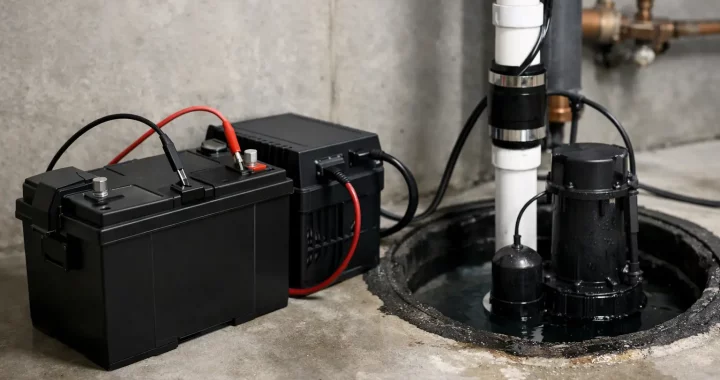
A sump pump usually fails at the worst possible moment – during a storm, after hours of heavy rain, or right when the power drops. That is exactly why choosing the best backup battery for sump pump protection matters. If your basement takes on water when the grid goes down, a battery backup is not just a convenience. It is part of your home protection plan.
The right setup keeps your pump running long enough to move water out when utility power is unstable or completely unavailable. But this is also where many homeowners get tripped up. Not every battery system can handle a sump pump’s startup surge, and not every backup option gives you meaningful runtime.
What makes the best backup battery for sump pump use?
The short answer is this: the best system has enough inverter power to start the pump, enough battery capacity to keep it running, and battery chemistry that can hold up over years of standby use. If one of those three pieces is weak, the backup plan is weak.
Sump pumps do not draw power the same way a phone charger or lamp does. Even a modest pump can pull a much higher surge wattage at startup than its running wattage suggests. A pump that runs at 800 watts might need well over 1,500 watts for a brief startup burst. That is why a small emergency battery pack that looks good on paper can still fail when you actually need it.
For most homeowners, the safest approach is to size around both the pump load and the storm scenario. If your basement only sees occasional water and your pump cycles briefly, you may not need a massive battery bank. If your area gets long outages or constant pumping during storms, capacity becomes far more important than the minimum startup requirement.
Start with your sump pump’s actual power demand
Before comparing batteries, look at the pump itself. Check the motor plate, owner’s manual, or existing power label. You want to know the running wattage or amperage, plus the likely startup surge.
Many residential sump pumps fall somewhere between 1/3 HP and 1/2 HP. A 1/3 HP unit may run in the 600 to 800 watt range, while a 1/2 HP pump can easily run higher, with startup surges that jump well beyond the continuous draw. These numbers vary by model, age, head height, and plumbing conditions, so estimates help, but the real specs are better.
If you cannot find exact wattage, calculate a cautious estimate. It is better to oversize a battery and inverter than to buy a unit that shuts off every time the motor kicks on. A pure sine wave inverter is also the safer choice for motor-driven equipment. It delivers cleaner power and is generally better suited for appliances with electric motors.
Capacity matters more than most buyers expect
People often focus on wattage first, and that makes sense because the pump has to start. But watt-hours determine how long your backup lasts. That is where the difference between a short-term stopgap and dependable outage coverage becomes clear.
If a battery system stores 1,000 watt-hours, that does not mean a sump pump drawing 1,000 watts will run for a full hour in real-world conditions. You have inverter losses, battery reserve margins, and the pump’s cycling behavior to consider. Real runtime will be lower than the simple math suggests.
The good news is that sump pumps usually do not run continuously. They cycle on and off based on water level. That means a battery can often last much longer than expected if water inflow is moderate. The bad news is that during severe flooding, the pump may run frequently enough that a small battery drains fast.
For that reason, the best backup battery for sump pump coverage is usually not the smallest unit that can start the motor. It is the one that gives you enough stored energy for repeated cycles during the kind of outage your area actually experiences.
Why LiFePO4 batteries are a strong fit
For home backup applications, lithium iron phosphate, or LiFePO4, has real advantages. It offers long cycle life, better thermal stability than many other lithium chemistries, and reliable performance for standby and repeated-use scenarios. It is also much lighter and easier to manage than traditional lead-acid battery setups with comparable usable energy.
Lead-acid systems still exist in the sump pump backup market, and they can work. But they tend to offer less usable capacity, shorter lifespan, more maintenance concerns, and slower charging. If your goal is dependable, low-hassle backup power, LiFePO4 is usually the better long-term value.
This matters even more if you want a flexible system that can serve more than one purpose. A lithium-based portable power station can potentially support your sump pump during outages and still be useful for other emergency loads, mobile power, or general home preparedness.
Portable power station or dedicated sump pump backup?
This is where the decision gets practical. A dedicated sump pump battery backup system is built for one job. It may integrate directly with a compatible backup pump system and stay in place full time. That can be a smart solution if you want a fixed, appliance-specific setup.
A portable power station is different. It gives you a battery, inverter, charging system, and outlets in one package. For many homeowners, that flexibility is appealing because the same unit can power a sump pump, charge phones, keep internet equipment online, run lights, or support a refrigerator for part of an outage.
The trade-off is that you need to confirm compatibility carefully. The portable power station must have enough continuous and surge output for the pump, and you may need to think through charging, cable routing, and how you will deploy it when weather turns bad. If you want one backup solution for several household essentials, the portable route can make more sense. If sump protection is the only priority, a dedicated system may feel simpler.
Features worth paying for
If you are comparing battery systems for sump pump use, a few features matter more than flashy extras.
A pure sine wave inverter should be near the top of the list because pumps are motor loads. High surge output is just as important, since startup demand can be the deal-breaker. Battery expansion is also valuable if you live in an area where outages can stretch for many hours.
Fast recharging helps after the storm passes or during short power returns between outages. Clear displays and app-based monitoring are useful, but they are secondary to the core performance numbers. Quiet operation matters too. One advantage of a battery system over a gas generator is that it works indoors without fuel storage, engine noise, or exhaust concerns.
How to size your system without guessing
A practical way to choose is to build around three questions: How large is your pump, how often does it cycle during heavy rain, and how long do outages typically last where you live?
If you have a smaller pump and your outages are usually brief, a mid-capacity battery system with strong surge capability may be enough. If your pump runs often during storms or your grid is unreliable for long stretches, it makes sense to step up to a larger-capacity power station or a system with expansion batteries.
It also helps to think in terms of margin. Buying a battery backup that only barely covers your pump’s startup wattage leaves little room for real-world performance changes. Pumps age, conditions change, and storms do not follow ideal test conditions. A little overhead buys peace of mind.
For many buyers, this is where brands like Thundervolt Power fit naturally into the conversation. The value is not just having battery capacity on hand. It is having a dependable lithium-based backup system with the inverter strength, expandability, and recharge flexibility to handle more than one emergency load.
Common mistakes to avoid
The biggest mistake is choosing based on running watts alone. If the surge rating is too low, the pump may never start. The second mistake is underestimating runtime needs. A battery that covers a few cycles may not help much in a multi-hour storm outage.
Another common issue is ignoring recharge strategy. If your area sees back-to-back weather events, quick AC charging or solar support can matter. Finally, do not assume every portable battery is suitable for motor loads just because it has a large watt-hour rating. Inverter quality and surge capability still decide whether it works.
The best backup battery for sump pump reliability depends on your risk
There is no single battery that is best for every basement, every pump, and every storm pattern. The right choice depends on how much water you typically handle, how severe your outages get, and whether you want a single-purpose solution or a more flexible backup power system.
If your priority is dependable protection, focus on a pure sine wave system with enough surge output to start the pump, enough watt-hours for repeated cycles, and LiFePO4 battery chemistry for long-term reliability. That combination gives you a much better shot at keeping water under control when the grid is not.
Storm prep is easiest when it happens before the forecast turns ugly. If your sump pump is part of your home’s first line of defense, your backup battery should be ready to do the same job without hesitation.
