
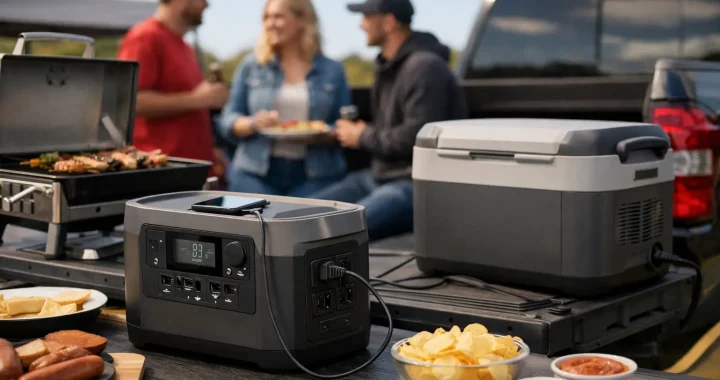
The first thing that ruins a good tailgate is not the weather. It is losing power halfway through the pregame. A lithium battery generator for tailgating solves that problem without the noise, fumes, and fuel hassles that come with gas equipment. If you want steady power for a TV, speaker, phone chargers, blender, or electric grill, the right setup keeps the party running and the parking lot a lot calmer.
Why a lithium battery generator makes sense for tailgating
Tailgating power needs are different from home backup needs. You are not trying to run an entire house. You want clean, portable electricity that sets up fast, stays quiet, and does not force you to keep extra gas in the trunk.
That is where lithium power stations stand out. They are easier to transport, simpler to use, and far more practical in crowded lots where noise and exhaust matter. Many models also use LiFePO4 battery chemistry, which is valued for long cycle life, thermal stability, and better long-term durability than older battery types.
For tailgaters, the biggest advantage is convenience. Press a button, plug in your gear, and you are ready. No pull cord. No refueling. No engine noise competing with your music or the game audio.
What to look for in a lithium battery generator for tailgating
The best choice depends on what you actually plan to power. A small unit may handle phones, a portable speaker, and a tablet all day. Once you add a TV, a mini fridge, or cooking gear, your requirements change fast.
Battery capacity matters more than most buyers think
Capacity is measured in watt-hours. This tells you how much energy the unit stores. If your setup is light, around 500Wh to 800Wh may be enough for a short event. If you are running a TV, powered cooler, lights, and several chargers for hours, you will likely want 1000Wh or more.
A common mistake is buying based on outlet count instead of battery size. Plenty of ports do not help if the battery runs dry before kickoff.
Output wattage determines what you can run
Wattage tells you how much power the generator can deliver at one time. This is critical for appliances with heating elements or startup surges. A TV and phone chargers do not ask for much. An electric griddle, coffee maker, or portable ice maker can demand much more.
For lighter tailgating, a unit with 500W to 1000W of AC output often works well. If you want more flexibility for cooking appliances or larger entertainment setups, stepping up to 1500W or 2000W gives you more room. Pure sine wave output is also worth prioritizing because it delivers stable power for sensitive electronics like TVs, laptops, and audio gear.
Portability is not just about weight
It is easy to focus on capacity and forget that you still have to move the unit from your vehicle to your setup. A larger battery generator gives you more runtime, but it can also mean more bulk. Wheels, handles, and overall shape matter if you are hauling chairs, coolers, and canopies at the same time.
There is always a trade-off here. Smaller units are easier to carry. Larger units reduce the risk of running out of power. The best fit depends on how much gear you bring and how far you need to carry it.
Charging speed affects how usable it feels
Fast recharging is one of the most underrated features. If you tailgate regularly, a unit that recharges quickly at home is easier to keep ready. Some models also support car charging or solar input, which can help during longer events or weekend trips.
Solar can be useful, but it depends on the situation. In an open lot with good sun exposure, portable solar panels can extend runtime. In shaded areas or packed stadium parking, solar is less predictable. For most tailgaters, AC charging before leaving home remains the main strategy.
How much power do tailgating essentials actually use?
This is where shopping gets practical. Your generator should match your real equipment, not a vague idea of what you might use someday.
A typical flat-screen TV may use around 60W to 150W depending on size and brightness. A portable speaker might draw 20W to 100W. A phone charger uses very little, but several devices charging at once add up over time. A compact electric cooler could draw 40W to 70W while cycling, while an electric grill or griddle may pull 1000W to 1600W.
That means a moderate-capacity unit can handle entertainment gear with no trouble, but cooking appliances are where battery size and inverter output start to matter. If you are planning to cook with electricity, not propane, shop with that in mind from the start.
Matching the power station to your tailgate style
Not every tailgate looks the same, and your power needs should reflect that.
Casual setup
If your setup is mostly music, phones, a fan, and maybe a small TV, a compact lithium unit is usually enough. This is the easiest category to shop for because runtime tends to be manageable and portability stays high.
Entertainment-heavy setup
If your group brings a larger TV, multiple speakers, game consoles, or extra lighting, move into a mid-size or large power station. This gives you more runtime headroom and avoids stressing the inverter with several devices running together.
Food-first setup
If your tailgate centers on electric cooking gear, your generator needs to do more than keep devices charged. Higher AC output becomes essential, and larger battery capacity is not optional. Heating appliances can drain a small unit surprisingly fast.
All-day or weekend setup
If you arrive early, stay late, or roll tailgating into camping, look at larger LiFePO4 systems with expansion options. Extra battery capacity can make a meaningful difference when the event stretches beyond a few hours.
Why lithium beats gas in the parking lot
Gas generators still have their place, especially for very high loads and long runtimes where refueling is practical. But for tailgating, they often create more problems than they solve.
They are loud. They produce exhaust. They require fuel storage and maintenance. They can also be a poor fit in crowded spaces where people are sitting, eating, and watching the game nearby.
A lithium battery generator is quieter, cleaner, and easier to manage. That matters when you want power without turning your tailgate into a jobsite. It also makes a better impression on everyone parked around you.
Features worth paying extra for
Some upgrades are worth the cost because they improve reliability, not just convenience. A clear display helps you monitor battery percentage, output load, and estimated runtime. Multiple AC and USB outputs make it easier to keep everyone connected without hunting for adapters. Fast charging shortens the turnaround between events.
If you plan to use the same unit beyond football season, features like solar compatibility, expansion battery support, and higher surge capacity can add real value. The best portable power station is often the one that handles tailgating now and emergency backup later.
Brands carried by retailers like Thundervolt Power often focus on this broader usefulness, which is important if you want your purchase to work for recreation, outages, and travel instead of just one use case.
Common buying mistakes to avoid
The most common mistake is underestimating runtime. Buyers often assume that if a unit can power a device, it can power it for the whole event. Those are two different questions.
Another mistake is ignoring surge wattage. Some appliances need extra power at startup, even if their running wattage looks manageable. There is also the issue of overbuying. If you only need power for a speaker, phones, and a small screen, an oversized unit may add cost and weight without adding much benefit.
A little planning goes a long way. Add up the wattage of the devices you actually use, estimate how many hours they will run, and give yourself some extra margin. That is how you avoid disappointment in the lot.
The right choice is the one that keeps your setup ready
A good tailgating power station should feel simple. It should be quiet enough to disappear into the background, strong enough to handle your gear, and dependable enough that you are not checking the battery every 20 minutes. For most buyers, that means choosing a lithium unit with enough capacity for real runtime, enough inverter power for your biggest load, and enough portability that bringing it along is easy.
If your goal is a cleaner, quieter, more dependable game day setup, buying the right power station is less about chasing the biggest specs and more about matching the unit to the way you tailgate. Get that part right, and the power becomes one less thing to think about when the lot fills up and the game is getting close.
