
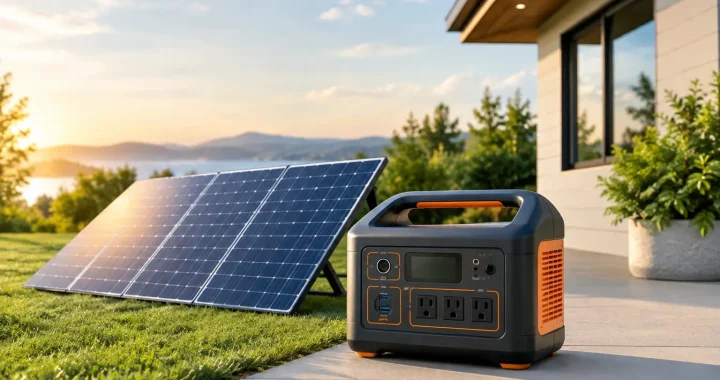
A summer storm can turn a fully connected home into a dark, quiet place in minutes. A solar generator cannot control the weather or repair the grid, but it can keep the essentials running: phones, lights, a modem, a CPAP machine, a refrigerator, or the tools needed to get work done. That practical role is shaping the future of solar generators far more than novelty features ever could.
For homeowners, RV travelers, contractors, and families planning for emergencies, portable power is becoming less about occasional camping trips and more about having a dependable energy reserve. The next generation of systems will be easier to recharge, more capable with appliances, and better matched to the way people actually use power during an outage or away from the grid.
The Future of Solar Generators Is Built on Better Batteries
The battery is the heart of any solar generator. Improvements in battery chemistry, management systems, and capacity expansion are already changing what portable power can do.
Lithium iron phosphate, commonly called LiFePO4, is likely to remain a major part of the market. It offers a long cycle life, stable performance, and a practical balance of safety, weight, and usable capacity. For buyers who expect to use a power station frequently – whether for weekend travel, remote work, or recurring outages – a battery designed for thousands of charge cycles offers more long-term value than a system intended for occasional use.
Battery management systems will also become smarter. Rather than simply showing a percentage on a display, advanced systems can monitor cell temperature, charging conditions, output demand, and remaining runtime with greater accuracy. That matters when a family needs to decide whether to run a refrigerator overnight or preserve power for medical equipment and communications.
Expansion batteries are another clear direction. A compact power station may be enough for charging devices and running lights, while a larger expandable setup can support longer outages and higher-demand appliances. This lets buyers start with the capacity they need now and add stored energy later instead of replacing the entire system.
Faster Charging Will Make Preparedness More Practical
A backup battery is most valuable when it can be ready again quickly. Future solar generators will continue to improve charging speed from wall outlets, solar panels, and vehicle charging ports.
Fast AC charging is especially useful when severe weather is in the forecast. A system that takes all day to recharge can be a limitation if an outage is expected that evening. Faster input gives homeowners a better chance to top off their energy reserve while grid power is still available.
Solar charging will improve in a different way. Portable panels are becoming more efficient, lighter to set up, and easier to position. Higher solar input limits will allow compatible power stations to recover meaningful capacity during daylight, especially in clear conditions. For an RV traveler or an off-grid user, that means less dependence on campground hookups or idling a vehicle just to charge electronics.
Still, solar charging has real limits. Panel output changes with weather, season, shade, panel angle, and available daylight. A 200-watt panel will not deliver 200 watts every hour of every day. The practical approach is to size a system with enough battery capacity for nighttime use and enough panel capacity to replenish it under realistic conditions. Solar is a powerful source of independence, but it works best as part of a complete plan.
Hybrid Charging Will Be the Standard
The most useful systems will not force users to choose one charging method. They will combine AC charging before an event, solar charging during extended disruptions, and vehicle charging when traveling. Some users will also pair a power station with an existing home solar setup where appropriate.
That flexibility matters because emergencies are unpredictable. A major storm may bring days of cloud cover. A road trip may involve long driving hours but limited time in direct sun. The best solar generator is not the one with the most impressive single specification. It is the one that can be replenished reliably in the conditions where you will use it.
More Appliance Power Without the Noise or Fuel
The inverter determines what a solar generator can run. A pure sine wave inverter delivers clean, stable electricity suitable for sensitive electronics, chargers, and many household appliances. As inverter capacity rises, portable systems can handle a wider range of real-world loads.
This does not mean every power station can run every appliance. High-wattage heating devices such as electric space heaters, coffee makers, hair dryers, and toaster ovens can drain a battery quickly. Central air conditioning and large electric ranges are generally beyond the practical range of most portable systems. But larger solar generators can increasingly support refrigerators, freezers, microwaves for limited use, sump pumps, power tools, TVs, internet equipment, and certain window air conditioners.
The key is to look beyond the appliance label. Buyers should consider both running watts and startup surge. Motors in refrigerators, pumps, and air conditioners can briefly demand much more power when starting than they use while running. A system needs enough inverter capacity to handle that surge and enough watt-hours to run the appliance for the desired length of time.
Future designs will make these calculations easier. Better displays and companion apps can show live input, output, estimated runtime, and individual port use. That does not replace understanding your power needs, but it helps users make informed decisions before the battery is low.
Solar Generators Will Fit More Types of Homes and Work
Portable power is expanding beyond one kind of customer. A homeowner may want quiet backup power for a bedroom, kitchen, or home office. An RV owner may need energy for lights, a cooler, laptops, and a fan without relying on a loud campground generator. A contractor may need clean power for battery chargers, test equipment, and smaller jobsite tools.
For these users, quiet operation is not a minor convenience. Gas generators require fuel storage, maintenance, ventilation, and careful placement because of exhaust. Battery-powered solar generators run without combustion at the point of use, making them a practical choice indoors for appropriate devices. They also avoid the constant engine noise that can disrupt sleep, conversation, camping, or work.
The trade-off is energy capacity. Gas can be refueled quickly, while a battery must be recharged. For a prolonged outage with heavy loads, some households may still use a fuel generator as part of a broader backup strategy. For shorter outages, essential loads, overnight power, and quiet portable use, a solar generator can be the more convenient and lower-maintenance option.
What to Look for as Technology Advances
New features will continue to arrive, but the buying fundamentals will stay the same. Start with the devices that matter most during an outage or trip, then calculate a realistic power plan around them.
A high watt-hour rating supports longer runtime. A higher inverter rating supports more demanding appliances. LiFePO4 chemistry supports frequent use over many years. Fast charging and sufficient solar input improve recovery time. Expansion capability matters if your needs may grow. Multiple AC, USB, and DC outputs reduce the need for extra adapters and power strips.
Portability should remain part of the decision. A large-capacity system may provide better backup coverage but can be heavy to move. If you need power on a balcony, at a campsite, in an RV, or on a jobsite, consider whether you can comfortably transport and set up the unit. In many cases, a modular setup with a main power station and separate expansion battery is easier to manage than one oversized unit.
Thundervolt Power focuses on this practical fit: matching portable power capacity, output, charging options, and battery technology to the situations where reliable electricity makes a real difference.
Preparedness Is the Real Innovation
The most meaningful change in the future of solar generators is not a single battery breakthrough or a larger display. It is the growing expectation that backup power should be available, clean, quiet, and simple enough to use when the pressure is on.
A well-chosen solar generator gives you options before an outage, during a trip, or at a remote worksite. Build your power plan around the devices you cannot afford to lose, test it before you need it, and keep it charged. When the lights go out, readiness is worth more than any feature list.
