
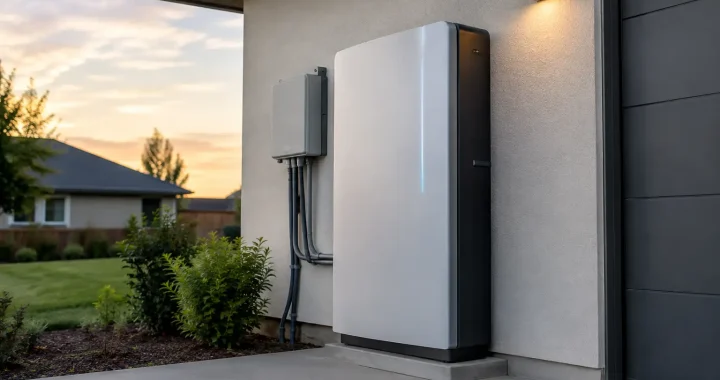
A storm does not need to take out power for days to create a real problem. A few hours without refrigeration, internet, lights, phone charging, or a CPAP can quickly disrupt a household. This home outage battery backup example shows how to size a quiet, fuel-free power station around the essentials that matter most, rather than guessing based on a single appliance label.
The goal is not to run every circuit in the house. It is to keep the household safe, connected, and comfortable until grid power returns.
A Home Outage Battery Backup Example for 12 Hours
Consider a family preparing for a 12-hour overnight outage. They want to operate one refrigerator, a Wi-Fi router and modem, a few LED lights, two phones, and one CPAP machine. This is a realistic essential-load plan for many homes, and it avoids the battery-draining appliances that create the biggest sizing mistakes.
| Essential load | Estimated running power | Estimated 12-hour energy use | | — | —: | —: | | Refrigerator | 60 watts average | 720 Wh | | Router and modem | 15 watts | 180 Wh | | LED lights | 25 watts | 300 Wh | | Two phones | Varies | 120 Wh | | CPAP without heated humidifier | 40 watts | 480 Wh |
The estimated total is 1,800 watt-hours, or 1.8 kWh. That is the starting point, not the final battery size.
Portable power stations lose some energy through inverter operation, cable losses, and charging behavior. Refrigerators also cycle on and off, so their real energy use changes with room temperature, how often the door is opened, and the age of the appliance. A practical planning margin is 15% to 25% above the estimated load.
For this example, a household should target roughly 2,200 Wh of usable battery capacity. A power station rated near 2,000 Wh may cover the load under favorable conditions, but a 2,500 Wh or expandable system provides more breathing room. That extra capacity can matter when an outage lasts longer than forecast, the refrigerator runs harder in summer, or a medical device needs more power than expected.
Battery capacity is only half the calculation. The inverter must also handle the refrigerator’s startup surge. A refrigerator may run at a modest wattage once operating, then demand several times more power for a brief moment when its compressor starts. For this setup, a pure sine wave inverter with at least 1,200 watts of continuous output is a sensible baseline. Higher output gives more flexibility if lights, charging equipment, or a small kitchen appliance are switched on at the same time.
Start With Watt-Hours, Not Just Watts
Watts tell you how much power an appliance needs at a given moment. Watt-hours tell you how much stored energy it consumes over time. A 100-watt device running for 10 hours uses about 1,000 Wh of energy.
The basic estimate is simple:
Watts x hours of operation = watt-hours needed
The complication is that many home appliances do not draw the same power every minute. Refrigerators, freezers, sump pumps, and furnace blowers cycle. A CPAP can use far more energy when a heated humidifier or heated tube is enabled. A television may use less than expected, while a gaming console, desktop computer, or large monitor can add a meaningful load over a long evening.
Use appliance labels, user manuals, or a plug-in power meter when possible. For equipment that cycles, measure it over several hours or use a conservative estimate. Planning for the low end is how a battery system gets exhausted before morning.
What This Home Outage Battery Backup Example Does Not Include
A portable battery backup can handle essential circuits and selected appliances very well. It is not automatically a whole-home system.
Electric space heaters, central air conditioning, electric dryers, electric water heaters, full-size ovens, and large electric ranges consume energy quickly. A 1,500-watt space heater can use 1,500 Wh in a single hour. In the 12-hour example above, one heater could drain most of the battery capacity that was intended to keep refrigeration, communications, lighting, and medical equipment operating.
Microwaves, coffee makers, toaster ovens, hair dryers, and induction cooktops may be usable briefly if the inverter has enough output, but they should be treated as planned short-duration loads. Do not assume a battery can support them alongside a refrigerator compressor startup without checking the station’s continuous output and surge rating.
Whole-home backup is possible with larger battery banks, expansion batteries, properly sized inverters, and professionally installed transfer equipment. That is a different project from plugging critical devices directly into a portable power station. Never connect a portable power station to a home wall outlet or electrical panel without appropriate transfer equipment and qualified electrical guidance. Improper backfeeding can injure utility workers and damage equipment.
Build Your Own Essential-Load Plan
Begin by deciding what must work during the first 12 to 24 hours. For most households, that means food preservation, communication, basic lighting, phones, and any health-related device. If you have a well pump, sump pump, furnace blower, or medical equipment, move those items to the top of the list because they can determine the entire system size.
Next, separate loads into two groups: devices that run for many hours and devices used only briefly. Long-running loads drive battery capacity. Brief high-wattage loads drive inverter requirements. A 900-watt microwave used for five minutes may consume less energy than a 50-watt device that runs all night, but the microwave still requires an inverter capable of supporting its high demand.
Then add a reserve. A battery rated at 2,000 Wh should not be treated as 2,000 Wh of guaranteed appliance energy under every condition. Build in enough capacity for conversion losses, seasonal temperature changes, battery aging, and unexpected use. If reliable overnight coverage is the priority, choose the next capacity level up rather than planning around a perfect calculation.
Battery Chemistry and Features That Matter During an Outage
LiFePO4 battery systems are a strong fit for home preparedness because they are designed for long cycle life and stable performance. They also avoid the fuel storage, exhaust fumes, and frequent maintenance associated with gasoline generators. For apartment dwellers, suburban homeowners, and families who need quiet overnight backup, that difference is significant.
A pure sine wave inverter is another feature worth prioritizing. It provides clean AC power suitable for sensitive electronics and many motor-driven appliances. Multiple AC outlets, USB-C charging, 12V outputs, and a regulated car-style port also make it easier to support a mix of devices without relying on a stack of adapters.
Fast AC recharging helps after a short outage, while solar input can extend runtime during a longer disruption. Solar is useful, but it should be viewed realistically. Panel output depends on weather, panel placement, shade, season, and available daylight. During a storm, solar production may be limited precisely when the grid is down. Start with enough stored energy for the first night, then treat solar charging as a way to recover and extend your reserve when conditions improve.
Expandable battery configurations are especially useful when needs may grow. A family may begin with refrigeration and communications, then later add a freezer, a work laptop, a sump pump, or additional medical equipment. An expandable system allows capacity to increase without replacing the primary power station.
Test Before the Weather Alert
A backup system is most useful when it has already been tested. Fully charge the power station, connect the intended devices, and run a controlled outage test for a few hours. Watch the battery percentage, confirm that the refrigerator starts reliably, and check whether the CPAP, modem, lights, and chargers are using the amount of power you expected.
Keep the station in a dry, ventilated location and make sure every family member knows which appliances are approved for backup use. Labeling a few extension cords and storing them with the station can save time when power fails after dark.
Thundervolt Power helps customers compare portable power stations, solar charging options, and expandable battery systems around real household loads. The right setup is the one that matches your essential equipment, provides a practical reserve, and is ready before the next outage puts that plan to the test.
Prepare for the devices your household cannot comfortably lose, then test the system while the lights are still on. That small amount of planning turns stored battery capacity into dependable power when it counts.
