
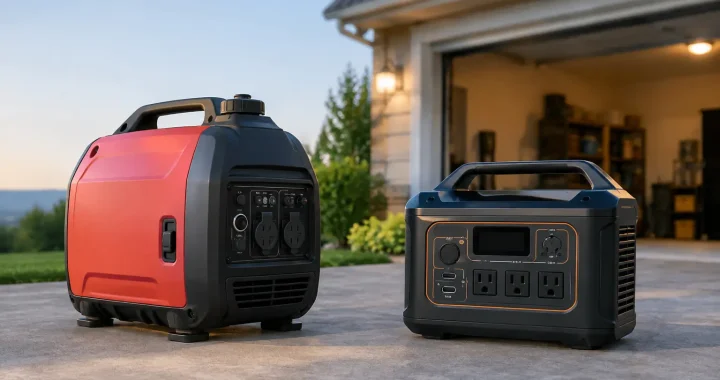
A refrigerator full of food, a CPAP machine, phones, a sump pump, and a dark house can turn a power outage into an urgent buying decision. The real question behind inverter generator versus battery power is not which option is universally better. It is which one can reliably support your equipment for the length of time you need, where you need it, without creating new problems around noise, fuel, or setup.
Both can provide stable electricity for sensitive electronics and essential appliances. Their strengths are different. A fuel-powered inverter generator is built for long runtime when you can keep refueling it. A portable power station uses stored battery energy for quiet, indoor-safe power with no exhaust. For many households, RV travelers, and mobile workers, the best preparedness plan may include a clear primary choice and a backup strategy for the other.
Inverter Generator Versus Battery Power: The Core Difference
An inverter generator makes AC electricity from an engine, then conditions that electricity through an inverter. Compared with a conventional open-frame generator, it typically delivers cleaner power, runs more quietly, and can adjust engine speed to match the load. It still needs gasoline, propane, or another approved fuel source, and it must operate outdoors away from doors, windows, and vents because it produces carbon monoxide.
Battery power usually means a portable power station with a lithium battery, a built-in pure sine wave inverter, AC outlets, USB ports, and often DC outputs. You charge it from a wall outlet, vehicle outlet, generator, or compatible solar panels. Once charged, it produces power without engine noise, fuel handling, or exhaust.
The practical distinction is straightforward: a generator creates power as long as fuel is available and the unit is operating safely. A battery power station stores a fixed amount of energy, measured in watt-hours, until it needs recharging.
Start With the Devices You Cannot Go Without
Choosing by product type alone can lead to an undersized system. Start with the loads that matter during an outage, on the road, or at a jobsite. A phone charger and Wi-Fi router require very little power. A refrigerator, microwave, coffee maker, portable heater, circular saw, or window air conditioner requires much more.
Two numbers determine whether a system will work: watts and watt-hours. Watts measure the power a device needs at a given moment. Watt-hours measure how much stored energy is available over time. A 1,000Wh power station can theoretically run a 100W load for 10 hours, though real runtime will be lower after inverter losses and changing device use.
Also account for startup surge. Appliances with compressors and motors, including refrigerators, freezers, pumps, and air conditioners, can draw a much higher burst of power when starting than when running. A power station or inverter generator must have enough surge capacity to handle that moment without shutting down.
For a short outage, battery power may cover communication, lighting, refrigeration cycles, laptops, and medical devices comfortably. For multi-day outages with a refrigerator running continuously, frequent cooking, or higher-draw appliances, a generator’s refuelable runtime becomes more compelling.
When Battery Power Is the Better Answer
Battery power is the practical choice when silence, indoor operation, and ease of use matter most. A charged portable power station can sit in a living room, RV, tent, or work trailer and provide stable electricity immediately. There is no pull cord, oil check, fuel can, or exhaust management.
That makes it especially useful for CPAP machines, phones, tablets, laptops, lights, cameras, routers, and other low-to-moderate-demand essentials. Pure sine wave output is also well suited to sensitive electronics. For families sheltering at home during a nighttime outage, the ability to keep devices powered without filling the house with generator noise is a meaningful advantage.
Solar charging adds another layer of resilience. Portable solar panels can replenish a compatible battery power station during daylight, helping extend its usefulness when grid power is unavailable. Solar output changes with weather, season, panel angle, and shade, so it should be treated as a recharge source rather than an unlimited power supply. Still, it can reduce dependence on stored fuel during a prolonged event.
Battery systems are also better suited to places where engine noise is unwelcome or prohibited. Campgrounds, tailgates, quiet campsites, apartment settings, and indoor work areas all favor a zero-emission power source. Expansion batteries can be valuable when you need more runtime without moving up to a much larger generator.
The trade-off is finite capacity. A battery station can be very capable, but high-wattage appliances drain it quickly. A 1,500W space heater may be within the inverter’s output rating, yet it can consume stored energy fast enough to make it a poor outage load. The same is true for electric cooking appliances and many air conditioners unless the battery system is sized for that specific use.
When an Inverter Generator Makes More Sense
An inverter generator is often the stronger choice for long outages, high daily energy use, and demanding jobsite loads. If you can safely store fuel and operate the generator outdoors, refueling gives you a path to continue producing power well beyond a battery’s initial charge.
This matters for homeowners dealing with extended storm outages. A properly sized inverter generator can support refrigerator and freezer cycling, sump pumps, tools, lights, chargers, and selected appliances over several days. It can also recharge battery power stations, giving you quiet power indoors after the generator is turned off.
For contractors, inverter generators can support tools with high starting demands that would overwhelm many portable battery systems. They are also useful where work continues all day and reliable fuel resupply is easier than waiting for batteries to recharge.
However, a generator is not a simple substitute for battery power. It requires fuel planning, routine maintenance, outdoor placement, and safe extension-cord management. Fuel can degrade in storage, and a generator should be tested periodically rather than left untouched until an emergency. Noise may be lower than with a conventional generator, but it is never silent.
Runtime, Recharging, and the Real Cost of Readiness
Battery runtime depends on capacity and load. If your critical equipment averages 200W and your power station has 2,000Wh of usable energy, it may support that load for roughly eight to nine hours after conversion losses. Reduce the average load by switching off unnecessary devices, and the same station lasts longer.
Generator runtime depends on tank size, load, and fuel efficiency. Most units run longer at lighter loads, but that does not eliminate the need for fuel. During regional emergencies, gas stations may be closed, crowded, or without power. Fuel availability is part of the calculation, not an afterthought.
Battery power shifts that planning earlier. You need to keep the unit charged and understand how to recharge it from AC, solar, or a vehicle. A LiFePO4-based portable power station is particularly appealing for preparedness because this battery chemistry is designed for long cycle life and stable performance. For a system that may sit ready for an outage and then see frequent use during travel, that durability matters.
A Hybrid Setup Gives Many Households More Options
For serious outage readiness, battery power and an inverter generator can work together rather than compete. Run the generator outdoors during the day to handle heavier loads and recharge a power station. Then use the battery station overnight for quiet refrigeration cycles, medical devices, communications, lights, and electronics.
This approach can reduce generator runtime, fuel use, and nighttime noise while preserving an option for longer emergencies. It also gives you a portable power source for camping, RV travel, remote work, and tailgating when the generator would be excessive.
A hybrid setup is not required for everyone. If your needs are primarily phones, laptops, lights, and short outages, a properly sized battery power station may be the more practical investment. If you regularly need to run pumps, power tools, or appliances through extended utility failures, an inverter generator may need to be part of the plan.
Choose Capacity Before Convenience
Do not choose a system based only on the largest watt number printed on the box. List the devices you need to power, estimate their running watts, check motor-driven equipment for surge demands, and decide how many hours of runtime you need. Then consider where the system will operate and how it will be recharged or refueled.
For dependable battery backup, look for enough watt-hours for your expected runtime, pure sine wave AC output, appropriate surge capacity, and expansion options if your needs may grow. Thundervolt Power focuses on portable energy systems that make this planning more manageable, from compact backup units to expandable solutions for larger home and mobile power needs.
The best power source is the one that is charged or fueled, correctly sized, and ready before the forecast turns severe. Build around the equipment your household or crew truly depends on, test the setup under normal conditions, and you will have a far more useful answer when the grid goes down.
