
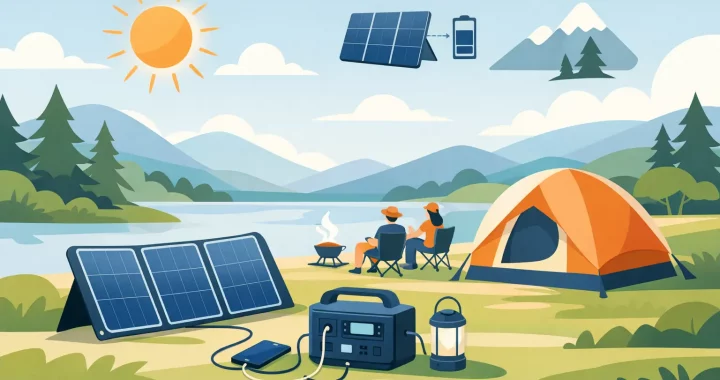
You notice power differently once you spend a night outdoors with more than a flashlight. Phones need charging. A fridge or cooler draws steady energy. CPAP machines, lights, cameras, fans, and tablets turn a simple campsite into a real power plan. That is where portable solar panels for camping make sense – not as a gadget, but as a practical way to stay charged without fuel, noise, or constant trips to recharge.
For many campers, the appeal is straightforward. Solar is quiet, low-maintenance, and easy to use once the basics are right. But performance depends on matching the panel to your actual needs, your battery setup, and the conditions at camp. A panel that works well for topping off phones may fall short for a power station running a fridge all weekend.
Why portable solar panels for camping are worth considering
Camping power usually comes down to three options: bring less gear, rely on a gas generator, or build a battery-and-solar setup that fits your trip. For a lot of people, the third option is the most practical. Portable solar panels for camping let you harvest energy during daylight hours and feed that power into a compatible portable power station or solar generator.
That matters most when you are off-grid for more than a day. A fully charged battery gets you started, but solar helps extend runtime instead of forcing you to ration every device. It also gives you a better margin for weather changes, longer stays, and unexpected loads.
There are trade-offs. Solar output is not constant. Tree cover, cloud cover, panel angle, season, and time of day all affect charging speed. If you camp deep in shade or only stay out overnight, solar may be less useful than simply starting with a larger battery. But for multi-day trips, dispersed camping, RV travel, and emergency-ready outdoor use, solar can be the difference between limited power and dependable power.
What portable solar panels actually do at camp
A portable solar panel does not usually power your devices directly in the way many first-time buyers imagine. In most camping setups, the panel charges a portable power station, and the power station runs your gear. That setup is cleaner and more stable because the battery stores energy for use after sunset and smooths out fluctuations from changing sunlight.
This is especially helpful when you are running sensitive electronics or devices that need steady AC output. A good power station with a pure sine wave inverter can handle laptops, charging bricks, and small appliances more reliably than a direct panel connection. The solar panel is the charging source. The power station is the control center.
That is why sizing the whole system matters more than shopping the panel by itself. A 200W foldable panel sounds strong on paper, but if your battery capacity is too small, or your daily consumption is higher than your solar input, you will still come up short.
How to size portable solar panels for camping
The best way to choose solar is to start with your daily energy use. Think in watt-hours, not just watts. Watts tell you how much power a device draws at one moment. Watt-hours tell you how much energy it uses over time.
If you charge two phones, run LED lights for a few hours, and top off a laptop, your daily use might be modest. If you add a portable fridge, a CPAP machine, a fan overnight, or camera batteries every day, your needs rise quickly. A fridge alone can change the math from light-duty charging to a more serious off-grid setup.
For lighter camping loads, a 100W portable panel paired with a compact power station can be enough. For longer stays or more demanding devices, 200W to 400W of solar may be more realistic, especially if you want enough charging speed to recover battery capacity during limited daylight.
Real-world output is usually lower than the panel’s rated wattage. A 200W panel may spend much of the day producing well below that number depending on sun angle, temperature, and cloud cover. That is normal. It is one reason experienced buyers build in some overhead instead of sizing their setup to perfect conditions.
The biggest factors that affect solar performance
Sunlight is the obvious variable, but it is not the only one. Panel placement makes a bigger difference than many campers expect. A flat panel on the ground will usually produce less than one tilted toward the sun. Even partial shade across one section of a panel can cut output sharply.
Campground choice matters too. Open desert sites are ideal for solar. Forested campsites are not. If you prefer shaded camps for comfort, you may need a larger battery bank because your panel will have fewer productive charging hours.
Cable compatibility and charging limits also matter. Your power station has a maximum solar input rating. If your panels exceed that input range or voltage limit, the setup may not charge properly. This is where buying by headline wattage alone causes problems. The panel, connectors, charge controller requirements, and battery input all need to line up.
Durability matters more than people think. Camping gear gets folded, carried, leaned against vehicles, and exposed to dust, moisture, and uneven ground. A portable panel should be easy to deploy, stable once opened, and built for repeated travel rather than occasional backyard use.
Choosing the right panel type for your camping style
Foldable portable panels are usually the best fit for camping because they store compactly and set up quickly. They are easy to move as the sun shifts, which can improve daily output. That flexibility is useful if your campsite has mixed shade or if you want to keep your vehicle or tent parked while your panel sits in the best available light.
Rigid panels can make sense for RV roofs or more permanent setups, but they are less convenient for tent campers or anyone packing and unpacking gear often. If portability is the goal, foldable panels are usually the practical choice.
Weight and pack size matter more for some users than raw panel output. Car campers and RV travelers can usually handle larger panels without issue. Tent campers moving gear by hand may prefer a smaller panel and a tighter energy plan. There is no universal right size. The right setup is the one you will actually use, carry, and deploy correctly.
Pairing solar with a portable power station
The best camping solar setup is usually a matched system: panel, battery, and outputs sized around your real devices. A portable power station gives you stored energy for nighttime use and backup power when conditions are poor. It also simplifies the experience. Instead of managing separate components, you plug the panel into the station and use the station to run your gear.
That approach works well for campers who want reliable AC and DC output without the maintenance, fumes, or startup issues of gas generators. It is also a smarter fit for families, RV users, and anyone bringing medical devices or food storage on the trip. Quiet power is not just more pleasant at camp. In some situations, it is the safer and more dependable option.
If you are comparing systems, pay attention to battery capacity, inverter output, solar input limits, and battery chemistry. LiFePO4 battery systems are especially appealing for camping and backup use because they offer long cycle life and strong durability over time. If your trips are getting longer or your device list is growing, expandable battery options can also make sense.
For shoppers building a dependable off-grid setup, stores like Thundervolt Power focus on the combination that matters most: portable solar plus practical energy storage that is ready for travel, outages, and extended use.
Common mistakes campers make
The first mistake is underestimating daily power use. People often think about charging a phone and forget the fan, the fridge, the Bluetooth speaker, the laptop, and the lights. The second is overestimating solar production. Nameplate wattage is not an all-day guarantee.
Another common issue is poor placement. If the panel stays in shade for half the day, performance drops fast. The same goes for leaving the panel flat when the sun angle changes. Small adjustments throughout the day can make a meaningful difference.
The last mistake is buying for one ideal trip instead of your normal use. If you camp several times a year in different conditions, buy for the harder scenario. A little extra capacity usually feels smart once the weather shifts or your trip runs longer than planned.
Portable solar works best when you treat it like part of a complete power plan, not a magic fix. Size it honestly, pair it with the right battery, and expect conditions to vary. When you do that, camp power gets a lot simpler – and a lot more reliable the moment the sun comes up.
