
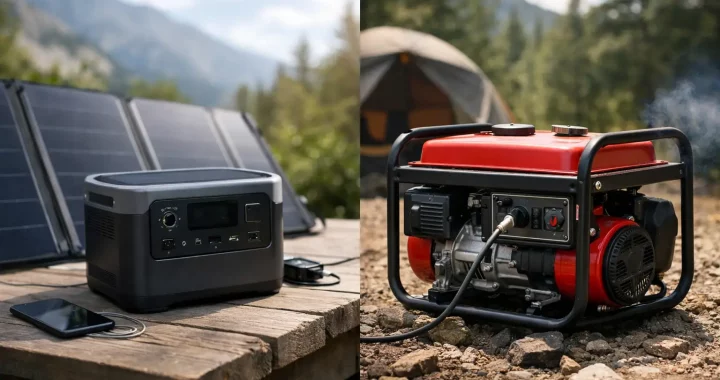
When the lights go out, the difference between a workable backup plan and a frustrating one shows up fast. The real question in a power station versus gas generator comparison is not which one is stronger on paper. It is which one fits the way you actually live, travel, and prepare.
For many buyers, this comes down to a simple shift in priorities. Gas generators have long been the default for backup power because they can run hard for extended periods as long as fuel is available. Portable power stations changed that conversation by offering quiet, low-maintenance electricity that works indoors, starts instantly, and does not depend on gasoline sitting in a can when a storm hits.
Power station versus gas generator: what changes in real use?
A gas generator creates electricity by burning fuel through an engine. A portable power station stores electricity in a battery and delivers it through built-in inverters, outlets, and charging ports. Both can keep essentials running, but they do it in very different ways.
That difference matters most in the moments people actually buy backup power for. During a nighttime outage, a gas generator needs to be moved outside, fueled, started, and kept far from doors and windows because of exhaust. A power station can be used immediately, often right where you need it, whether that is beside a refrigerator, in a home office, or near a CPAP machine.
If your goal is emergency readiness with the least amount of setup, battery power has a clear advantage. If your goal is long-duration output for larger loads and you are comfortable managing fuel and engine maintenance, gas still has a place.
Noise, safety, and convenience are not small details
People often start by comparing watts, but daily usability matters just as much. A gas generator is loud. That is not a minor inconvenience. During an outage, noise affects sleep, neighbors, campsite comfort, and your ability to hear what is happening around your property.
A portable power station is dramatically quieter, and in some cases nearly silent depending on load and cooling fan activity. For home backup overnight, van life, RV stops, tailgating, and indoor work areas, that changes the experience completely.
Safety is another major dividing line. Gas generators produce carbon monoxide and must never run indoors, in garages, or near open windows. That makes placement and weather protection part of the equation every time you use one. A power station has no combustion and no fumes, which makes it a better fit for apartments, enclosed workspaces, tents with caution around ventilation and heater use, and any indoor emergency setup.
Convenience follows from that. A battery unit usually means push-button operation, app monitoring on some models, multiple output types, and little day-to-day upkeep. There is no oil to change, no spark plug to replace, and no stale fuel to worry about months later.
Runtime depends on what you need to power
This is where the answer gets more nuanced. Gas generators excel when you need long runtime and have fuel on hand. As long as you can refuel safely, they can keep producing power. That is why they remain common for whole-home backup strategies, remote job sites, and heavy equipment use.
Portable power stations are limited by battery capacity, usually measured in watt-hours. Once the stored energy is used, the unit must recharge. That sounds like a disadvantage until you look at the actual loads many people care about most.
Phones, routers, lights, laptops, CPAP machines, TVs, portable fridges, and many small appliances are often a strong match for a power station. Higher-capacity lithium systems can also support refrigerators, microwaves, coffee makers, and even some window AC units for useful periods, especially when paired with expansion batteries or solar input.
The practical takeaway is simple. If you need to run modest essentials efficiently and quietly, a power station may cover more than expected. If you need to power high-draw tools all day or support large household loads continuously for multiple days without a strong recharging plan, a gas generator may still be the more direct solution.
Surge power matters as much as running watts
Some appliances need extra power at startup. Refrigerators, pumps, and air conditioners can draw a brief surge before settling into normal operation. That is why inverter quality and surge capacity matter.
A well-designed portable power station with a pure sine wave inverter can run sensitive electronics safely and handle startup surges better than buyers sometimes assume. But you still need to match your load carefully. Nameplate wattage, startup spikes, and total simultaneous use all matter more than marketing claims.
Fuel dependence versus charging flexibility
One of the biggest reasons buyers move away from gas is uncertainty around fuel. During severe weather, gas stations can be crowded, offline, or empty. Fuel must be stored correctly, rotated, and handled carefully. That is manageable, but it adds friction when conditions are already stressful.
A power station gives you more ways to recharge. Wall charging is the fastest and easiest when the grid is available. Car charging can help during travel or evacuation. Solar charging adds a layer of resilience that fuel generators simply do not have. With enough sunlight and the right panel setup, you can keep critical devices running without making a fuel run.
That does not mean solar is magic. Cloud cover, panel size, season, and battery capacity all affect performance. But for preparedness-minded households and off-grid users, charging flexibility is a real strategic advantage.
Cost is more than the purchase price
Gas generators often look cheaper at first, especially at lower wattage tiers. But ownership cost does not stop at checkout. Fuel, oil, service parts, seasonal maintenance, and eventual repair all add up.
Portable power stations usually cost more upfront, particularly larger LiFePO4 models with strong inverter output and expansion options. Over time, though, they can be easier to own. There is less maintenance, no fuel expense for routine use, and fewer operating hassles. For buyers who use their backup system regularly for camping, RV travel, outdoor events, or daily backup duty, that value becomes clearer.
Battery chemistry matters here too. LiFePO4 systems are especially attractive because they are built for long cycle life, thermal stability, and dependable repeat use. That makes them a practical fit for people who want backup power they can also use between emergencies.
Which option is better for specific situations?
For apartment dwellers, battery power is usually the obvious choice. You cannot safely run a gas generator indoors or on many balconies, and noise restrictions may apply. A power station is more realistic and more usable.
For homeowners preparing for outages, the answer depends on priorities. If your main goal is keeping essentials running safely inside the home with minimal effort, a high-capacity power station can be an excellent solution. If you need to sustain major appliances for extended outages and already have a fuel plan, gas may still fit.
For RV travel, camping, and tailgating, portable power stations are often the better match because they are quiet, easy to transport, and compatible with solar. They support the kind of flexible, low-hassle power these settings call for.
For contractors and remote work crews, it depends on load type and duration. Sensitive electronics and lighter-duty tools often pair well with battery systems. Heavy, continuous tool use may still favor gas, especially where recharging is limited.
For families supporting medical devices, quiet indoor-safe power can be a deciding factor. In that situation, ease of use and reliability are not luxury features. They are part of the backup plan.
The best choice is often based on your tolerance for hassle
This is the part buyers sometimes skip. Two power solutions can look similar in wattage and still feel completely different to own. A gas generator asks more from you every time you use it – fuel management, outdoor placement, startup procedure, maintenance, and noise. A power station asks more upfront in planning battery capacity, but much less in the moment.
That trade-off matters during bad weather, overnight outages, and stressful situations when simple operation has real value. It also matters if you plan to use your system often, not just once a year.
For many households, the strongest setup is not a strict either-or decision. It is choosing the system that covers your most likely needs reliably. In many cases, that means a portable power station for indoor essentials, quiet operation, and everyday versatility. Brands and retailers focused on energy resilience, including Thundervolt Power, have built around that shift because more customers want dependable backup without the complications that come with fuel-powered equipment.
If you are deciding between the two, start with your real loads, your outage pattern, and how much setup you want when power is not stable. The right backup system is the one you can count on quickly, safely, and without second-guessing it when the grid fails.
