


Description

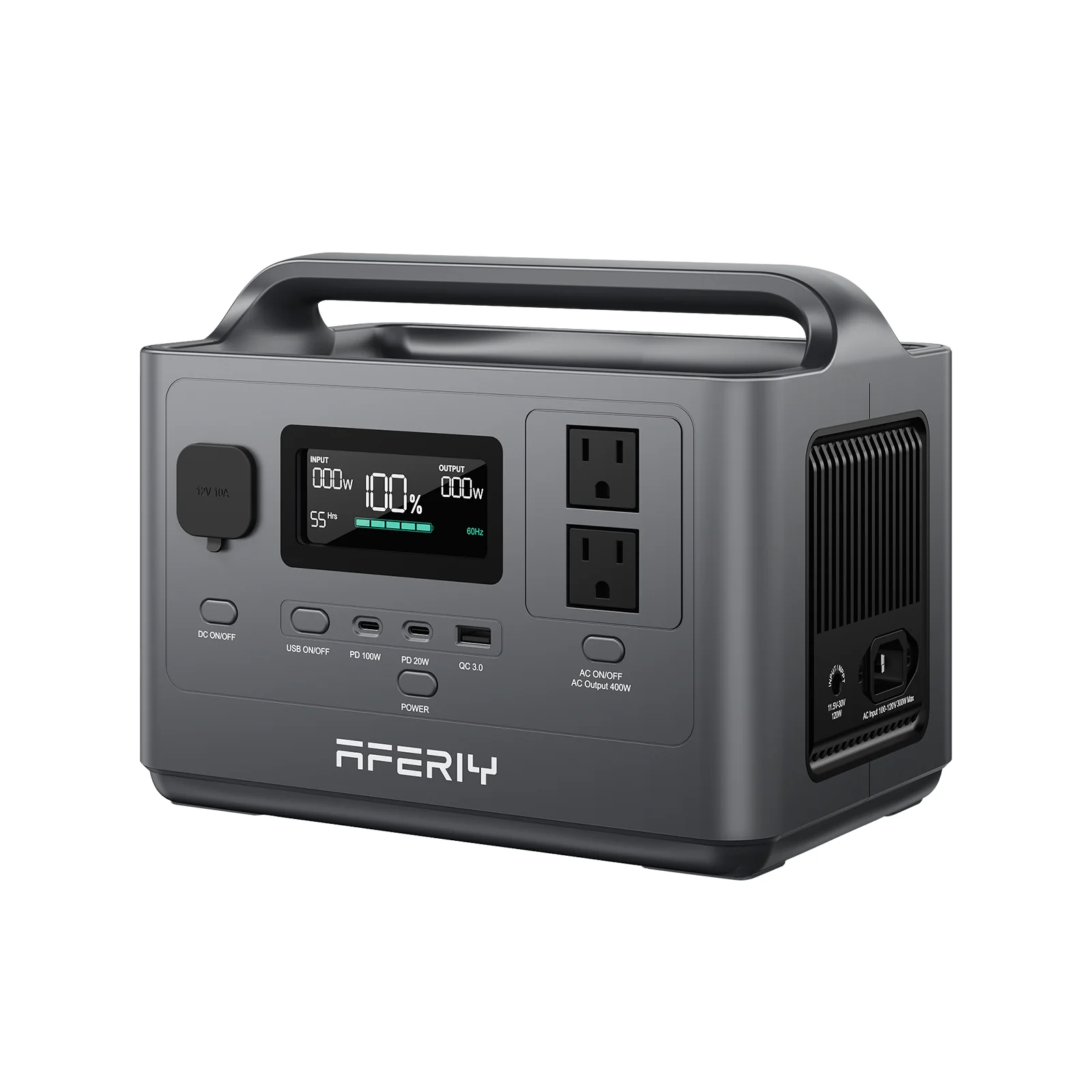
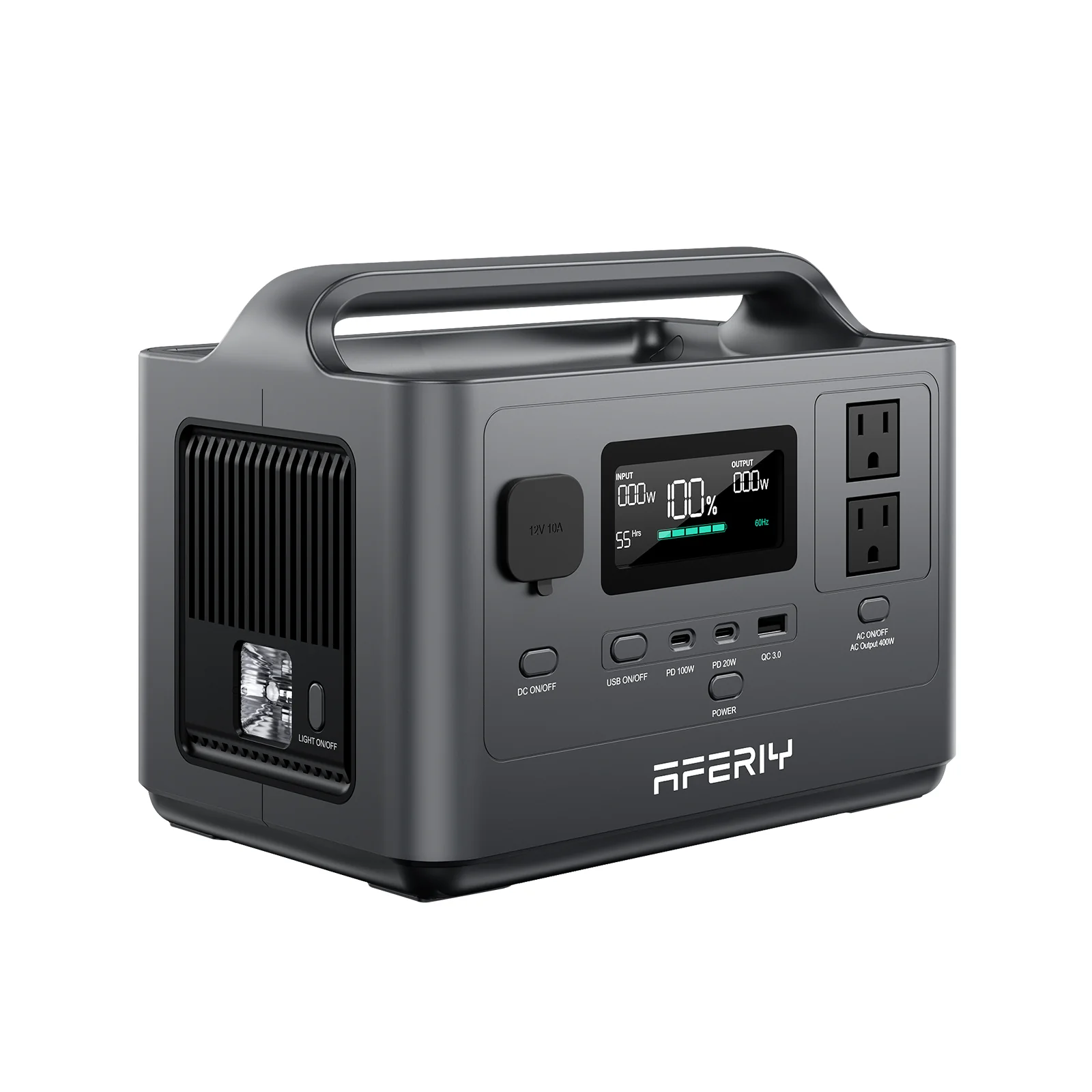
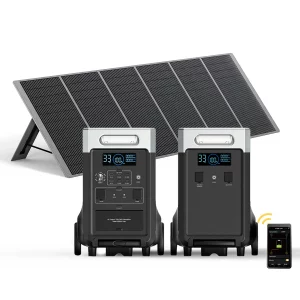
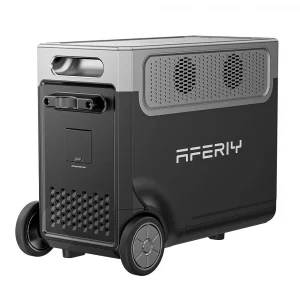
AFERIY P040 Portable Power Station – 400W | 256Wh
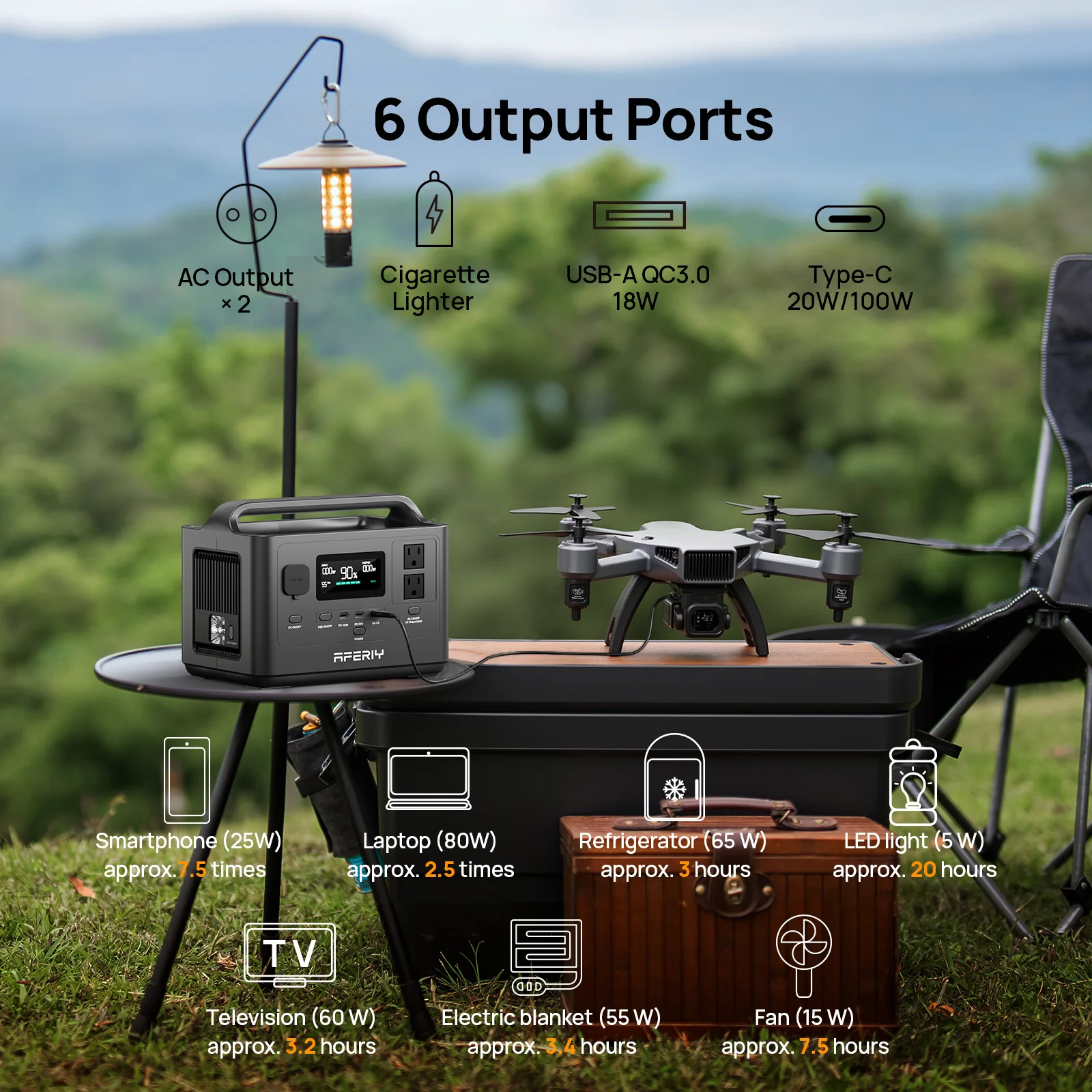
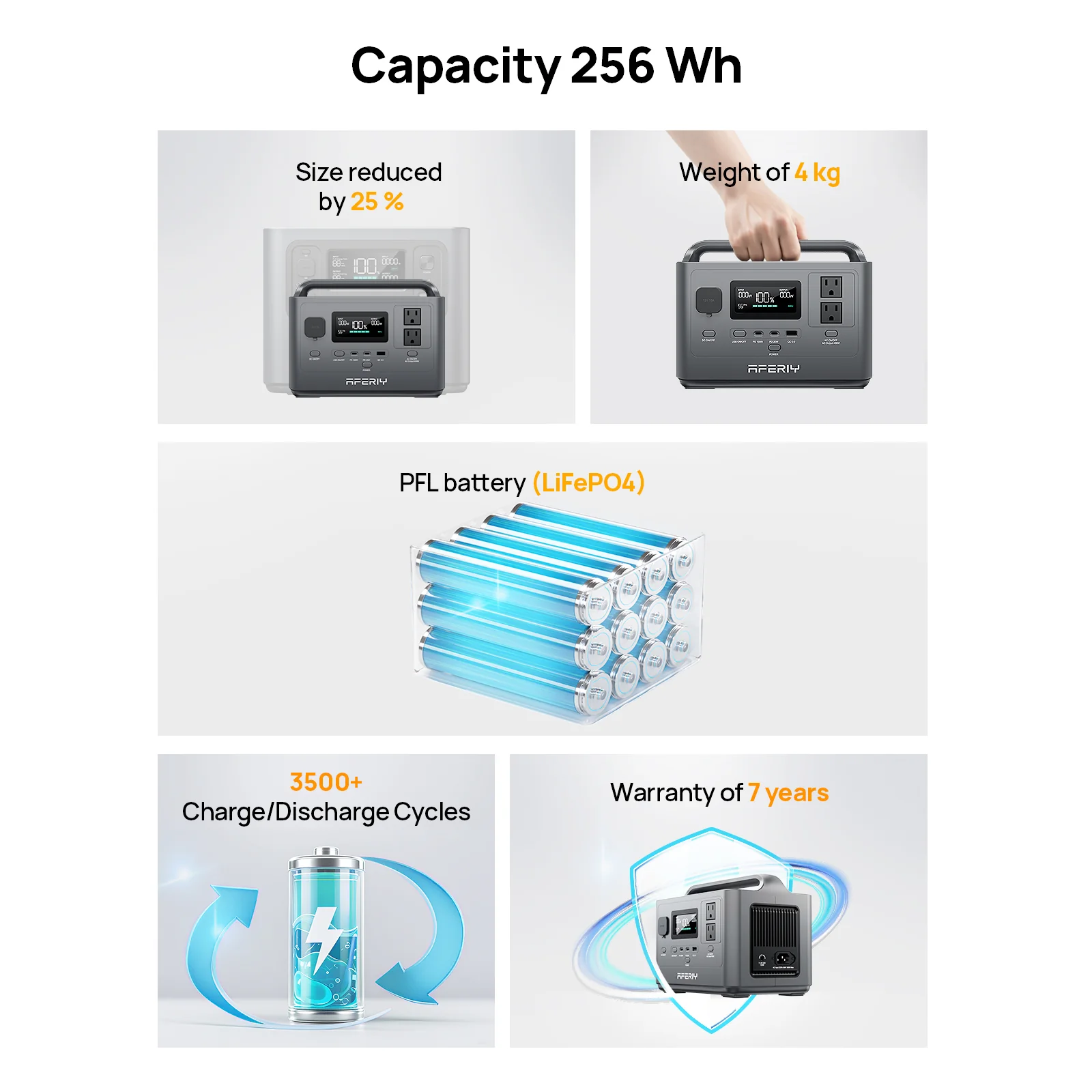
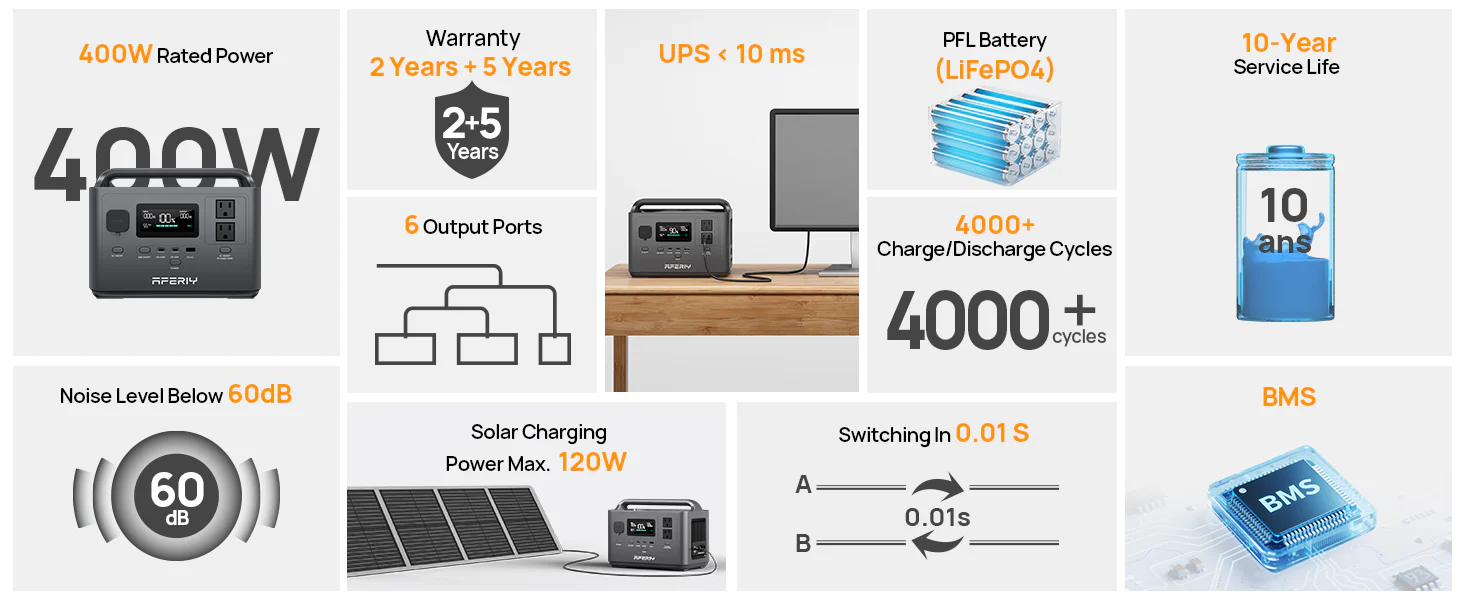
Compact, durable, and reliable — the AFERIY P040 delivers 400W pure sine wave AC output with a 256Wh LiFePO₄ battery. Featuring 5 output ports, 4 charging methods, and a <10ms UPS backup function, it’s perfect for home, office, or outdoor use.
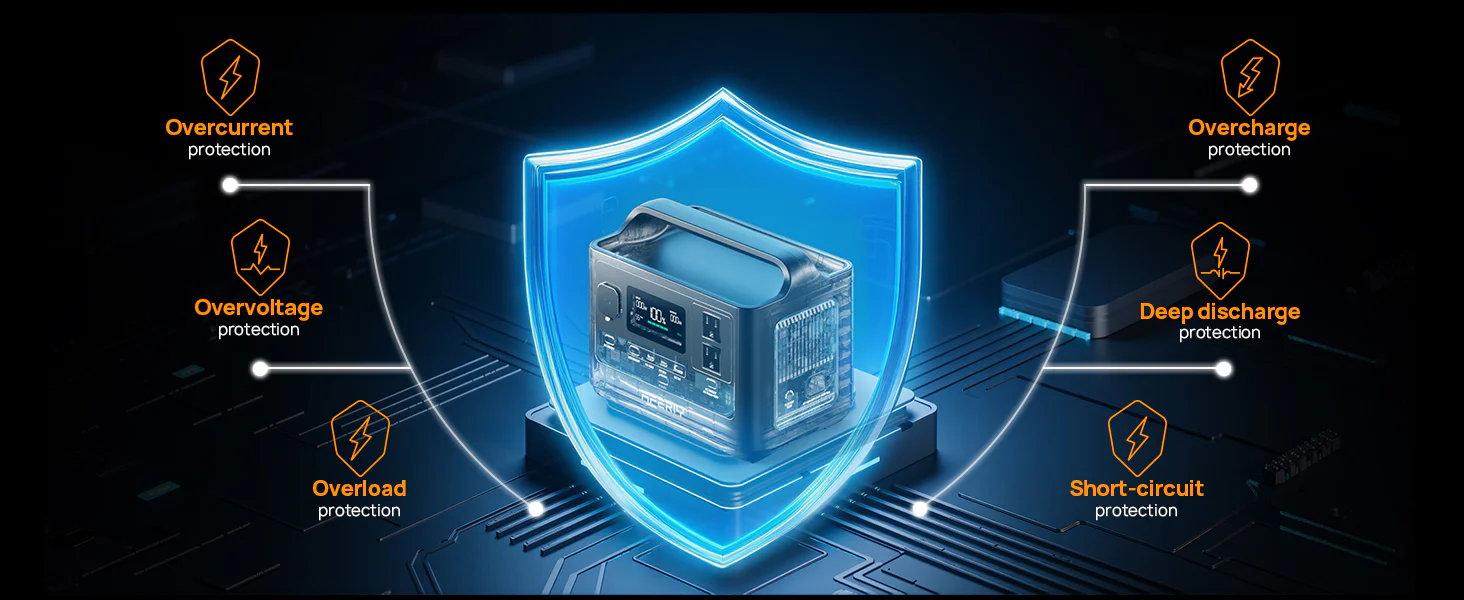
Smart BMS with 6-in-1 Protection
Advanced Battery Management System (BMS) ensures safety with 6 protection layers: overvoltage, over-discharge, overcurrent, overheating, low temperature, and short circuit. Guarantees reliable, long-lasting performance.
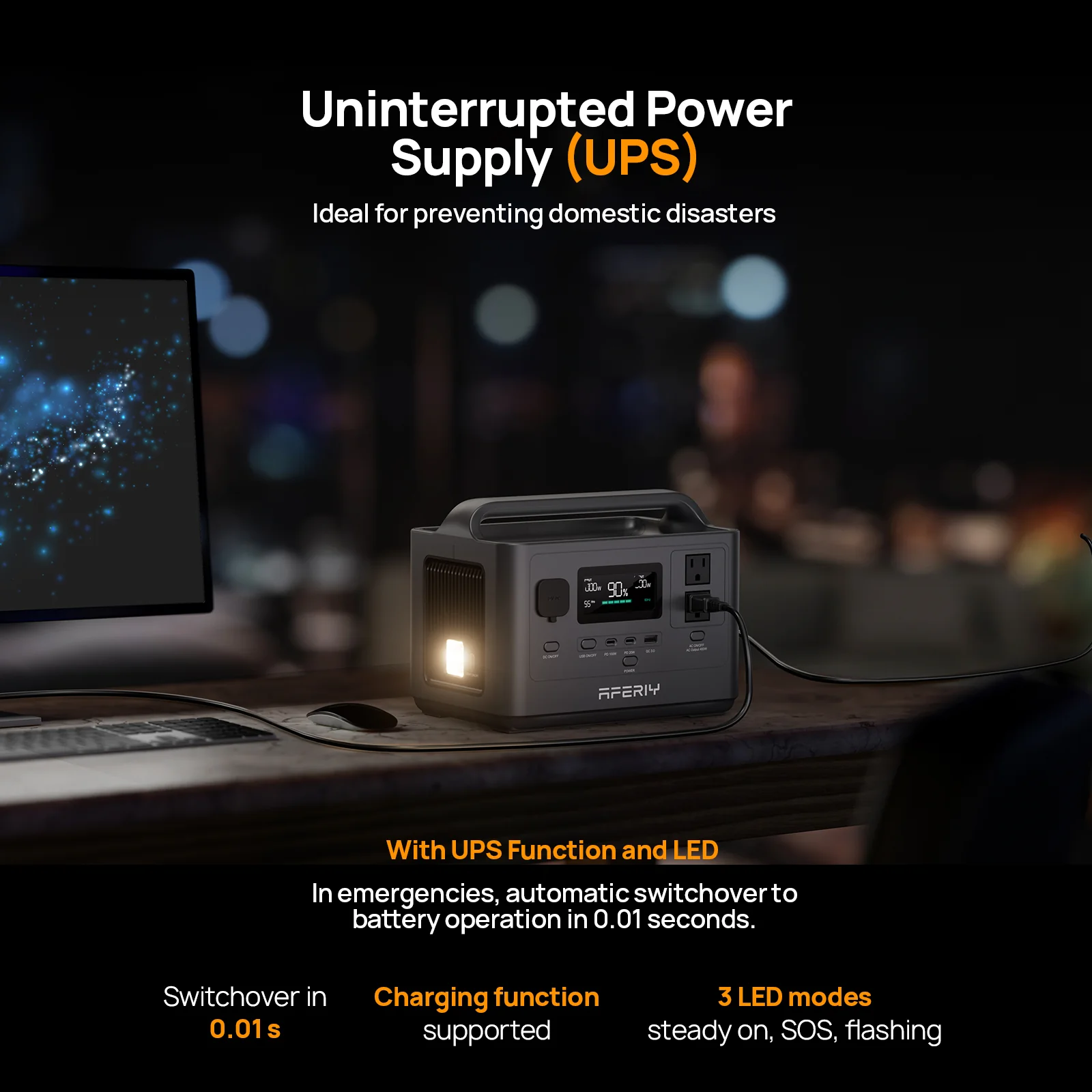
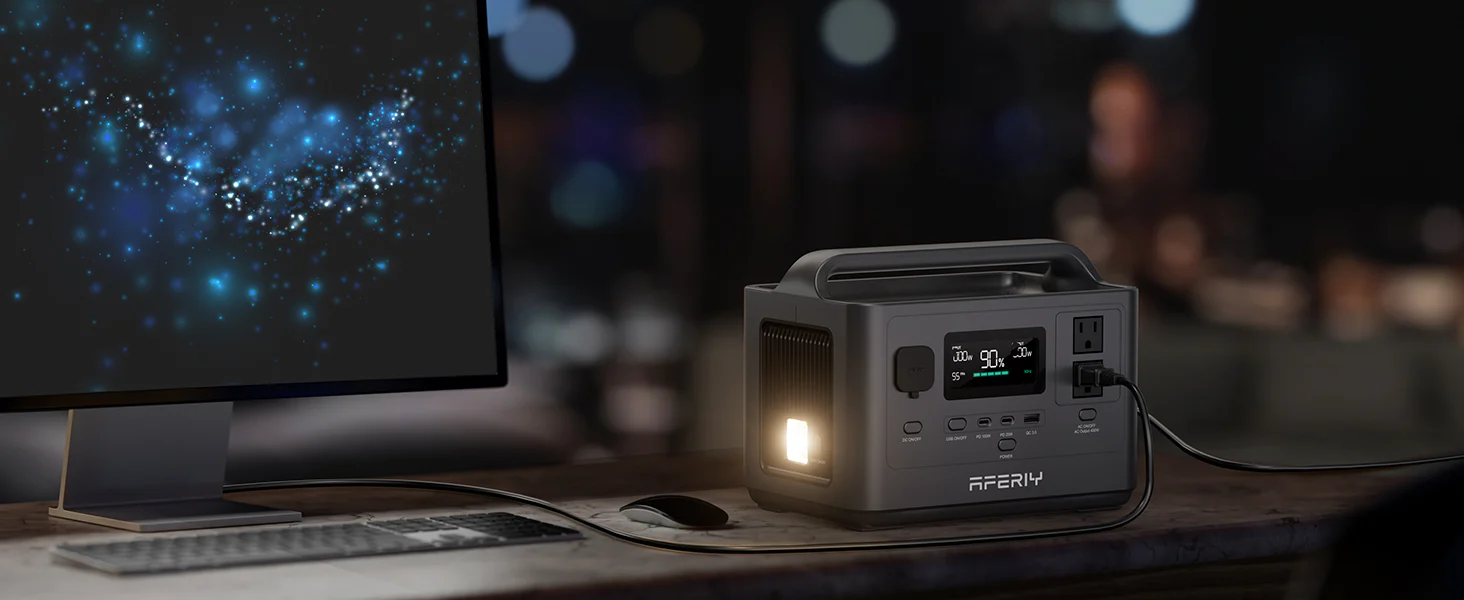
Fast <10ms UPS Function
Built-in UPS (<10ms response) provides continuous, stable power to protect sensitive devices — ideal for computers, CPAP machines, and home offices.
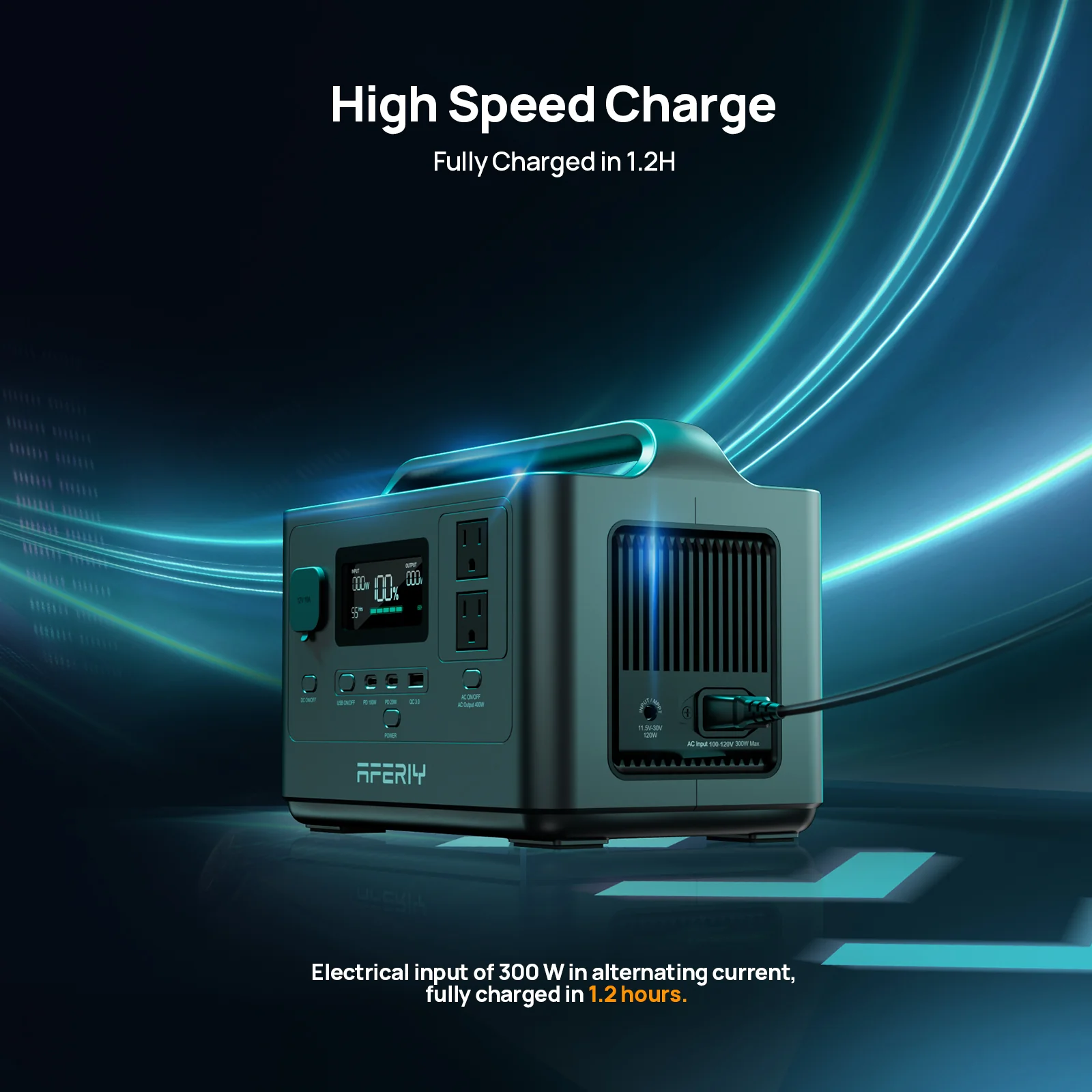
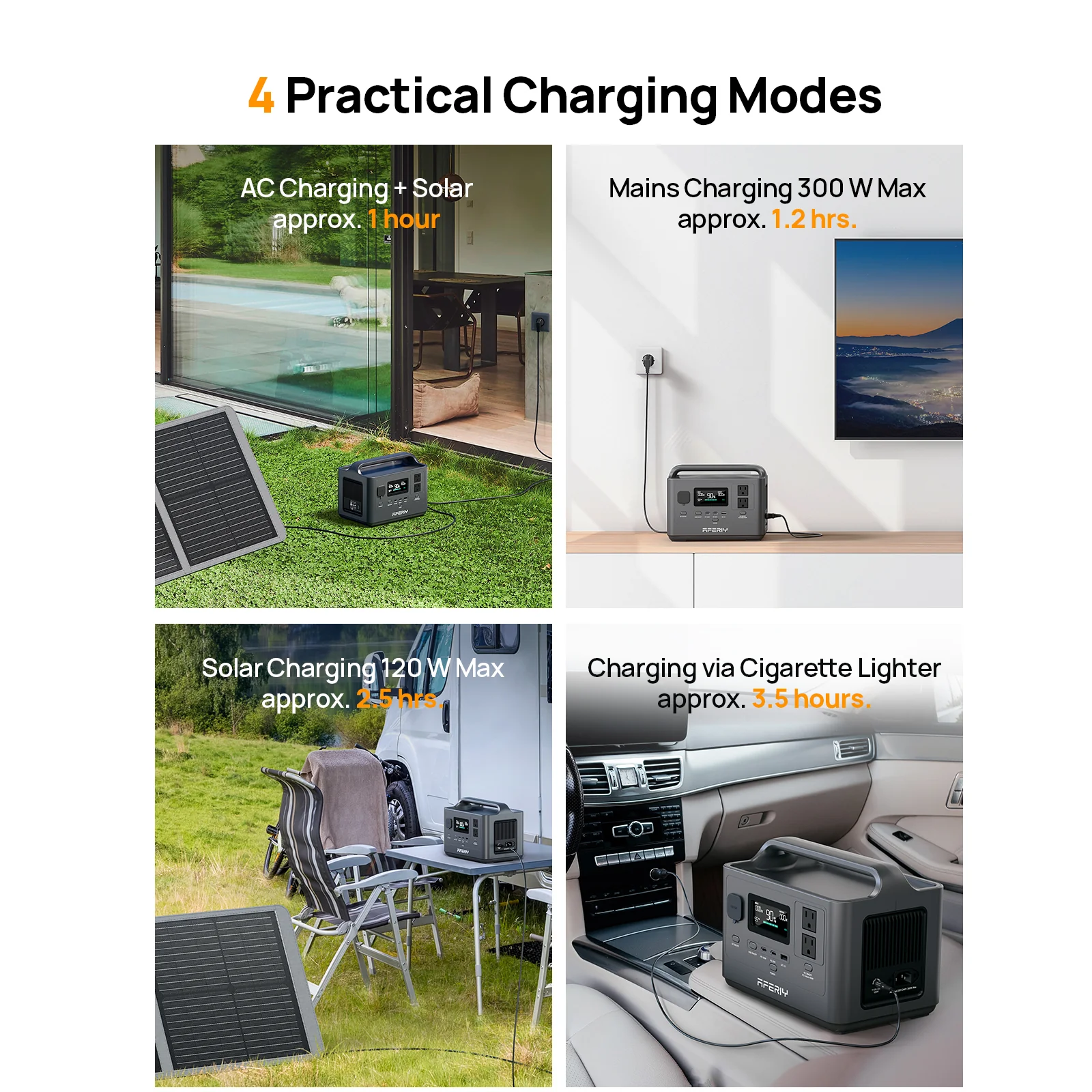
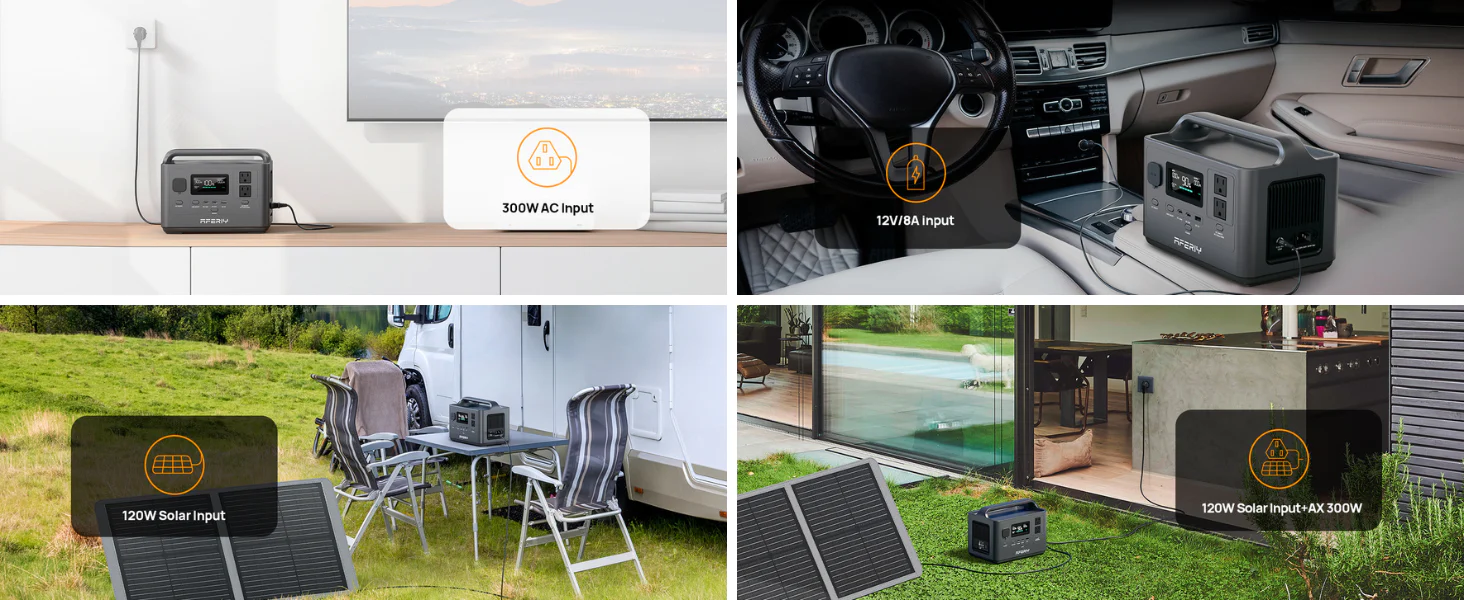
4 Charging Methods
Recharge via: ① Wall outlet (up to 300W, full charge in 1.2h), ② Solar panel (up to 120W), ③ Car outlet (12V/8A), ④ AC + Solar dual input for faster charging.
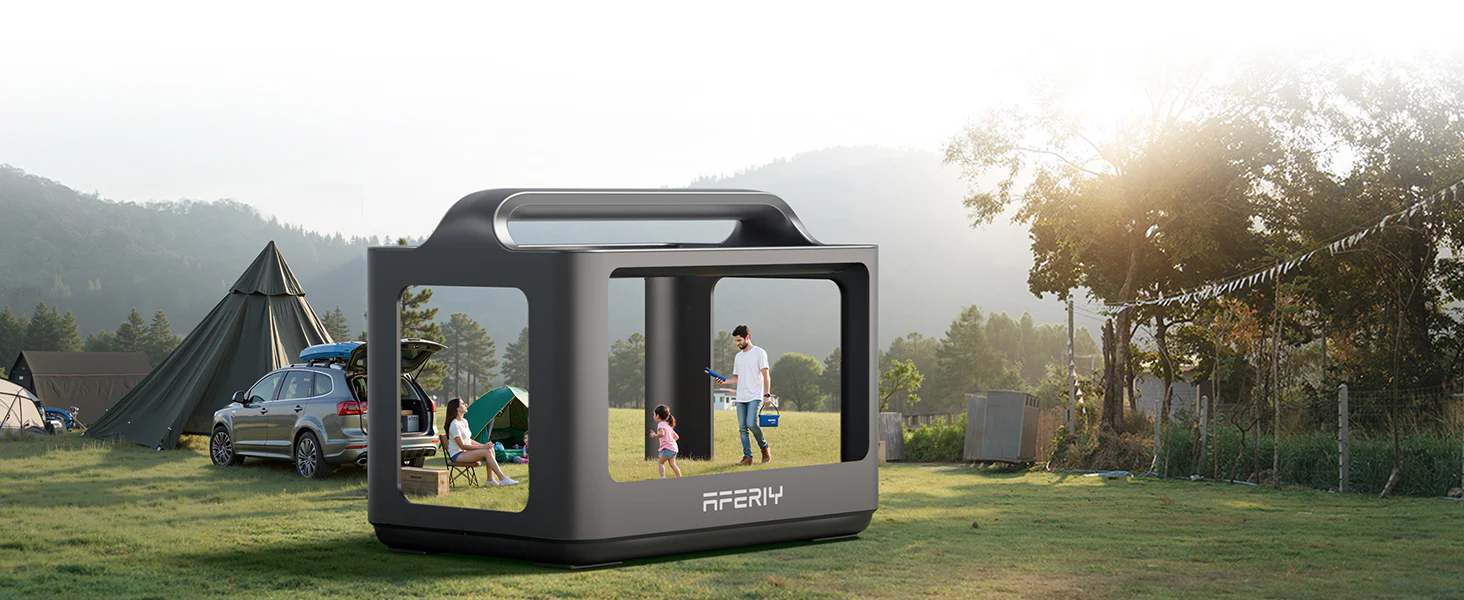
Perfect for Outdoors & Off-Grid Living
With 5 output ports and solar panel compatibility, the P040 is ideal for camping, travel, remote work, and emergency backup — your reliable outdoor companion.
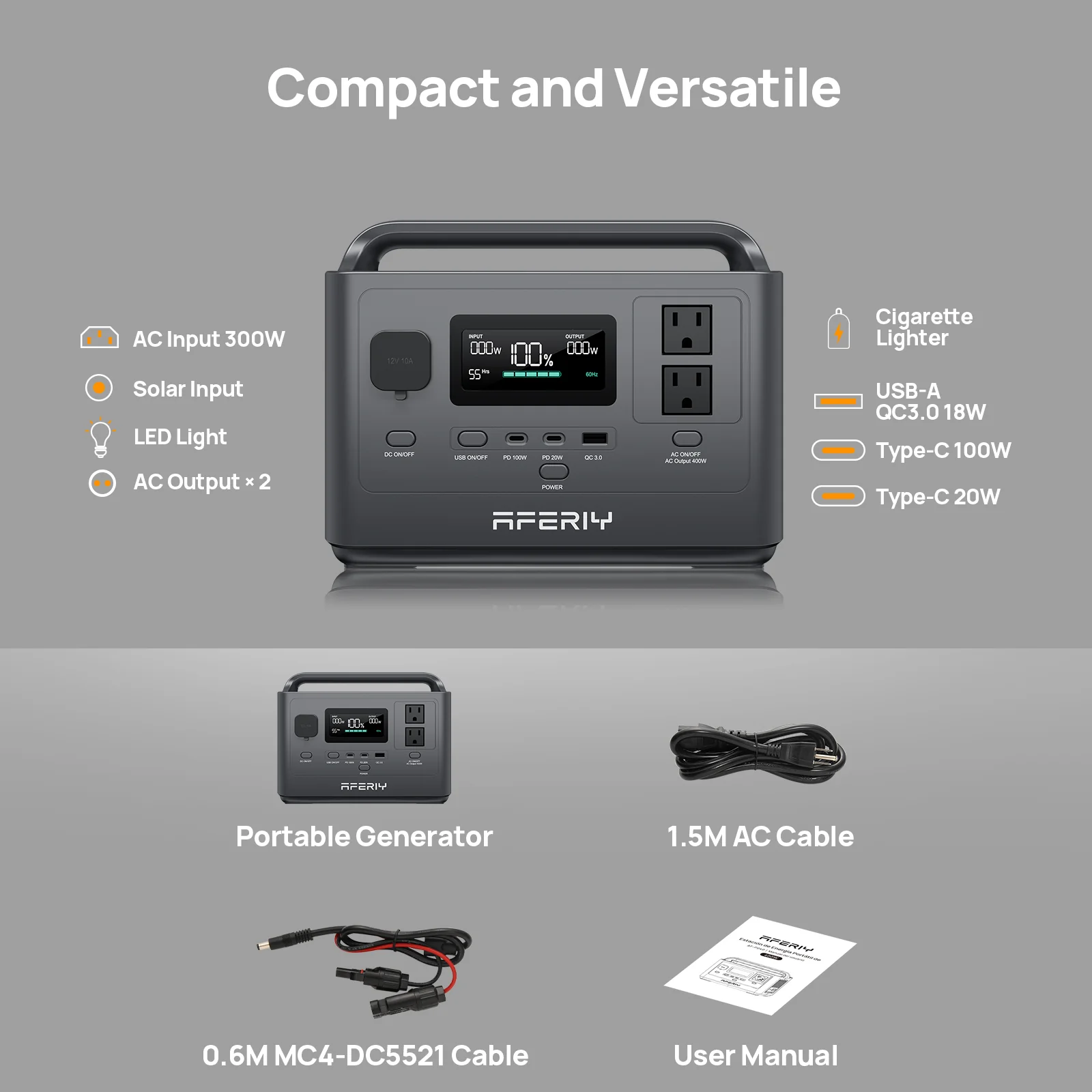
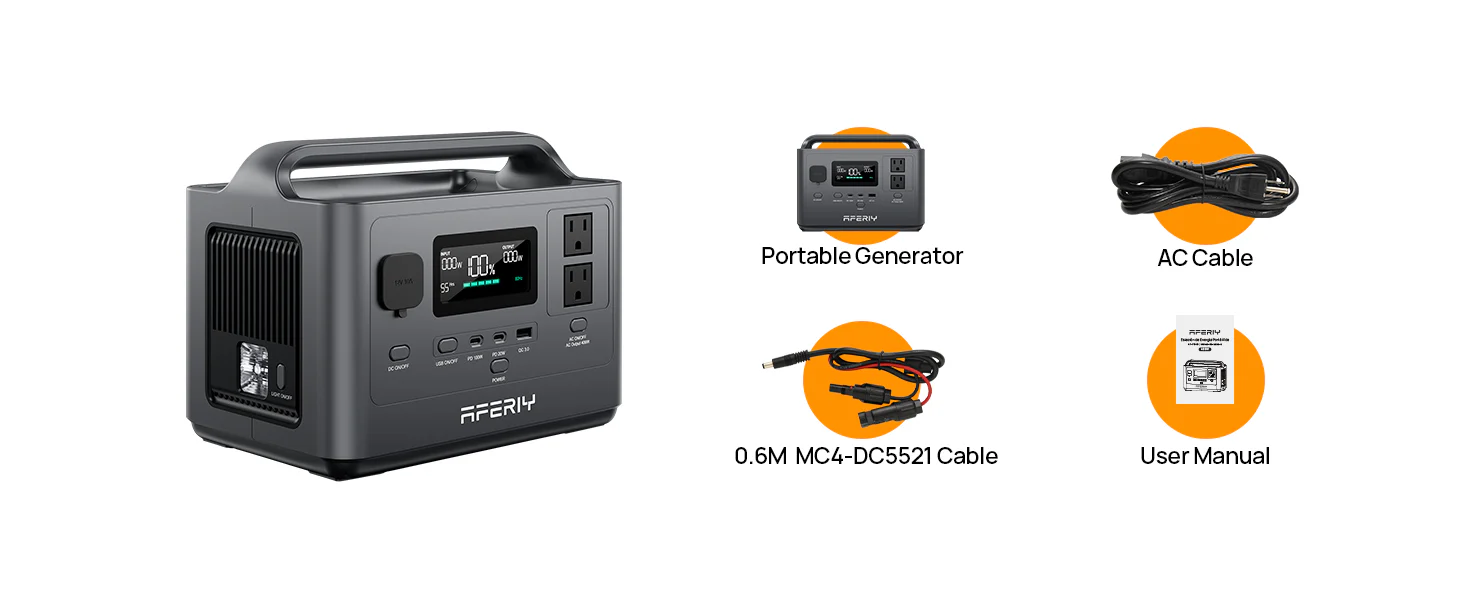
Package Contents
1 × AFERIY P040 Portable Power Station (400W, 256Wh), 1 × AC Charging Cable, 1 × MC4 to DC5521 Solar Cable, 1 × User Manual — ready to use out of the box.
Specifications
| Product Size | 259*174*201mm |
| Product Weight | 4 kg |
| Capacity | 256Wh |
| AC Charging | 50/60Hz, 300W max |
| MPPT Input | 11.5-30V, 8A, 120W max |
| AC Output | 100V-12oV, 50Hz/60Hz | 220-240, 50Hz/60Hz | pure sine wave |
| USB-AM Output | (QC3.0 18W) max |
| Type-C1 Output | PD 20W max Typ-C2 output: PD 100W max |
| LED Light | 1W |
| Cigar Lighter Output | 12V/10A |
| Power Off Current | <500uA |
| Operating Temperature | -10-40ºC |
| Charging Temperature | 0-40ºC |
| Environmental Humidity | ≤90%RH |

User Manual
Bulk Order/Custom Quote
Need to order in bulk or with custom colors and/or your logo imprinted on the product? Please use the form below:
Portable Power Stations – Knowledge Base
What Is a Portable Power Station?
A portable power station is a compact, rechargeable battery system that provides AC and DC electricity for powering devices and appliances. Unlike traditional generators, portable power stations operate silently, produce no emissions, and can be safely used indoors. They are commonly used for emergency backup power, camping, RVs, job sites, and mobile workstations.
How Portable Power Stations Work
A portable power station stores electrical energy in an internal battery and delivers power through built-in outlets and ports. It consists of three main components:
-
Battery Storage – Holds energy for later use.
-
Inverter – Converts DC battery power into AC power for standard appliances.
-
Charge Controller – Manages incoming power from wall outlets, vehicles, or solar panels.
The unit can be recharged from a wall outlet, car charger, or solar panel and then used to power devices such as phones, laptops, lights, refrigerators, tools, medical equipment, and electronics.
Key Benefits of Portable Power Stations
Silent and Clean Operation
Portable power stations run quietly and produce zero emissions, making them ideal for indoor use, RVs, and quiet environments.
Low Maintenance
With no moving parts or fuel requirements, portable power stations require minimal maintenance.
Portable and Compact Design
Designed for easy transport, most models feature built-in handles or wheels for mobility.
Reliable Backup Power
Provide dependable emergency power during blackouts, storms, and grid failures.
Versatile Charging Options
Recharge from wall outlets, vehicles, or solar panels for maximum flexibility.
Common Uses for Portable Power Stations
Emergency Home Backup
Power essential devices such as lights, refrigerators, routers, sump pumps, and medical equipment during outages.
Camping and Outdoor Recreation
Run fans, lights, cooking devices, and charge electronics while off-grid.
RVs and Van Life
Supply power for onboard appliances, lighting, and electronics without engine noise or fumes.
Job Sites and Field Work
Operate tools and equipment in remote or temporary work locations.
Events and Mobile Setups
Power audio systems, displays, lighting, and temporary installations.
Types of Portable Power Stations
Compact Portable Power Stations
Small units for charging phones, laptops, cameras, and small devices.
Mid-Capacity Power Stations
Designed for powering appliances such as mini-fridges, TVs, and power tools.
High-Capacity Power Stations
Large systems capable of running refrigerators, air conditioners, and heavy-duty equipment.
Expandable Power Stations
Units that allow additional battery modules to increase capacity and runtime.
Portable Power Station Battery Types
Lithium-Ion Batteries
Lightweight and energy-dense, offering excellent portability.
Lithium Iron Phosphate (LiFePO₄) Batteries
Longer lifespan, improved safety, and higher cycle life.
AGM or Lead-Acid Batteries
Lower upfront cost but heavier and shorter lifespan.
Important Features to Consider
Power Output (Watts)
Determines which devices and appliances can be powered.
Battery Capacity (Watt-Hours)
Indicates how long devices can run.
Inverter Type
Pure sine wave inverters are best for sensitive electronics.
Charging Inputs
Support for wall charging, car charging, and solar charging adds flexibility.
Ports and Outlets
Look for AC outlets, USB-A, USB-C, DC outputs, and RV ports.
Recharge Time
Depends on input wattage and battery size.
Weight and Portability
Important for travel, camping, and mobile use.
How to Choose the Right Portable Power Station
Estimate Your Power Needs
List devices and their wattage requirements.
Determine Runtime Needs
Decide how long you need backup or off-grid power.
Check Expandability
Choose models that allow additional battery modules.
Evaluate Portability
Select a size and weight that fits your use case.
Review Safety Certifications
Look for UL, CE, or FCC certifications.
Portable Power Station vs. Traditional Generator
Noise Level
Portable power stations are silent; traditional generators are loud.
Fuel Source
Power stations use stored electricity; generators use gasoline or propane.
Maintenance
Power stations require little maintenance; generators require regular servicing.
Indoor Use
Portable power stations are safe indoors; generators are not.
Environmental Impact
Power stations produce no emissions; generators do.
Frequently Asked Questions
Can a portable power station run a refrigerator?
Yes. Many models can power refrigerators, depending on wattage and capacity.
How long does a portable power station last?
Battery lifespan depends on battery type. LiFePO₄ batteries often last 3,000–5,000 cycles.
Can I charge a portable power station with solar panels?
Yes. Most models support solar charging with compatible panels.
How long does it take to recharge a power station?
Recharge time depends on input power and battery capacity.
Why Choose a Portable Power Station?
Portable power stations provide clean, quiet, and reliable power for emergencies, outdoor activities, and mobile work. With versatile charging options, low maintenance, and safe indoor operation, they are a modern alternative to traditional generators.

Reviews
There are no reviews yet.