
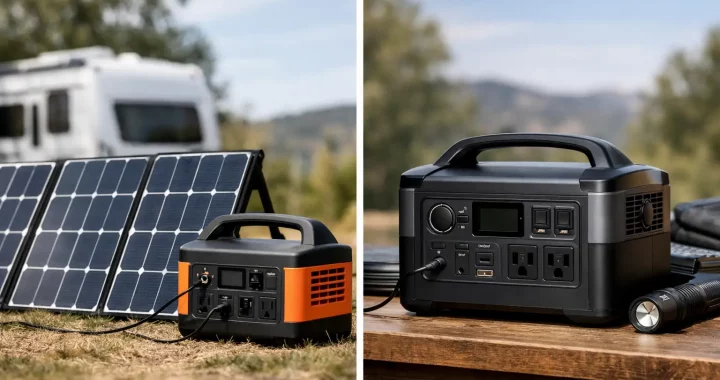
When the lights go out or you need power away from an outlet, the solar generator vs power station question gets practical fast. One term is used for a complete charging setup, while the other usually refers to the battery-and-inverter unit itself. Knowing the difference helps you buy the right equipment the first time, especially if you need dependable power for outages, RV travel, job sites, or off-grid use.
Solar generator vs power station: the short answer
A portable power station is the core device. It stores electricity in a battery, converts it through an inverter, and gives you outlets for AC devices, USB electronics, and often DC loads. You charge it from the wall, a car outlet, or compatible solar panels.
A solar generator is usually a portable power station paired with solar panels. In many cases, retailers and brands use the term solar generator to describe the full package because the system can generate usable power from sunlight, even though the battery unit itself is not creating energy on its own. It is storing and converting energy collected by the panels.
That means the two terms overlap, but they are not always identical. If you buy a power station alone, you have portable stored power. If you buy that same unit with solar panels, you now have a solar generator setup.
Why the wording causes confusion
The market has blurred these labels for years. Some shoppers use both terms interchangeably, and many product pages do the same because they are talking about the same base hardware. The confusion usually comes down to whether solar panels are included, optional, or already owned.
For a buyer, the better question is not which term is more correct. The better question is what problem you need to solve. If you need emergency backup that can recharge during a multi-day outage, the solar side matters. If you mostly want quiet indoor backup or a portable battery for weekend use, the power station itself may be the main decision.
What a portable power station actually does
A power station combines three main components into one portable unit: a battery, an inverter, and a charge controller. The battery stores energy. The inverter turns that stored DC power into usable AC electricity for household-style plugs. The charge controller manages incoming power from wall charging, vehicle charging, or solar input.
This is why power stations have become a strong alternative to gas generators for many use cases. They are quieter, require less routine maintenance, and can run safely indoors when used as intended. For homeowners, that means backup power without fuel storage. For campers and RV users, it means charging and running devices without engine noise. For contractors and mobile workers, it means clean power for electronics and light tools.
Capacity and output matter more than the label on the box. A small unit may handle phones, laptops, lights, and routers. A larger unit can support refrigerators, microwaves, CPAP machines, sump pumps, or even a window air conditioner, depending on running watts and surge needs.
What makes a solar generator different
A solar generator adds renewable charging capability to the power station. The main benefit is resilience. Once the internal battery is depleted, you are not limited to wall power or your vehicle. With enough sunlight and properly matched panels, you can recharge and keep essential devices running.
That matters most in longer outages, remote travel, and off-grid setups. A standard power station can still be charged by solar if it has solar input and you add panels later. So in practical buying terms, many so-called power stations are already solar-ready. The difference is whether the solar charging pieces are part of your system now.
This is where bundle decisions matter. Buying a solar generator package can simplify compatibility. Panels, connectors, and charging specs are chosen to work together. Buying separately can offer more flexibility, but it requires more attention to input limits, panel wattage, voltage range, and total charging speed.
Solar generator vs power station for home backup
For short outages, a power station alone may be enough. If your goal is to keep the internet up, charge phones, run lights, and support a medical device overnight, wall-charging the unit ahead of time may cover you. This works well for people who want simple emergency readiness without adding panels immediately.
For extended outages, a solar generator setup is usually the stronger option. Storm-related grid failures can last longer than one battery cycle. Solar panels give you a path to recharge during the day and stretch your runtime well beyond what stored energy alone can provide.
The trade-off is speed and conditions. Solar charging depends on sunlight, panel size, orientation, and weather. Wall charging is faster and more predictable. So for serious home backup, many buyers want both: fast AC charging when the grid is available and solar charging when it is not.
Which one is better for camping, RVs, and travel
For travel, the answer depends on how long you stay off-grid and what you plan to power. If you are taking weekend trips and mainly charging personal electronics, cameras, fans, and small appliances, a portable power station may be all you need. You can recharge before leaving home or top off while driving.
If you are boondocking for several days or running more demanding gear, solar becomes far more useful. A solar generator setup can help maintain battery levels without depending on hookups or idling a vehicle. That is especially valuable for RV users trying to keep fridges, lights, communication devices, and work equipment available day after day.
Portability also changes the decision. Larger-capacity units provide more runtime, but they weigh more. Adding folding solar panels increases flexibility, though it also adds setup time and storage considerations. For travel buyers, the right setup is often the one you will actually use consistently, not just the one with the biggest numbers.
The specs that matter more than the name
If you are comparing products, focus on the hardware first.
Battery capacity, measured in watt-hours, tells you how much energy is stored. Inverter output, measured in watts, tells you how much power the unit can supply at one time. Surge rating matters for appliances with startup spikes. Battery chemistry matters too, with LiFePO4 standing out for long cycle life, stability, and readiness for repeated use.
Charging speed is another major separator. Some units recharge quickly from AC power, which is useful when storms are approaching. Others support high solar input for faster off-grid recovery. Expandability can also be a deciding factor. If your power needs may grow, a unit that supports expansion batteries can be a better long-term investment than replacing the whole system later.
Output variety matters in real use. AC outlets are obvious, but USB-C, USB-A, 12V car ports, and regulated DC outputs can make a big difference for mobile setups and emergency convenience.
When a gas generator still has an edge
Battery systems solve many backup power problems, but not every one. If you need to run very large loads for long periods, such as whole-home HVAC or multiple heavy-duty appliances at once, a gas generator may still provide more raw output for the price.
The trade-off is noise, fuel storage, fumes, and maintenance. Portable power stations and solar generator systems are usually the better fit when you need indoor-safe operation, low noise, easy startup, and cleaner power for electronics. For many households, that makes them the more practical first step in preparedness, even if a gas unit remains part of a broader backup plan.
How to choose the right setup
Start with your real-world loads, not the marketing label. Think about what must stay on during an outage or while traveling. A phone and laptop setup is one category. A refrigerator, CPAP, router, and lights is another. Add up the running wattage, estimate how many hours you need, and then compare that to battery capacity and inverter output.
Next, decide how you will recharge. If your use is occasional and short, wall charging may be enough. If you want independence during multi-day outages or extended off-grid trips, build around solar input from the start.
Finally, think about future needs. Many shoppers buy too small and end up replacing their system sooner than expected. A dependable unit with LiFePO4 batteries, strong output, fast charging, and room to expand usually gives better value over time. That is especially true if you want one platform that can cover emergencies at home and portable use on the road.
For most buyers, the choice is not really solar generator or power station. It is whether you want the core battery system alone or a complete solar-ready setup that keeps working when the outage lasts longer than planned. If preparedness is the goal, buying for day two matters just as much as buying for day one.
