
When the grid goes down, the difference between inconvenience and real disruption often comes down to one thing – available power. Solar generators give homeowners, travelers, and off-grid users a practical way to keep essential devices running without fuel storage, engine noise, or the startup hassle of a gas unit.
That appeal is easy to understand, but the term gets used loosely. Some buyers expect a solar generator to work like a whole-home standby system. Others assume every model can run a refrigerator, a microwave, and an AC unit at the same time. In reality, the right choice depends on battery capacity, inverter output, solar input, recharge speed, and what you actually need to power when conditions are less than ideal.
What solar generators actually are
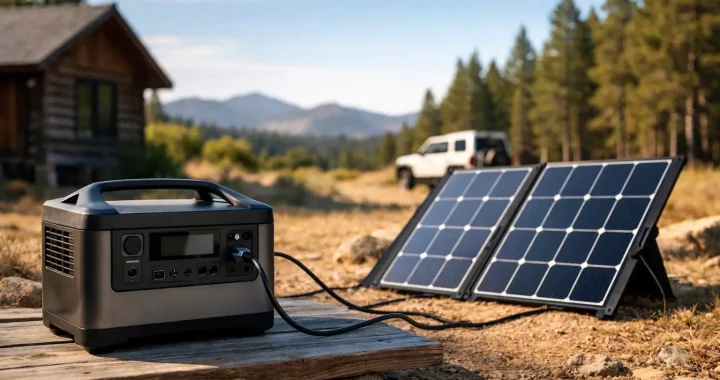
A solar generator is typically a portable power station paired with compatible solar panels. The power station stores electricity in a battery, converts it through an inverter, and delivers usable power through AC outlets, USB ports, and DC outputs. The solar panels recharge the battery using sunlight.
Unlike traditional generators, solar generators do not burn gasoline, propane, or diesel. That means no exhaust, much less noise, and far less ongoing maintenance. For many households and mobile users, that is the main advantage. You can place a unit indoors, keep it charged, and use it the moment an outage starts.
The trade-off is just as important. A gas generator can keep running as long as you have fuel. A solar generator is limited by its battery size, its output rating, and how much sun you can collect for recharging. That does not make it a weaker option. It makes it a different tool, and often a better one for short outages, overnight backup, travel, and quiet off-grid power.
Why solar generators are gaining ground
Preparedness has changed. People are no longer shopping only for major disasters. They are planning for rolling outages, storm-related disruptions, unreliable local grids, remote work needs, and the simple fact that phones, internet gear, medical devices, and refrigeration matter every day.
Solar generators fit that shift because they are easier to live with. You can store one in a closet, garage, RV, or truck. You can charge it from a wall outlet before a storm, top it off from a car while traveling, or use solar panels when utility power is unavailable. For many users, that flexibility matters more than raw generator power.
They also fit situations where noise and fumes are a problem. Campgrounds, tailgates, indoor backup use, and job sites with sound restrictions are all better matches for battery-based systems. A quiet power source that can run lights, routers, laptops, tools, and small appliances has real value even if it is not designed to power an entire house.
How to choose the right solar generator
The biggest mistake buyers make is shopping by product name alone instead of matching specs to use. A small unit may be perfect for charging phones, running lights, and keeping a modem online. That same unit may be completely wrong for a freezer, coffee maker, or sump pump.
Start with output, measured in watts. This tells you how much power the inverter can supply at once. If you want to run a refrigerator, microwave, induction cooker, power tools, or a window air conditioner, inverter rating matters immediately. You also need to watch surge capacity, since many appliances draw extra power when they start.
Next comes battery capacity, usually shown in watt-hours. This tells you how long a solar generator can run your devices before it needs recharging. A higher-capacity unit gives you more runtime, but it also tends to weigh more and cost more. For emergency planning, runtime is often the deciding factor. Keeping a fridge cold for several hours is very different from powering one through a full day and night.
Battery chemistry matters too. Many buyers now prefer LiFePO4 because it offers long cycle life, good thermal stability, and strong value for frequent use. If you expect to use your system for regular travel, work, or routine backup, that longer lifespan becomes more than a spec sheet detail.
Recharging speed is another factor that gets overlooked. A large battery is useful, but only if you can refill it fast enough. Wall charging speed helps before and between outages. Solar input capacity matters if you plan to stay off-grid or use panels as your main recharge source. A system with limited solar input may take much longer to recover than expected, especially in cloudy conditions.
Solar generators for home backup
For home use, most people do not need to power everything. They need to protect the essentials. That usually means refrigeration, communication, lighting, internet equipment, fans, CPAP machines, laptops, phones, and sometimes medical devices or a sump pump.
This is where solar generators make the most sense. They provide immediate backup without extension cords running to a loud engine outside. They can sit ready in a living space, operate quietly through the night, and help maintain a basic level of comfort and safety during an outage.
Still, expectations should stay realistic. If your goal is to run central air, electric water heating, and multiple kitchen appliances at once, you are looking at a much larger energy strategy. But if your goal is to keep critical loads online and avoid food spoilage or communication loss, a properly sized unit can make a major difference.
Expandable systems deserve attention here. Some power stations allow you to add external battery modules, which gives you more runtime without changing the core unit. That is useful for households that want to start with backup for essentials and scale up over time.
Solar generators for RVs, camping, and mobile use
On the road, convenience matters as much as capacity. Solar generators are popular for RV travelers, van users, campers, and tailgaters because they reduce dependence on hookups and avoid the noise of conventional generators.
For lighter mobile setups, the focus is often on charging phones, cameras, laptops, lights, fans, and small kitchen gear. For heavier RV use, buyers may need to support a 12V fridge, TV, router, coffee maker, or even a compact air conditioner under the right conditions. That is where inverter size, battery reserve, and solar panel compatibility start to separate entry-level systems from serious portable power.
Portability is the balancing act. A larger unit gives you more capability, but it can be harder to lift, pack, and move around camp. Wheels, handles, and modular battery design can matter almost as much as watt-hours if you plan to travel often.
What solar panels really add
A solar generator without panels is still useful because it can be charged from the wall and used as backup power immediately. Adding solar panels changes the system from stored power to renewable power recovery.
That matters most during extended outages and off-grid use. With enough panel input and decent sun, you can replace a meaningful portion of the energy you use each day. But solar charging is not constant, and weather always plays a role. Panel placement, season, cloud cover, and available daylight all affect real-world performance.
This is why panel sizing should match your use case. If you drain a large battery every night and only have a few hours of weak winter sun, recovery may be slow. If your daily loads are moderate and you have strong sun exposure, solar can stretch runtime dramatically.
Features that are worth paying for
Not every upgrade is necessary, but a few features consistently improve real-world reliability. Pure sine wave output is important for sensitive electronics and many appliances. Multiple output options make it easier to run mixed devices without adapters. Fast AC charging helps when storms are approaching and you need to top off quickly.
Clear display data is also valuable. You want to see input, output, battery percentage, and estimated runtime without guesswork. For larger systems, app control can be convenient, but dependable electrical performance should come first.
If backup power is a serious priority, build quality matters more than flashy extras. Buyers should look for units designed for repeated use, stable inverter performance, and battery systems intended to hold up over time. That is where a curated retailer like Thundervolt Power can help narrow the field to proven options instead of forcing buyers to sort through inflated claims.
The best solar generator is not the one with the longest feature list. It is the one that matches your actual loads, recharges fast enough for your routine, and gives you dependable power when conditions are not stable. Buy for the outage, trip, or job you expect to face most often, and you will end up with a system you actually trust when it counts.
