
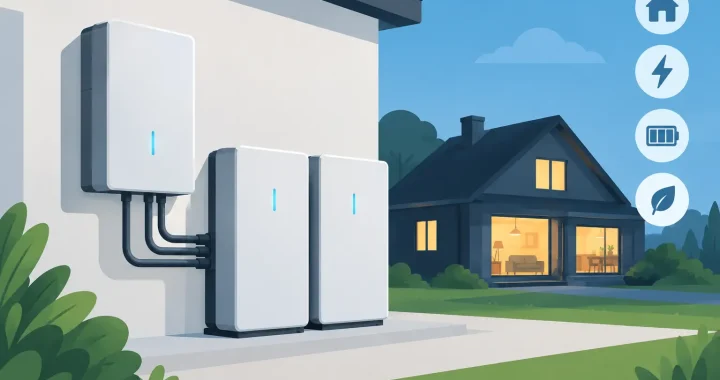
A power station that runs a phone for days can still fall short when the refrigerator needs to stay cold through a long outage. That is the practical question behind “are expansion batteries worth it?” For many households, RV owners, and off-grid users, extra battery capacity is the difference between having emergency convenience and having meaningful power resilience.
An expansion battery is not automatically the right purchase. It adds cost, weight, storage needs, and recharge time. But when matched to a compatible portable power station and a real power plan, it can be one of the most efficient ways to prepare for a multi-day outage, longer trip, or higher-demand setup without buying an entirely separate system.
Are Expansion Batteries Worth It? Start With Runtime
Expansion batteries increase stored energy, usually measured in watt-hours (Wh). They do not increase the output rating of your power station’s inverter. That distinction matters.
If your power station can supply 2,000 watts of continuous AC power, adding an expansion battery will not turn it into a 3,000-watt inverter. A microwave, space heater, well pump, or window air conditioner still has to stay within the station’s output limit and surge capability. What the extra battery does is let compatible loads run longer.
For example, a 2,000Wh power station may provide roughly 1,700Wh to 1,800Wh of usable AC energy after normal conversion losses. Add a 2,000Wh expansion battery, and the usable energy may rise to roughly 3,400Wh to 3,600Wh. That additional reserve can make a major difference for a refrigerator, CPAP machine, Wi-Fi equipment, lights, charging devices, and other essential loads.
Runtime is best estimated with a simple calculation:
Usable battery watt-hours ÷ device watts = estimated runtime in hours.
A 60-watt refrigerator may average far less than 60 watts because its compressor cycles on and off. A 1,500-watt space heater, however, can drain even a large battery quickly if it runs continuously. Expansion batteries are most valuable when you are powering efficient essentials, not trying to recreate unlimited grid power.
When Extra Capacity Makes Sense
The strongest case for expansion capacity is an outage that could last longer than one night. A base power station may handle immediate needs well: phones, lights, a modem, medical devices, and a few hours of refrigerator support. Additional battery capacity gives you more room to manage the next day without making difficult choices too soon.
For homeowners, expansion batteries are especially useful in storm-prone areas where restoration times are uncertain. They can support a quiet indoor backup plan without fuel storage, exhaust, or the repeated trips outside required by a gas generator. A portable power station with LiFePO4 batteries also offers long cycle life, making the system useful between emergencies for projects, travel, and outdoor events.
RV travelers and campers often find expansion batteries worthwhile because their energy demand is predictable. Running lights, water pumps, fans, laptops, TVs, and a 12V refrigerator over several days requires more than a small battery bank. If you regularly camp away from hookups, added capacity reduces the need to conserve every watt-hour.
For contractors and mobile workers, an expansion battery can keep charging stations, laptops, communications gear, and selected corded tools available throughout a longer workday. It is not a substitute for a high-output generator when heavy equipment must run all day, but it is a clean, quiet option for many lighter-duty jobs.
Expansion batteries are often a smart choice when at least one of these situations applies:
- You need backup power for more than overnight outages.
- Your current station has enough inverter output but not enough runtime.
- You use solar panels and want more stored energy for evening or cloudy-day use.
- You travel or live off-grid often enough to use the added capacity regularly.
- You support essential equipment, such as a CPAP machine, communication devices, or refrigeration for medication.
When an Expansion Battery May Not Be Worth It
If your biggest problem is not runtime but output power, an expansion battery may disappoint. A station that cannot start your appliance, handle its running wattage, or meet its surge requirement needs a larger inverter, not merely a larger battery.
Consider a homeowner who wants to run a 13,500 BTU RV air conditioner or a window AC unit. The battery may have plenty of stored energy, but the power station must first be capable of starting and operating that load. Soft-start devices can help with some air conditioners, but compatibility and actual wattage still need to be confirmed before purchasing.
Extra capacity may also be unnecessary for short, occasional use. If your goal is to charge phones, run a few LED lights, and keep a laptop operating for one evening, a well-sized base power station may already cover the need. Buying more capacity than you can realistically use can tie up budget that might be better spent on solar panels, a higher-output station, or essential extension cords and adapters.
Storage is another factor. Expansion batteries are heavy, and they are typically designed to remain connected to a specific power station model. They are not as flexible as owning a second standalone unit that can be used in a different room, vehicle, or campsite. If portability between locations is your top priority, two smaller independent stations can sometimes make more sense than one large expandable system.
Check Compatibility Before You Buy
Expansion batteries are usually proprietary. They are built to communicate with specific stations through dedicated cables and battery-management systems. Do not assume that a battery from one brand, or even one product family, will work with another power station.
Before choosing an expansion setup, verify the exact compatible power station model, maximum expansion capacity, required cable, and whether the battery can be added later. Also check whether the system allows solar charging while expanded and whether it can charge from AC power and solar at the same time.
Battery chemistry deserves attention as well. LiFePO4 systems are widely favored for backup and portable power because they offer strong cycle life, good thermal stability, and dependable performance for repeated use. Capacity alone is not the full story. A system with reliable battery management, clear displays, pure sine wave AC output, and the charging options you need will be easier to depend on when the grid is down.
Solar Changes the Value Equation
An expansion battery becomes more compelling when paired with solar charging. Solar panels do not eliminate the need for adequate battery capacity. They work best when there is enough storage to collect energy during daylight and use it later.
For example, if your panels can produce meaningful energy for five or six hours, extra battery storage lets you capture more of that production instead of leaving potential charging capacity unused once the base station is full. You can then use that reserve after sunset for refrigeration, lights, fans, or communications.
Solar performance varies with panel size, sun angle, weather, shade, and seasonal conditions. Treat advertised panel wattage as a maximum under ideal testing conditions, not a guaranteed daily result. For emergency planning, build in a margin. An expanded battery system should be able to carry essential loads through poor solar days, not only perform well under clear summer skies.
Compare Cost Per Usable Watt-Hour
The practical financial question is not just the price of the expansion battery. Compare the cost per usable watt-hour against your alternatives.
A compatible expansion battery may be less expensive than purchasing a second full power station because it does not duplicate the inverter, display, ports, and charging hardware you already own. It can also create a cleaner setup with one central power source. On the other hand, a second station provides redundancy. If one unit needs service, the other may still power key devices.
Think about the loads you want to protect and assign them a priority. Refrigeration, medical equipment, communications, lighting, and device charging usually come before comfort loads. Once you know the daily watt-hours for those essentials, you can decide whether added battery capacity provides practical protection or simply more reserve than you need.
Build for the Outage You Expect
The best expandable power setup is sized for your likely conditions, not the most extreme scenario imaginable. A family preparing for overnight weather outages may need a different system than an RV traveler staying off-grid for a week or a homeowner supporting medical equipment during hurricane season.
Thundervolt Power helps customers compare portable power stations, solar charging options, and expansion capacity around the devices that matter most. Start with your required wattage, then calculate how long those loads need to run. Add solar if you need renewable recharging, and add expansion batteries when longer runtime is the real gap.
Preparedness is not about powering everything at once. It is about keeping the right things running long enough to stay safe, connected, and in control when power is not stable.
