
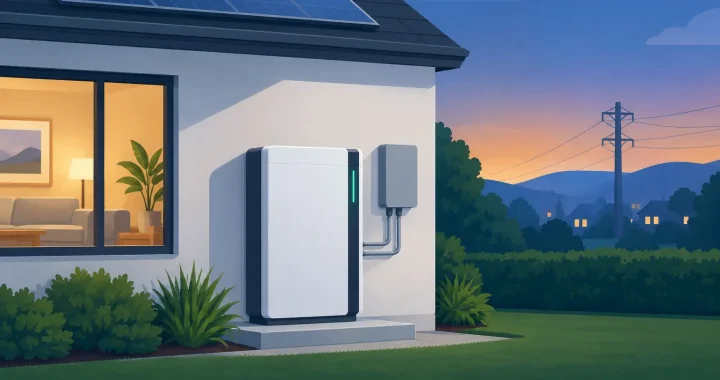
A home battery review should start with one practical question: what needs to stay powered when the grid goes down? For one household, that means phones, a router, lights, and a refrigerator. For another, it may include a CPAP machine, sump pump, home office, or window air conditioner. The right backup system is not simply the biggest battery you can buy. It is the battery that gives your critical devices dependable runtime without adding fuel, noise, or unnecessary complexity.
Portable lithium power stations and expansion batteries have become a practical alternative to gas generators for many backup needs. They run quietly, produce no exhaust at the point of use, and can be safely used indoors when operated according to manufacturer instructions. But capacity, output, recharge speed, and battery chemistry all matter. A system that looks impressive on a product page can still fall short if its specifications do not match the equipment you need to run.
Home Battery Review: Start With Your Load
The first number to understand is watts. Watts measure how much power an appliance needs while operating. A phone charger may use 10 to 30 watts, a Wi-Fi router may use 10 to 20 watts, and a refrigerator may average far less than its listed peak draw but require a larger surge when its compressor starts.
A battery power station’s AC output rating tells you how much it can supply at one time. If you need to run a 1,200-watt microwave, a 1,500-watt space heater, and a refrigerator at the same time, add those demands before choosing a unit. The inverter must support the combined running load and any startup surge from motor-driven appliances.
This is where many buyers make an expensive mistake. They shop by battery capacity alone, then discover their battery has enough stored energy but not enough inverter output to start the appliance. For home backup, look for a pure sine wave inverter. It provides clean AC power suitable for sensitive electronics and is a sensible choice for laptops, communication equipment, modern appliances, and medical devices.
Watts and watt-hours are not the same
Watt-hours, shown as Wh, measure stored energy. They help estimate runtime. A 1,000Wh battery can theoretically run a 100-watt load for about 10 hours. Actual runtime will be lower because inverters use power, loads fluctuate, and charging devices are not perfectly efficient.
A simple estimate is:
Battery watt-hours × 0.85 ÷ device watts = approximate runtime in hours
For example, a 2,000Wh power station running a steady 100-watt load may provide roughly 17 hours of use. That could cover a router, a few LED lights, phone charging, and a laptop. Add a refrigerator, however, and runtime changes based on the refrigerator’s compressor cycle, room temperature, door openings, and starting surge.
Do not size a battery around the label on one appliance alone. List the equipment you want to run together, estimate how long you need it, and give yourself margin for real-world conditions.
Match Capacity to the Outage You Expect
Short outages call for a different setup than an all-night or multi-day disruption. A compact power station can keep personal electronics, lighting, and communications ready for several hours. A mid-capacity unit in the 1,000Wh to 2,000Wh range may support a more complete essentials plan, especially when paired with solar charging. Larger systems with expansion batteries are better suited to households that need overnight refrigeration, work connectivity, medical support, or repeated use during extended weather events.
The goal is not always to power every circuit in the house. Central air conditioning, electric water heaters, electric ranges, clothes dryers, and whole-home heating systems can demand more power than a portable battery system is designed to deliver. A better preparedness plan often focuses on essential loads: food preservation, communications, lighting, device charging, and one or two comfort or health-related devices.
For a homeowner in hurricane country, capacity may be the priority because outages can last days. For an apartment resident or renter, portability and indoor-friendly operation may matter more. An RV traveler may value a system that can operate a fridge, charge tools, and recharge from solar between stops. There is no single best size for every use case.
LiFePO4 Batteries Make a Difference
Battery chemistry affects service life, safety characteristics, weight, and long-term value. Many current portable power systems use lithium iron phosphate, commonly called LiFePO4. This chemistry is widely valued for its long cycle life and thermal stability compared with older lithium-ion designs.
For buyers who expect to use backup power regularly, LiFePO4 is a strong buying cue. A battery used for weekend travel, emergency readiness, and occasional jobsite work can see many charge cycles over its life. More usable cycles can make a higher-quality unit a better value than a lower-priced battery that reaches the end of its useful life sooner.
That does not mean every LiFePO4 system is identical. Review the manufacturer’s stated cycle rating, warranty terms, operating temperature range, and battery management protections. Cold weather deserves special attention. Lithium batteries may discharge in cold conditions, but charging below the manufacturer’s approved temperature range can damage cells. If winter outages are common where you live, store and charge the unit in a protected space whenever possible.
Charging Speed Is Part of Backup Readiness
A battery that takes most of a day to recharge can be a limitation during repeated outages. Fast AC charging helps restore reserve power between weather events or after a long night of use. Solar input adds another layer of independence when grid power is unavailable, though solar performance depends on panel wattage, sun angle, cloud cover, shade, and available daylight.
Check both the battery’s maximum solar input and the panel output you plan to use. Connecting a small portable panel to a large battery can be useful for maintaining devices, but it may not replenish a heavily used system quickly enough. On the other hand, a properly matched solar array can keep essential loads running far longer by replacing energy during the day.
Car charging is useful for travel and emergency top-ups, but it is usually slower than wall or solar charging. Treat it as a supplemental option, not your primary recovery plan for a large battery.
Expansion Creates Room to Grow
Expansion batteries are especially useful when your needs may change. You might begin with enough capacity for a refrigerator, lights, and communications, then later decide to support a home office, a CPAP machine, or longer camping trips. An expandable system can add stored energy without requiring you to replace the main power station.
Keep one distinction clear: adding battery capacity increases runtime, not necessarily AC output. If the main unit supplies 2,000 watts, an expansion battery may help it run longer, but it will not automatically allow a 3,000-watt appliance. Check whether a system supports output upgrades, split-phase operation, or only additional capacity before making assumptions.
At Thundervolt Power, shoppers can compare portable power stations, solar generators, and expansion battery options around the way they actually plan to use power. That approach is more useful than choosing based on a single headline number.
Features That Matter During a Real Outage
A display that shows input, output, remaining battery percentage, and estimated runtime is more than a convenience. It helps you manage energy before the battery is drained. Multiple AC outlets, USB-C ports, USB-A ports, DC outputs, and vehicle-style ports also make it easier to power mixed equipment without carrying a drawer full of adapters.
UPS or emergency power supply capability can be helpful for computers, routers, and certain critical electronics. Still, verify the transfer time and confirm compatibility with the specific equipment you intend to protect. A feature described as UPS support does not mean every medical device or appliance will respond the same way during a transfer.
Portability matters, too. Higher-capacity batteries can be heavy. Consider where the unit will live, who will move it, and whether you need a wheeled design, folding handle, or a modular battery setup. A powerful battery that cannot be moved safely when storms are approaching is not the right fit.
A Better Way to Choose Your System
Before buying, write down your essential loads and separate them into three groups: must run, helpful to run, and can wait. Then check each item’s running watts, startup watts where applicable, and expected daily runtime. This turns a broad search into a clear power plan.
For most households, the strongest setup combines a LiFePO4 power station with sufficient inverter output, enough capacity for priority loads, and a realistic recharge path. Solar panels add meaningful resilience for extended outages, while expansion batteries provide flexibility for growing needs. If you rely on critical medical equipment, consult the device manufacturer and maintain a dedicated backup plan rather than depending on estimates alone.
Preparedness works best when the system is tested before the weather alert arrives. Charge the battery, connect the devices you expect to use, and see what the display tells you about actual draw and runtime. When the power is not stable, that small amount of preparation can make the difference between scrambling in the dark and staying connected, informed, and ready.
