
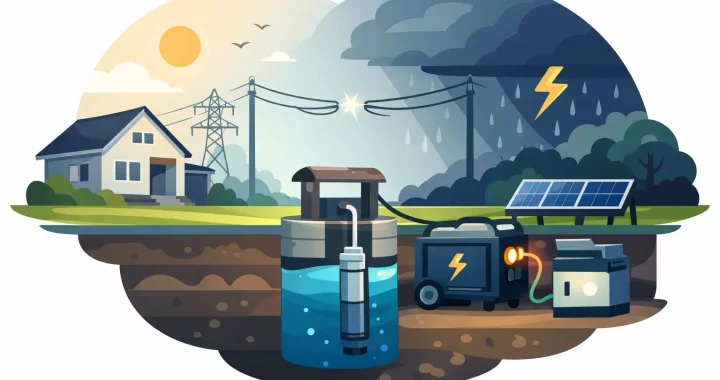
A power outage changes quickly when your home depends on a private well. Faucets may run briefly while the pressure tank still has water, but once that stored pressure is gone, the pump cannot refill it without electricity. Backup power for well pump systems is not just about keeping one appliance running. It is about protecting access to drinking water, toilets, handwashing, livestock water, and basic household routines when the grid is down.
The right setup depends on your pump voltage, horsepower, starting surge, and how long you need to operate between recharges. A portable power station can be a quiet, fuel-free answer for some well systems. For others, especially 240V pumps with high starting demands, a larger generator or professionally designed battery system may be the better fit. The key is sizing for the actual pump, not guessing from the size of the house or pressure tank.
Start With Your Well Pump’s Electrical Requirements
The pump label, control box, or installation paperwork should identify the information that matters most: voltage, horsepower, running amps, and sometimes starting amps. If the label is inaccessible, an electrician or well-pump technician can confirm the specifications before you buy equipment.
Many residential submersible well pumps run on 240V. Others, particularly smaller shallow-well or jet pumps, may run on 120V. This distinction is critical. Most portable power stations provide standard 120V household outlets only. Even if the station has plenty of watt-hours, it cannot operate a 240V pump unless it is specifically designed to provide the required 240V output through a compatible connection.
Horsepower alone does not tell the whole story. A 1/2 HP pump and a 1 HP pump can have very different electrical behavior depending on pump design, wire length, water depth, and the control equipment installed. The motor also needs a brief but substantial burst of power to start.
Running Watts Are Only Half the Equation
A pump may use 800 to 1,500 watts while running, yet require several times that amount for a fraction of a second at startup. This is called starting surge or inrush current. If an inverter cannot supply it, the power station may shut down on overload even though its continuous watt rating looks adequate on paper.
For a well pump, look for a pure sine wave inverter with a continuous output rating that exceeds the pump’s running demand and a surge rating that can handle motor startup. A practical planning range is often three to six times the running load, but the motor’s actual specifications should always take priority.
Soft-start equipment can reduce the surge demand of certain pump motors. That may make battery backup more realistic, but it is not a universal solution. Compatibility, installation, and local electrical requirements should be reviewed by a qualified professional.
Size Backup Power for a Well Pump by Both Watts and Watt-Hours
Watts determine whether the equipment can start and run the pump. Watt-hours determine how long the battery can support it. Both numbers matter.
A pressure tank makes well-pump backup more manageable because the pump does not need to run continuously. It cycles on only when tank pressure drops. A properly sized pressure tank may provide several gallons of usable water before the pump starts again, allowing a battery system to run the pump in short intervals rather than for hours without stopping.
For example, if a 120V well pump draws 1,000 watts and runs for a total of 20 minutes over several hours, it uses roughly 333 watt-hours of energy before accounting for inverter losses. A 2,000Wh battery power station may provide multiple pump cycles, but real runtime varies with pump efficiency, startup surge, battery temperature, other connected loads, and the station’s usable capacity.
Do not size the system to the pump alone if you plan to power other essentials. A refrigerator, lights, modem, medical device, phone chargers, sump pump, or freezer can quickly change the battery calculation. Decide whether the goal is water only or a broader home-outage plan, then reserve enough capacity for the loads that matter most.
Portable Power Station or Generator?
For a compatible 120V well pump, a high-capacity portable power station offers clear advantages. It runs quietly, produces no exhaust, can be used indoors in a dry, ventilated location, and requires no gasoline storage. Lithium iron phosphate battery systems are especially well suited to preparedness because they are designed for long cycle life and can be kept charged for outage readiness.
Portable power also works well when outages are short or when solar charging is available. A solar panel array can replenish the battery during daylight, extending water access without a fuel run. Solar production changes with weather, season, panel placement, and shade, so it should be treated as a recharge source rather than a guarantee during a major storm.
A fuel generator may be more practical for a larger 240V pump, a high-horsepower motor, or extended outages with heavy household loads. The trade-offs are noise, maintenance, fuel storage, carbon monoxide risk, and the need to operate it outdoors well away from doors, windows, and vents.
For many households, the strongest plan is layered: stored water for the first hours, a battery system for quiet essential loads, and a properly sized generator or 240V-capable backup system for longer outages and larger pump demands.
Connect the System Safely
Never plug a power station or generator into a wall outlet to energize household circuits. This dangerous practice, known as backfeeding, can damage equipment, create a fire risk, and endanger utility workers.
If you want backup power to operate a hardwired well pump through your home’s electrical system, use a properly installed transfer switch, interlock, or dedicated inlet designed for the application. A licensed electrician can verify conductor sizes, breaker requirements, neutral bonding, grounding, and whether the selected power source is appropriate for the pump circuit.
Some homeowners can power a plug-in 120V jet pump directly from a portable power station. Even then, keep the station dry, use appropriately rated cords, avoid undersized extension cords, and protect connections from rain and standing water. For a submersible pump connected through a control box or pressure switch, the installation is usually more involved and deserves professional guidance.
Build Water Resilience Before the Storm
Backup electricity is only one part of the plan. Store drinking water before severe weather arrives, and keep enough non-potable water for flushing and basic cleaning when possible. A simple water reserve reduces pressure on the backup system and gives you time to troubleshoot if the pump does not start as expected.
Test your setup before an emergency. Confirm that the power station is fully charged, the inverter can handle startup, the correct outlets and cords are available, and everyone in the household knows how to use the system safely. A test run also reveals whether the pump cycles normally and how much battery capacity it uses in real conditions.
Check battery charge levels monthly, especially during storm season. If you use solar panels, practice setting them up and identify a sunny location before you need them. If your system supports expansion batteries, consider whether added capacity would cover a full day of water use instead of only a few pump cycles.
When a Battery System Makes the Most Sense
Battery backup is often a strong choice for homes with a smaller 120V pump, moderate water demand, and a need for quiet operation. It is also useful for cabins, RV properties, remote structures, and households that want to avoid running a generator late at night for a short pump cycle.
For large 240V well pumps, long-duration outages, or whole-home ambitions, the solution may require more than a standard portable station. That does not make portable power less valuable. It can still keep communications, refrigeration, lighting, and other essentials operating while a larger pump-capable system handles the well.
The most dependable backup power for well pump planning starts with accurate pump data and a realistic picture of your household’s water needs. Prepare before the outage, test before the storm, and choose equipment built to deliver stable power when the grid cannot.
