
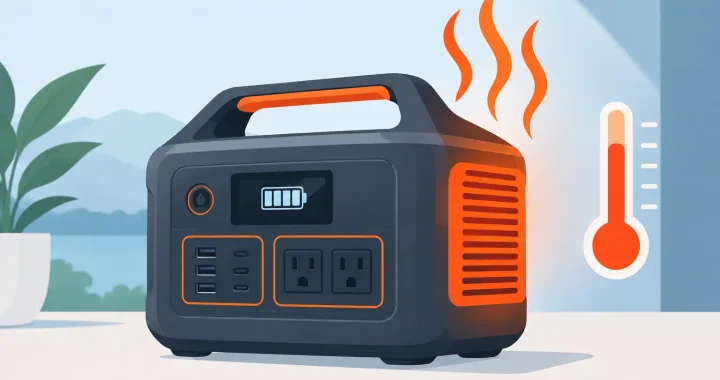
A portable power station should be ready when the grid is not. That raises a fair question for homeowners, campers, RV travelers, and anyone relying on stored electricity: do power stations overheat easily? Under normal use, a quality portable power station should not overheat easily. It will produce some heat while charging, running appliances, or operating in warm conditions, but built-in cooling and battery protections are designed to manage that heat safely.
Problems usually begin when high demand, poor ventilation, direct sun, or extreme temperatures push the unit beyond its intended operating conditions. Knowing what creates heat – and how to prevent it – helps protect your equipment and keeps dependable power available when you need it most.
Why Portable Power Stations Generate Heat
Every power station creates some heat as it moves energy from the battery to your devices. When you plug in a phone, the unit converts stored DC battery power into the voltage the phone charger needs. When you run an appliance through an AC outlet, the inverter performs a larger conversion from DC power to household-style AC power. Energy conversion is never 100% efficient, so some energy becomes heat.
Charging also creates heat. Fast AC charging, solar charging in strong sun, and charging while powering other equipment can make a station noticeably warm. This is expected behavior, especially on high-capacity models designed to recharge quickly.
The amount of heat depends on the load. A power station running a laptop, CPAP machine, router, or a few lights may stay relatively cool. A unit supporting a microwave, coffee maker, electric heater, power tool, or window air conditioner will work much harder. Higher continuous wattage means more heat from the inverter, wiring, and battery cells.
A warm case or an active cooling fan is not automatically a warning sign. What matters is whether the station can release heat effectively and whether its protective systems can reduce or stop operation before temperatures become unsafe.
Do Power Stations Overheat Easily in Real Use?
For most users, the answer is no – provided the power station is correctly sized, placed, and used within its specifications. Modern lithium power stations commonly include a battery management system, temperature sensors, cooling fans, and overload protection. These systems monitor battery and inverter conditions and can slow charging, activate fans, display a warning, or shut down output if temperatures rise too far.
That protection is useful, but it is not a reason to ignore operating conditions. A power station inside a closed vehicle on a 95-degree afternoon faces a very different heat load than the same unit operating in a shaded garage or ventilated RV. Internal fans can only move heat away if there is cooler air around the unit.
LiFePO4 battery power stations are especially popular for preparedness and mobile power because the battery chemistry is known for stable performance and long cycle life. Still, every battery chemistry has temperature limits. Extreme heat can shorten battery life over time, while extreme cold can limit charging performance. The product manual for your specific model remains the final authority on operating and charging temperatures.
The Conditions Most Likely to Cause Overheating
Heat issues rarely come from one factor alone. They usually result from a demanding load combined with a poor setup. Watch for these common conditions:
- Direct sunlight: A dark power station can absorb significant heat on a patio, campsite table, truck bed, or RV roof area. Solar panels belong in the sun; the power station itself should stay shaded.
- Blocked vents: Blankets, cargo, bedding, jackets, or a tight cabinet can obstruct intake and exhaust vents. Even a few inches of clearance can make a meaningful difference.
- High-wattage appliances: Running near the station’s continuous output rating for extended periods creates more inverter heat than occasional light-duty use.
- Hot enclosed spaces: Cars, sheds, tents, and unventilated storage compartments can become far hotter than the outdoor temperature.
- Charging and discharging at once: Pass-through charging can be convenient during an outage or while using solar, but it adds thermal demand. It is best used in a ventilated area and within the manufacturer’s guidance.
- Damaged cables or improper accessories: Loose connections, undersized extension cords, damaged plugs, and incompatible charging equipment can create resistance and heat where it does not belong.
For emergency backup, placement matters as much as capacity. Set the station on a stable, dry, hard surface with its vents clear. Avoid putting it directly against a wall, under a pile of gear, or in a cramped closet simply because it is out of sight.
Warning Signs That Need Attention
A quality power station may get warm and run its fan under heavy use. That is normal. The following signs suggest you should reduce the load, move the station, or stop using it until it cools:
- A temperature warning, fault code, or over-temperature message on the display
- Fans running at high speed continuously during a modest load
- The unit shutting down or cycling power off during use
- An unusually hot case, especially near vents or outlets
- A burning smell, smoke, swelling, melted plastic, sparking, or discoloration
The last group is not a troubleshooting situation. Disconnect the load if it is safe to do so, stop charging the unit, move away from the area, and follow the manufacturer’s safety instructions. Do not continue using a power station that shows physical damage or signs of electrical failure.
How to Keep Your Power Station Running Cooler
The simplest protection is to give the unit room to breathe. Leave clear space around all vents, keep it out of direct sunlight, and use it on a firm surface rather than carpet, cushions, or bedding. If you are powering equipment from an RV, van, or enclosed work trailer, open ventilation where practical and avoid storing the station in the hottest compartment.
Match the station to the job before an outage or trip begins. Check both the appliance’s running watts and its surge watts. Motors in refrigerators, pumps, power tools, and air conditioners may require a brief startup surge that is much higher than their normal running demand. A station operating well below its maximum rating generally has an easier thermal workload than one pushed to its limit for hours.
If a large appliance is making the unit run hot, reduce the demand. Turn off unnecessary devices, avoid stacking multiple heat-producing appliances on the same station, or rotate loads. For example, run a microwave briefly, then let the station return to a lighter load rather than operating a microwave, electric skillet, and coffee maker together.
Charging deserves the same attention. Fast charging is convenient when time is short, but it may create more heat than slower charging. If the unit feels warmer than expected, charge it in a cooler, ventilated location and avoid covering it. During solar charging, keep the panels in full sun while placing the power station in shade with the solar cable routed safely between them.
It also helps to inspect the station before critical use. Confirm that vents are free of dust, cables are intact, and connectors fit securely. Store the unit in a dry location with moderate temperatures, not in an attic, vehicle, or unheated shed that regularly reaches temperature extremes.
What an Automatic Shutdown Means
An over-temperature shutdown can be frustrating during an outage, but it is usually a safety feature working as intended. The station is protecting its cells, inverter, and internal electronics from continuing under conditions that could cause damage.
Let the unit cool naturally in a shaded, well-ventilated area. Disconnect high-demand appliances and stop charging unless the manual specifically instructs otherwise. Do not place it in a freezer, spray it with water, or attempt to force-cool it with methods that introduce moisture or sudden temperature changes.
Once the station returns to its normal temperature range, review what caused the event. Was it sitting in the sun? Were the vents blocked? Was the appliance load too close to the station’s rating? If shutdowns repeat under ordinary, properly ventilated use, contact the seller or manufacturer for support rather than relying on the unit for critical loads.
Plan for Reliable Power, Not Just Maximum Power
The best way to avoid overheating is to build a power plan around realistic loads and conditions. Choose enough wattage for the appliances you need to start, enough watt-hours for the time you need to run them, and enough charging capacity to recover between uses. For larger backup needs, expandable battery systems can reduce the pressure to run one smaller unit at its limits.
Thundervolt Power focuses on practical backup systems because readiness is more than having a battery on a shelf. It is having a properly sized, well-maintained power source that can support essential devices safely when weather, travel, or grid conditions become unpredictable.
Keep your power station cool, clear, and correctly loaded, and it can remain a quiet, dependable part of your emergency plan for years to come.
