
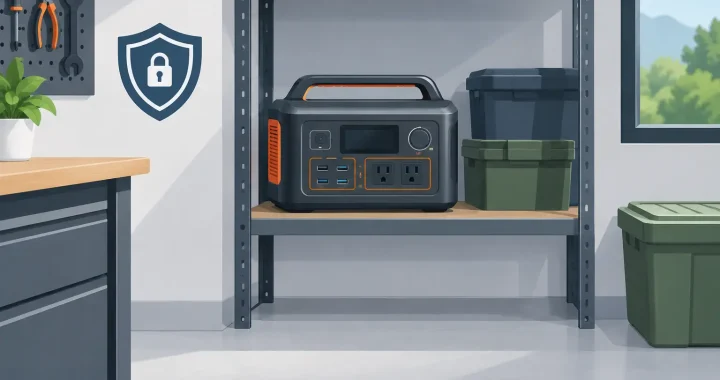
A portable power station is only useful in an outage if it is charged, healthy, and ready to run. Knowing how to store lithium power stations correctly helps protect your investment, preserve battery capacity, and avoid finding a depleted unit when the weather turns or the grid goes down.
Lithium power stations are simpler to own than fuel generators. There is no gasoline to stabilize, no oil to change, and no engine that may refuse to start after months in storage. They still need deliberate care. Battery charge level, temperature, location, and periodic checks all affect how well a station performs after sitting unused.
Store Lithium Power Stations at the Right Charge Level
For most lithium-based portable power stations, long-term storage at a partial charge is better than leaving the battery empty or holding it at 100% for months. A charge level around 50% to 60% is a practical target for many LiFePO4 and lithium-ion models, but the owner’s manual for the specific unit should always take priority.
A fully depleted battery can fall below its safe voltage threshold while in storage. Even when no device is plugged in, the battery management system uses a small amount of power to monitor and protect the cells. If the unit is left empty long enough, it may enter low-voltage protection and require service before it can be used again.
A full charge is appropriate when severe weather is approaching or when the power station is part of an active emergency plan. The trade-off is timing. If the unit stays at 100% for an extended period without being used, battery aging can increase, especially in warm conditions. Keep it topped off for short-term readiness, then return it to the manufacturer’s recommended storage range when the immediate risk has passed.
Choose a Cool, Dry, Protected Location
Heat is one of the biggest threats to lithium battery life. Store your power station indoors whenever possible, in a dry area away from direct sunlight, heating vents, furnaces, and moisture. A climate-controlled closet, utility room, or interior storage area is generally a better choice than a shed, attic, vehicle, or uninsulated garage.
A power station left in a parked vehicle can be exposed to extreme heat quickly, even on a mild day. High temperatures put unnecessary stress on battery cells and electronics. Freezing conditions also deserve caution. While many units can be stored in cool environments within their published specifications, charging a frozen battery can cause damage. Let a cold unit warm to an acceptable temperature before connecting it to AC, solar, or vehicle charging.
Leave the station on a stable, nonflammable surface with clear space around its ventilation openings. Do not cover it with blankets, stack heavy items on top of it, or seal it in an airtight container. It does not need a large dedicated room, but it should have airflow and protection from accidental knocks, water exposure, and curious children or pets.
Avoid these storage locations
Some spaces are convenient but poor choices for portable battery storage. Avoid locations that regularly experience high heat, heavy humidity, standing water, chemical fumes, or significant temperature swings:
- A car, truck bed, RV compartment, or enclosed trailer during hot weather
- An attic, shed, or garage that becomes very hot or very cold
- A damp basement floor, laundry area, or location exposed to leaks
- Near gasoline, propane cylinders, paint, solvents, or other flammable materials
- Directly beside a space heater, fireplace, radiator, or furnace
Shut Down Loads Before Putting the Unit Away
Before storage, disconnect appliances, chargers, extension cords, and solar panels. Turn off AC and DC output ports if your model allows it, and power down the station according to the manufacturer’s instructions. This reduces unnecessary standby drain and prevents a connected device from slowly pulling the battery down.
Check the exterior for dust, moisture, damaged cables, loose port covers, or debris in the vents. A dry microfiber cloth is usually enough for routine cleaning. Do not spray cleaners directly into outlets or ventilation openings. If the power station has been used outside, make sure it is completely dry before bringing it indoors for storage.
Solar panels deserve the same attention. Fold portable panels only when they are clean and dry, and keep connectors protected from dirt and moisture. Disconnect panels from the station during long-term storage unless the system and manufacturer specifically support a managed maintenance-charging setup.
Check the Battery on a Schedule
A stored power station should not be forgotten. Set a calendar reminder to inspect it every three to six months, or more often if the manufacturer recommends it. Turn the display on, confirm the battery percentage, inspect the case and cables, and recharge the unit if the charge has fallen below the recommended storage range.
This check is also the right time to confirm that your backup plan still matches your needs. A family that once needed to run phones, lights, and a router may now need to support a CPAP machine, a refrigerator, a home office, or a window air conditioner. Power needs change, and an expandable battery system can make the difference between short-term convenience and meaningful outage coverage.
For emergency readiness, it helps to practice using the station before an actual outage. Connect the devices you expect to power and confirm their wattage. Test AC outlets, USB ports, DC outputs, and any solar charging equipment. You do not want the first time you calculate refrigerator runtime to be while a storm is already moving through.
Prepare for Seasonal and Emergency Storage
There are two common ways to store a lithium power station: preservation storage and readiness storage. Preservation storage is for equipment that may sit for weeks or months between camping trips, jobsite use, or RV travel. Keep the station at the recommended partial charge, in a temperature-controlled location, and inspect it periodically.
Readiness storage is for hurricane season, wildfire risk, winter storms, or an unreliable local grid. In this case, keeping the station more fully charged makes sense. Stage it where it is easy to reach, alongside the cords and appliances you plan to use. Keep solar panels, vehicle charging cables, and expansion batteries organized nearby, but protected from weather and physical damage.
The best approach depends on your local risks and how quickly you can recharge. A household with dependable solar charging may be comfortable maintaining a moderate battery level between events. A household that relies on the power station for medical equipment or frequent outages may choose a higher state of charge and check it more often.
Know When a Power Station Needs Attention
Do not use or store a unit as normal if you notice a swollen case, unusual odor, leaking fluid, excessive heat, melted connectors, damaged ports, or repeated error messages. Move away from the device if it is safe to do so, keep it away from flammable materials, and contact the manufacturer or qualified support team for direction. Do not attempt to open the battery housing or repair internal components yourself.
A station that will not hold a charge after normal storage may simply need troubleshooting, but it can also indicate a battery or charging issue. Use the original charging equipment or an approved replacement, verify environmental conditions, and follow the model-specific support guidance. Thundervolt Power customers should keep purchase information and product documentation with their emergency equipment so it is easy to locate when support is needed.
A few minutes of storage care can protect years of portable power service. Keep the battery in a safe charge range, protect it from temperature extremes, and check it before you need it. When the lights go out, readiness is not a feature – it is the plan you made beforehand.
