
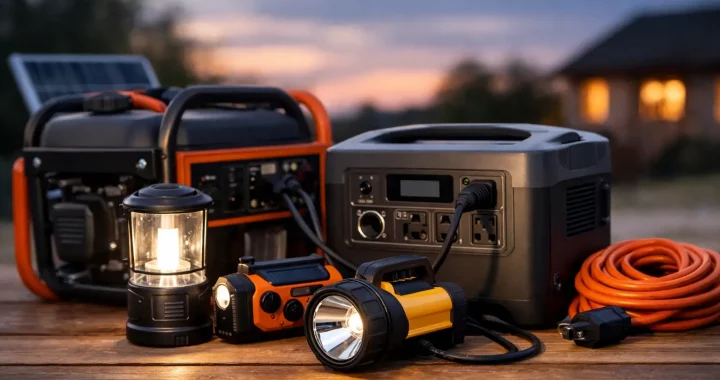
The lights usually go out at the worst possible time – during a heat wave, in the middle of dinner, or overnight when your phone is nearly dead and the Wi-Fi has already dropped. That is exactly why an emergency power essentials guide matters. When the grid is unstable, the goal is not to power everything you own. It is to keep the things that protect safety, comfort, and communication running without guesswork.
A good backup plan starts with priorities, not products. Most households do not need whole-home power to get through a short outage. They need a reliable way to run phones, lights, routers, medical devices, fans, a refrigerator, or a few kitchen basics. For longer outages, the plan changes. Runtime, recharging speed, solar input, and battery expansion become much more important than a simple outlet count.
What this emergency power essentials guide should help you decide
The first question is simple: what absolutely has to stay on? For one family, that may be a CPAP machine, phones, and a fridge. For another, it could be internet equipment for remote work, a sump pump during storms, or a window AC unit during a summer outage. Emergency power is personal, and the right setup depends on what failure looks like in your home.
That is why wattage and battery capacity matter, but so does context. A homeowner in hurricane season should think differently than an RV traveler or a contractor managing a jobsite interruption. The equipment can overlap, but the sizing logic is different. If you buy too small, you run out of power early. If you buy far too large for your real needs, you may spend more than necessary and still overlook recharging options.
Start with your critical loads
The most practical way to build a backup plan is to separate devices into three groups: must-run, nice-to-have, and wait-until-power-returns. Your must-run category is the foundation of the system.
For many homes, must-run loads include phones, flashlights or rechargeable lanterns, a modem and router, a refrigerator, and health-related equipment. In some cases, that also includes a fan, heated blanket, laptop, or small cooking device. If flooding is a risk, a sump pump may move into the top tier fast.
Once you know the devices, look at two numbers: running watts and how long you need them on. A refrigerator may not run continuously, but it still needs enough surge support to start. A CPAP may use modest wattage, yet it becomes a non-negotiable overnight load. A laptop is easy to power, but if your internet equipment dies after two hours, your workday still ends.
This is where many people make a common mistake. They focus on peak inverter output and ignore watt-hours. Watts tell you what the power station can run at one time. Watt-hours tell you how long it can keep those devices going. For outage planning, both matter.
Battery capacity is the real question during outages
If your outage is likely to last two to four hours, a compact portable power station may cover communications, lights, and device charging easily. If your local outages regularly stretch overnight or into multiple days, you need more stored energy and a clear recharging strategy.
That is where lithium systems, especially LiFePO4-based models, stand out. They offer long cycle life, dependable performance, and quiet operation without the fuel storage issues, fumes, or engine maintenance tied to gas generators. They are especially appealing for indoor-safe use where ventilation and noise are major concerns.
Still, battery-only backup has limits. If you need to run large loads for extended periods, capacity can disappear faster than expected. A microwave, coffee maker, electric kettle, or space heater can drain a system quickly. Even a fridge plus a few comfort items adds up over time. For that reason, many buyers are better served by a setup that can scale with expansion batteries or recharge from portable solar panels.
Inverter quality and output options matter more than people think
A battery with plenty of capacity is only part of the solution. The inverter determines what kind of devices you can run safely and reliably. Pure sine wave output is especially important for sensitive electronics, medical devices, and modern appliances. It provides cleaner, more stable power than modified sine wave systems.
Output variety also matters in real life. During an outage, you may need AC outlets for a refrigerator, USB ports for phones and tablets, DC outputs for smaller equipment, and possibly a 30A RV connection in mobile setups. A good emergency system should reduce the need for adapters and workarounds when time is already tight.
Fast recharging is another feature that deserves more attention. If grid power comes back for a short window and drops again, rapid recharge can make a major difference. The same goes for users who want to top off from solar between storm bands or while off-grid.
Solar can extend backup power, but expectations should be realistic
Solar charging is one of the biggest advantages of modern portable power systems, especially for multi-day outages. It can help keep essential loads running without relying on fuel deliveries or noisy engine-driven equipment. For remote travel and off-grid use, it adds flexibility that traditional generators cannot match as cleanly.
But solar is not magic. Weather, panel size, sun angle, and season all affect charging speed. A cloudy storm week is not the same as a clear summer day. If you are counting on solar to support emergency backup, panel wattage and battery size need to make sense together.
A small panel can help maintain phones, lights, and light electronics. It may not meaningfully replenish a large battery that has been running major appliances. On the other hand, a properly matched solar setup can turn a power station from short-term backup into a much more resilient system. The trade-off is cost, storage space, and setup time.
Choosing for home backup versus mobile use
One reason portable power appeals to so many buyers is that it can serve more than one job. The same unit that backs up your fridge at home may power an RV weekend, a campsite, or a tailgate. That flexibility has real value, especially if you want your emergency investment working year-round.
Still, there is a balance to strike. A system chosen mainly for camping convenience may fall short in a serious outage. A very large home-focused unit may be less practical if you need to move it often. Weight, handle design, wheel kits, charging speed, and expandability all become part of the buying decision.
For homeowners, the priority is usually runtime and appliance support. For RV users and campers, solar compatibility, portability, and versatile ports may matter more. Contractors may care most about durable output, recharge speed, and enough inverter headroom for tools. Families supporting medical devices tend to prioritize clean power, overnight reliability, and straightforward operation.
The emergency power essentials guide for better sizing
If you want to avoid buying twice, size for your real outage pattern. Think in terms of what you need during the first six hours, the first night, and day two. Those are different situations.
In the first six hours, communications and lighting usually come first. Overnight, refrigeration and sleep-related devices matter more. By day two, recharging becomes the main issue. If your plan does not include a way to refill the battery, even a powerful station becomes a countdown.
A practical setup often includes enough inverter capacity to cover startup surges, enough battery capacity to handle overnight essentials, and a recharge path that fits your environment. That may be AC wall charging, vehicle charging, solar input, or a mix. Expandable battery systems make particular sense for households that want to start with a strong base unit and add storage later.
For many buyers, this is where a curated retailer like Thundervolt Power is useful. The difference between a good spec sheet and a good emergency setup is knowing how those specs translate into fridge runtime, cooling support, device charging, and real-world outage performance.
What people forget to prepare
The power station itself is only part of readiness. You also need charged cables, extension cords rated for the load, a plan for refrigerator access, and a habit of keeping the unit topped off. If the battery is sitting half-charged when a storm hits, your effective runtime is already cut down.
It also helps to test the setup before you need it. Run a short drill at home. Plug in the devices you consider essential and see how your system performs. That small test often reveals the missing piece – maybe a longer cord, maybe more battery capacity, maybe a better understanding of what to leave unplugged.
Preparedness is rarely about having the biggest system. It is about having the right one, charged and ready, with enough capacity and flexibility to carry the loads that actually matter when power is not stable. If you build your backup plan around real priorities instead of assumptions, the next outage feels a lot less like a scramble and a lot more like a plan.
