
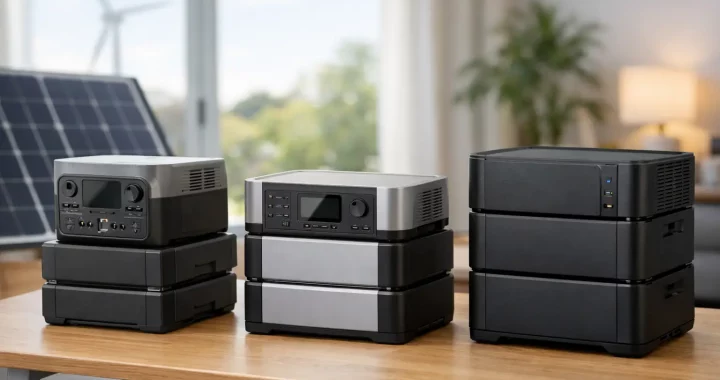
A backup system that looks big on paper can still fall short the first night the grid goes down. The gap usually shows up in runtime. That is why an expandable battery backup comparison matters more than a simple side-by-side look at watt-hours or inverter size. If you want power that can grow with your needs, expansion design is what decides whether a system feels prepared or underbuilt.
For most buyers, the question is not just how much power you need today. It is how much flexibility you need six months from now. A homeowner may start with enough capacity for phones, lights, and a router, then realize they also want to cover a refrigerator during storm season. An RV owner may begin with weekend trips and later add a 12V fridge, coffee maker, or portable AC. Expansion gives you room to scale, but not all systems scale the same way.
How to approach an expandable battery backup comparison
The biggest mistake is comparing only the base unit. A power station with a strong inverter and fast recharge can look like the better deal until you add extra batteries and see the limits. Some systems allow one add-on battery. Others support multiple expansion packs and much higher total storage. Some keep full output when expanded. Others increase runtime but do not change practical appliance support.
That distinction matters. If your main concern is keeping essentials running longer, added battery capacity may be all you need. If you are trying to support heavier loads such as microwaves, jobsite tools, or a window AC, inverter output and surge handling matter just as much as total battery size. More stored energy does not automatically mean more usable power at one time.
A smart comparison starts with your actual loads. Think in two categories: what must stay on, and what would be nice to keep running. For a home outage, the must-have list often includes phones, lights, internet gear, a CPAP, and refrigeration. For mobile use, it may be a cooler, fan, laptops, and cooking devices. Once you know those priorities, you can judge whether expansion is solving a runtime problem, an output problem, or both.
Capacity is only the start
Battery capacity, measured in watt-hours, tells you how much energy the system stores. It does not tell you how efficiently that energy can be delivered, how quickly it recharges, or whether expansion is simple enough to use when conditions are stressful. In an outage, convenience becomes a performance feature.
If two systems both offer expansion, look at the starting point and the ceiling. A smaller base unit with a lower entry cost can make sense if your needs are modest right now and growth is likely later. A larger base system can be the better value if you already know you need serious runtime. The right choice depends on whether you are buying for occasional short outages, daily off-grid use, or a mix of both.
There is also a practical issue many shoppers miss: depth of use. A family using backup power for a few storms each year can tolerate a different setup than someone cycling it regularly for RV travel, mobile work, or solar storage. In that case, long-life battery chemistry matters. LiFePO4 has become the preferred option for many buyers because it offers a strong balance of safety, cycle life, and stability.
Why output still decides what you can run
When people hear expandable, they often assume the system becomes more powerful in every way. Usually, expansion adds endurance, not output. If the inverter is rated for 2000W, adding extra batteries does not usually turn it into a 3000W system. It still powers the same kinds of appliances, just for longer.
That is good news if your goal is overnight runtime for a fridge or extended use of lights and communications gear. It is less helpful if you need to start motor-driven appliances with higher surge demands. In an expandable battery backup comparison, always separate runtime from load capability. A system that can run a refrigerator for 20 hours may still struggle with a space heater or larger air conditioner.
Charging speed changes real-world value
Fast charging is not a luxury feature. It changes how useful a backup system is before, during, and after an outage. If severe weather is on the way, the ability to recharge quickly from the wall can be the difference between full readiness and a partially charged compromise. The same applies to travelers stopping briefly between destinations.
Compare AC recharge times for the base unit and ask whether those times change when expansion batteries are connected. Some systems remain reasonably quick. Others become much slower once total capacity grows. Solar charging matters too, especially for off-grid use or multi-day outages. A system that accepts higher solar input can recover faster during limited daylight, which makes the expanded capacity more practical.
For buyers planning to pair storage with portable solar panels, input limits deserve close attention. Large battery banks are useful, but if solar input is modest, recovery may take longer than expected. That does not make the system bad. It just means the setup is better suited to reserve backup than daily solar-dependent use.
Expansion design matters more than specs suggest
Not every expandable system is equally easy to live with. Cable layout, pairing process, stackability, and app or screen clarity all affect ownership. During a power outage, nobody wants to troubleshoot confusing connection steps or wonder whether an add-on battery is actually recognized by the main unit.
This is where practical design earns its value. A clean, stable connection system and clear battery status reporting help reduce mistakes. So does straightforward output management. If you are buying for family readiness, simplicity matters even more because the person using it in an emergency may not be the person who originally set it up.
Physical size also deserves honest consideration. Expansion sounds efficient, but multiple batteries increase weight and storage footprint. A modular setup can be easier to move one piece at a time, which helps for RVs, garages, and job sites. On the other hand, a higher-capacity all-in-one unit may feel cleaner if you mostly plan to keep it in one place. There is no universal winner here. It depends on whether portability or maximum reserve power is your higher priority.
Matching the system to the job
For home backup, expansion is most valuable when you need longer runtimes on essential circuits and appliances without stepping into a permanently installed system. If your priority is outage resilience, look for enough inverter power to handle your core loads, then choose expansion based on how many hours of support you want.
For RV and camping use, the balance often shifts. You may care more about recharge speed, portability, and quiet overnight power than about maximum capacity. Expansion can still be useful, especially for longer trips, but oversized systems can become harder to move and store. In that setting, practical transport matters almost as much as electrical performance.
For contractors and mobile work crews, uptime and output usually matter first. Expansion is helpful if the jobsite lacks reliable charging opportunities, but the system still has to support the tools or electronics in use. Here, a strong inverter and fast recharge may justify more than the biggest battery number.
For families supporting critical devices, reliability and clarity should lead the comparison. You want known runtimes, stable power delivery, and a setup that is easy to operate under stress. Marketing language is less useful than a clear understanding of your wattage needs and how long the system can maintain them.
What usually separates a better buy from a bigger one
A bigger spec sheet is not always the better purchase. The better buy is the unit that fits your load profile, recharges fast enough for your routine, and expands without adding complexity you do not want. That is especially true in a market full of options that look similar at first glance.
When comparing brands and models, pay attention to the full package: battery chemistry, inverter rating, surge support, expansion ceiling, wall charging speed, solar input, and physical design. If one model offers less peak capacity but better recharge and easier modular use, it may deliver more real value. Thundervolt Power focuses on systems like these because dependable backup is not about one standout number. It is about how the system performs when the power is not stable and time matters.
The best expandable setup is the one you will actually trust when weather turns, plans change, or the lights go out. Buy for the next real problem you expect to face, not the biggest promise on the box.
