
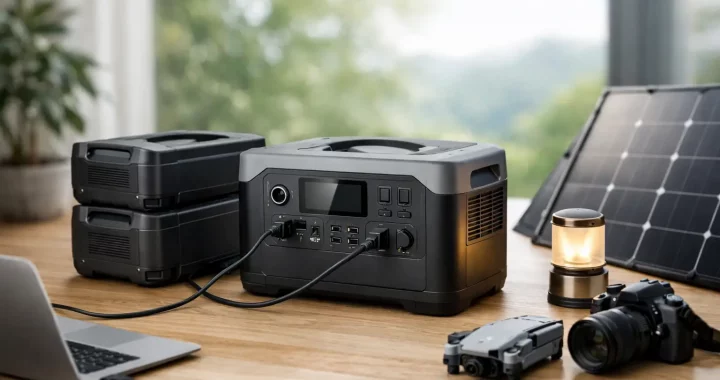
When the power goes out, the first question is rarely how many outlets you have. It is how long your power will last. That is exactly where an expandable battery power station starts to make sense. Instead of buying one fixed-capacity unit and hoping it is enough, you start with a core power station and add battery capacity as your needs grow.
For a lot of households and mobile users, that flexibility matters more than headline specs. A weekend camper may only need enough energy for lights, phones, and a portable fridge. A homeowner preparing for storm outages may want to keep a full-size refrigerator, router, CPAP machine, and a few essentials running for much longer. Those are very different jobs, and an expandable system gives you room to size your backup power around the way you actually live.
What an expandable battery power station really does
At a basic level, an expandable battery power station combines an inverter, battery, charge controller, and output ports in one portable unit. The difference is that it can connect to one or more external expansion batteries to increase total energy storage.
That extra storage does not usually increase the inverter’s output wattage by itself. In plain terms, adding batteries often gives you more runtime, not necessarily more peak power. If your main unit can run a microwave, a refrigerator, or a window AC within its rated output, expansion batteries help it run those loads longer. If the appliance already exceeds the inverter rating, adding extra battery modules will not change that.
This is one of the most common points of confusion for buyers. Capacity and output are connected, but they are not the same thing. Capacity, measured in watt-hours, determines how long you can run devices. Output, measured in watts, determines what you can run at all.
Why expandable capacity matters more than many buyers expect
A fixed battery power station can be a smart choice for light use, but it forces a guess up front. You either buy larger than you need and pay more for unused capacity, or you buy smaller and risk running short during a real outage.
An expandable battery power station gives you a more practical path. You can start with a core unit for immediate needs, then add storage later for storm season, RV travel, jobsite use, or off-grid weekends. That makes it easier to match your budget to your current situation without closing the door on future backup needs.
This matters even more when your power needs are seasonal or unpredictable. Summer outages may mean fans or a small air conditioner. Winter outages may shift the focus to communications, lighting, pellet stoves, or medical devices. Travel setups can change too. A solo camper and a family of four will not use the same amount of power, even in the same RV.
Expandable battery power station vs fixed-capacity models
If your main goal is charging phones, laptops, battery packs, and a few small devices, a fixed-capacity model may be all you need. It is simpler, lighter, and often less expensive.
If you want a system that can move between home backup and mobile use, expansion becomes far more valuable. A base unit can stay portable for lighter tasks, while added battery modules can turn that same platform into a more serious emergency power setup.
The trade-off is that expandable systems can be heavier, more expensive once fully built out, and less convenient to move when all components are connected. For some buyers, that is still the right compromise. For others, especially people who prioritize grab-and-go portability, a single self-contained unit may be a better fit.
How to tell if you need an expandable setup
The answer usually comes down to runtime, not features.
If you only need short bursts of backup power, such as keeping internet service up during a brief outage or charging devices on a road trip, expansion may be unnecessary. But if you are trying to cover overnight outages, support refrigeration, power a CPAP machine through the night, or stretch solar input across several cloudy days, expandable capacity becomes much more useful.
Homeowners often benefit the most because outage duration is hard to predict. The same is true for RV users staying off-grid for multiple days and contractors who need reliable silent power across long work sessions. In those cases, more stored energy gives you breathing room.
The specs that matter before you buy
Battery chemistry should be near the top of your list. Many buyers now prefer LiFePO4 because it offers strong cycle life, thermal stability, and long-term durability. That matters for a system you may use often, store for emergency backup, or count on for years.
Inverter rating is just as important. If you need to run kitchen appliances, power tools, sump pumps, or a portable AC, make sure the continuous wattage and surge capability match the load. Expansion batteries help with endurance, but the inverter is what determines whether the unit can start and run the device.
Charging speed also deserves attention. A large expandable system with slow recharging can leave you waiting too long between uses. Fast AC charging helps during outage prep, and strong solar charging support is valuable for RV travel, off-grid cabins, and extended blackouts.
Then look at the expansion architecture itself. Some platforms only allow one extra battery. Others support multiple modules for major increases in total watt-hours. Make sure the system is designed for the amount of growth you actually want, not just the amount advertised in large print.
Where an expandable battery power station works best
For home backup, the strongest use case is powering essentials without the noise, fumes, and fuel storage issues of a gas generator. You can keep refrigerators cold, communication devices charged, lights on, and critical electronics running in a more controlled and indoor-friendly way, depending on the unit’s operating guidelines.
For RVs and camping, expandability helps balance portability and comfort. You can travel with the main unit and add battery modules when you want longer stays or more appliance use. That is especially useful if you run a 12V fridge, coffee maker, induction cooktop, Starlink setup, or entertainment gear.
For jobsites, quiet power can be a major advantage. Battery systems reduce noise complaints and eliminate fuel handling for many lighter-duty applications. Runtime becomes the key factor, and that is exactly where expansion makes a difference.
For families supporting medical devices, extra capacity provides a margin that fixed systems often cannot. If a CPAP, mobility device, or refrigeration for medication is part of your backup plan, longer runtime is not a luxury. It is part of being prepared.
Common mistakes buyers make
The first mistake is shopping by capacity alone. A giant battery does not help if the inverter cannot run your target appliance.
The second is ignoring recharge strategy. If you buy a large expandable setup, think through how you will recharge it during a prolonged outage. Wall charging is great before a storm, but solar compatibility can be a real advantage when the grid stays down.
The third is assuming expansion is always cheaper later. Sometimes it is. Sometimes bundle pricing makes it smarter to buy the main unit and battery modules together. It depends on the product line, your timeline, and whether you already know your long-term power needs.
Choosing the right size for your situation
The smartest way to size a system is to start with the loads that truly matter. For some homes, that means refrigeration, lights, phones, internet, and medical devices. For others, it may include a microwave, television, fans, or a compact air conditioner.
Then think in hours, not just watts. A refrigerator that cycles on and off over 24 hours creates a very different energy demand than a coffee maker used for ten minutes. The same is true for a laptop versus a space heater. Short, high-watt devices and lower-watt all-day devices affect battery planning in different ways.
This is why expandable platforms appeal to practical buyers. You do not need to guess perfectly on day one. You can start with coverage for the essentials and build toward longer runtime as your budget or backup goals change.
If you are comparing options from brands like Aferiy, Fossibot, and Sorein, pay close attention to how each platform handles battery expansion, inverter size, charging speed, and outlet selection. The best system is not always the biggest one. It is the one that supports the devices you care about, for the amount of time you actually need, with a recharge plan that works in the real world.
For buyers who want dependable backup power without fuel, noise, or constant compromise, an expandable battery system is often the most sensible middle ground. It gives you a way to be ready now without locking yourself into the wrong capacity for later. If you are building a more resilient power setup, that kind of flexibility is worth taking seriously. You can explore current options at Thundervolt Power if you are ready to compare systems built for home backup, travel, and emergency use.
