
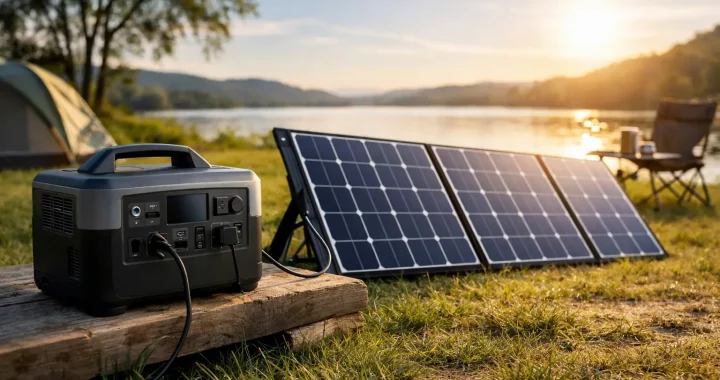
When the power goes out, charging speed stops being a nice extra and becomes the whole point. A fast charging solar generator can mean the difference between keeping your fridge cold before the next storm band hits or waiting half a day for enough stored power to come back online. The same goes for RV stops, job sites, and weekends off-grid – if your system takes too long to recharge, you end up planning around the battery instead of the battery working around you.
That is why shopping for one takes more than comparing price tags and battery size. Fast charging sounds simple, but it can describe wall charging, solar input, car charging, or a mix of all three. The better question is not just, “How fast does it charge?” It is, “How fast does it recharge in the way I will actually use it?”
What a fast charging solar generator really means
A solar generator is usually a portable power station paired with solar panels. It stores electricity in a battery, converts it through an inverter, and gives you usable outlets for AC devices, USB electronics, and often 12V gear. The “fast charging” part usually refers to how quickly the unit can refill its battery from an AC wall outlet, from solar panels, or from combined charging methods.
For many buyers, AC charging is the headline feature because it is the fastest way to get ready before a storm or leave for a trip. Some units can recharge from low battery to most of the way full in around an hour or two with high AC input. Others may need five to eight hours. That gap matters if outages are frequent, your travel schedule is tight, or you need to cycle the battery more than once in a day.
Solar charging speed is a little different. It depends on the generator’s maximum solar input, the actual wattage of your panels, panel angle, weather, time of day, and temperature. A unit can be marketed as fast charging, but if it only accepts modest solar input, its real off-grid recovery time may be limited.
Why charging speed matters more than many buyers expect
Battery capacity gets most of the attention, and for good reason. You need enough stored energy to run what matters. But recharge speed is what determines how quickly you can get back to full function.
At home, a bigger battery with slow recharge can leave you exposed after the first outage window. If the grid comes back briefly and then drops again, a unit with high AC input can recover much more usable capacity in that short interval. For weather-prone areas, that is practical resilience, not marketing language.
For RV travel and camping, fast recharging cuts idle time. You can top off at a campground, during a meal stop, or while the sun is strong, then keep moving. For contractors and mobile work, it reduces downtime between tool use and keeps phones, laptops, and battery chargers ready without hauling fuel.
There is a trade-off, though. Faster charging can sometimes mean more fan noise, more heat, or a higher upfront cost. Well-built systems manage those factors well, but they do not disappear entirely.
The specs that actually determine fast charging performance
If you want to compare a fast charging solar generator with confidence, focus on four numbers first: battery capacity, AC input, solar input, and inverter output. Each one affects a different part of real-world performance.
Battery capacity, measured in watt-hours, tells you how much energy the unit can store. A 2048Wh system can generally run longer than a 1024Wh system, but it also takes more energy to refill. A larger battery is useful, but only if recharge time still fits your routine.
AC input, usually listed in watts, tells you how quickly the generator can charge from a household outlet. Higher AC input usually means faster prep before an outage and faster recovery after use. If speed is a priority, this spec deserves close attention.
Solar input, also measured in watts, determines how much energy the unit can accept from panels. This is where many shoppers miss the mark. Pairing a large set of panels with a generator that has low solar input will bottleneck your charging speed. The power station and the panel array need to make sense together.
Inverter output matters because quick charging is only part of the equation. If the unit cannot run the devices you care about, fast refill does not help much. You need enough continuous wattage and surge capacity for loads like refrigerators, microwaves, CPAP machines, power tools, or portable air conditioners.
Battery chemistry matters too
For most buyers looking at dependable backup power, LiFePO4 is the better fit. It offers strong cycle life, better thermal stability, and longer-term value than older battery types. If you expect to use your system regularly for outages, travel, or daily off-grid support, that durability matters.
A cheaper battery can look attractive upfront. But if it degrades faster or offers fewer cycles, the lower price may not hold up over time.
How to choose the right size for your use case
The best fast charging solar generator for a homeowner is not always the best one for a camper or a tailgater. Start with what you need to power, then work backward.
For basic outage readiness, many households want to keep a refrigerator running, charge phones, power lights, support internet equipment, and maybe run a CPAP machine or television. That usually pushes buyers beyond entry-level units and into medium or large-capacity systems.
For RV use, the right setup depends on whether you are charging personal devices and small appliances or trying to support heavier loads like a microwave, coffee maker, or window AC. If AC use is part of the plan, inverter size and battery capacity become far more important.
For camping and tailgating, portability may matter more than maximum capacity. A lighter unit that charges quickly and supports phones, speakers, lights, and a cooler can be a better choice than a heavier station with more battery than you will actually use.
For job sites, durability and output flexibility matter just as much as speed. Multiple AC outlets, USB-C ports, and 12V outputs make it easier to support tools, chargers, and communication devices from one unit.
Fast charging solar generator setups for home backup
Home backup is where charging speed often delivers the clearest value. A storm warning comes in, and you may have only a few hours to get ready. If your unit can pull high AC input, you can bring it to full or near-full capacity before conditions worsen.
The same principle applies after an outage starts. If utility power returns briefly, a faster-charging system lets you recover more stored energy before the next interruption. That is especially useful for people supporting refrigerated food, sump pumps, communication gear, or medical devices.
Expandable systems deserve a look here. If your needs may grow, a generator that supports expansion batteries can give you more runtime without forcing a complete system replacement. Just remember that larger total battery capacity should still be matched with practical recharge options.
What to watch out for before you buy
Some product pages highlight “fast charging” without showing the full picture. A unit may charge quickly from AC but slowly from solar. Another may advertise high solar input, but only under ideal conditions with a large panel array that adds significant cost and storage bulk.
Pay attention to recharge claims that do not say from what source, or that use vague language like “up to” without context. You want the actual AC input rating, the actual solar input limit, and a realistic sense of how long a recharge will take.
Portability is another common compromise. Larger systems with strong output and fast charging are useful, but they are also heavier. That can be fine for home backup or RV use, less so for frequent carry-in, carry-out use.
Noise level matters too. Solar generators are much quieter than gas generators, but high-speed charging can activate cooling fans. For most people, that is a reasonable trade-off. It is still worth expecting some sound when the unit is pulling serious charging power.
Who should prioritize a fast charging solar generator
If you live in an area with unstable weather, rolling outages, wildfire-related shutoffs, or storm-driven power loss, fast charging is worth prioritizing. The same goes for buyers who depend on backup power for work, health, food storage, or family comfort.
It also makes sense for RV travelers, off-grid users, and anyone who wants to use stored power often rather than keep it tucked away for rare emergencies. The more often you cycle the battery, the more value you get from quick recharge.
Thundervolt Power focuses on this kind of practical readiness for a reason. People do not buy backup energy systems to admire spec sheets. They buy them to keep life moving when the grid, the weather, or the location does not cooperate.
A fast charging solar generator is not just about charging faster on paper. It is about shortening the gap between power used and power restored. If you choose one with the right battery chemistry, enough input capacity, and output that matches your real loads, you end up with a system that is ready when you need it and easy to use again the next time.
