
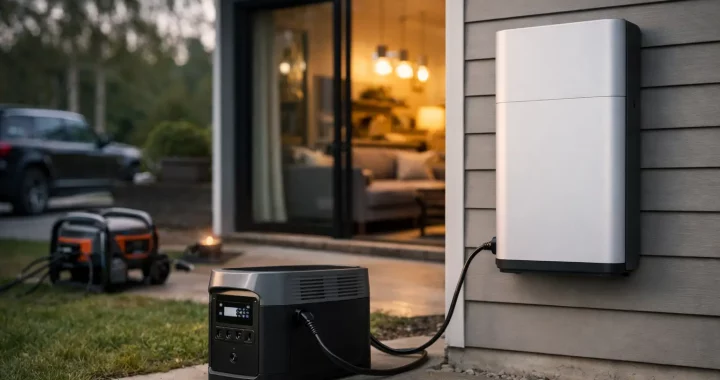
The outage usually answers the question faster than any product page can. When the lights go out, the router dies, the fridge starts warming up, your phone battery drops into the red, and suddenly home backup power stops feeling optional.
For most households, the real challenge is not whether to prepare. It is choosing a system that matches the way you live. Some people need to keep a few essentials running for several hours. Others need overnight power for a refrigerator, medical device, work equipment, or a portable AC unit during a storm-related outage. The right setup depends on what you need to power, how long you need it, and how simple you want the solution to be when the grid fails.
What home backup power really needs to do
A backup system is only useful if it covers your actual pressure points. For one home, that might mean preserving food, charging phones, and keeping a few lights on. For another, it means supporting a CPAP machine, modem, laptops, and a sump pump. The best buying decisions start there, not with the biggest number on the box.
Power and energy are where many shoppers get tripped up. Wattage tells you how much power a device needs at a given moment. Watt-hours tell you how long your battery can supply that power. A system with high output but limited battery capacity may start an appliance just fine, but it may not run it for very long. On the other hand, a large battery with weak output may store plenty of energy while struggling with startup surges from motors and compressors.
That is why a practical home backup power plan should look at both sides of the equation. You need enough inverter output for the devices you want to run at the same time, and enough battery capacity to keep them going for the duration that matters.
Battery backup vs gas generators
Gas generators still have a place, especially for whole-home coverage or extended high-load use. But many homeowners are moving toward lithium battery systems because they solve problems gas units create. They run quietly, produce no fumes indoors, require no fuel storage, and start with the push of a button instead of a pull cord and a maintenance schedule.
That matters more than it might seem. During a storm outage, a quiet battery system can sit inside your home and keep critical loads running without forcing you to manage gasoline, noise, or carbon monoxide risk. If you live in a neighborhood, have children sleeping, or need power overnight for medical or communication devices, battery backup becomes more than a convenience.
There are trade-offs. A portable power station will not replace a permanently installed standby generator for every household. If your goal is to run central air, electric water heating, and a full panel for days, you are looking at a different category of solution. But if your priority is dependable power for essentials, a well-sized lithium system is often the faster, cleaner, and easier answer.
How to size home backup power without overbuying
The fastest way to overspend is to buy for a vague idea of an emergency. The better approach is to build around the loads that matter most.
Start with your essentials. In many homes that means the refrigerator, internet equipment, phones, lights, laptops, and perhaps a microwave or coffee maker used occasionally. If someone in the home depends on a CPAP machine, oxygen concentrator, or refrigerated medication, those devices move to the top of the list immediately.
Then think in usage windows. You do not necessarily need to power everything at once. A refrigerator cycles on and off. A microwave runs for minutes, not hours. A laptop charger may only draw a modest load compared with a space heater or hair dryer. Once you think in real behavior instead of worst-case assumptions, the right capacity becomes clearer.
A smaller unit may be enough for communications, lighting, and personal electronics through a short outage. A mid-capacity system can usually handle a broader set of household essentials. Larger and expandable systems make more sense when you want longer runtime, higher inverter output, or support for heavier appliances. This is where LiFePO4 battery chemistry earns attention. It is valued for safety, long cycle life, and daily reliability, especially in systems meant to sit ready for the next outage.
What a portable power station can realistically run
This is where expectations need to be honest. Portable battery systems are excellent for electronics, routers, fans, TVs, CPAP machines, lights, mini fridges, and many full-size refrigerators depending on startup demand and runtime goals. Many can also support microwaves, coffee makers, power tools, and even some window AC units if the inverter output is high enough.
The limit usually shows up with sustained high-wattage heating loads. Space heaters, electric ovens, dryers, and whole-home HVAC can drain battery reserves quickly or exceed inverter capacity altogether. That does not make battery backup a weak option. It means it should be matched to the loads where it delivers the most value.
In practice, most families get the best results by covering critical circuits or essential plug-in devices first. Keep food cold. Keep the phones charged. Keep the internet on. Keep a fan, light, or medical device running. That level of preparation handles the most common outage pain points without forcing you into a larger system than you need.
Why solar charging changes the equation
A battery alone gives you stored energy. Solar adds the ability to refill it when the outage lasts longer than expected. That can be a major advantage in hurricane season, during regional grid strain, or in rural areas where restoration times can stretch.
Solar charging also makes backup power more flexible outside emergency use. The same system that covers an outage can support camping, RV travel, tailgating, jobsite work, or off-grid weekends. For many buyers, that dual use justifies investing in a larger unit or expandable battery setup. You are not paying for a device that sits idle. You are buying usable power that can move with you.
The important detail is recharge speed and panel compatibility. A battery system that supports fast AC charging gets back in service quickly between outages. A system that also accepts meaningful solar input gives you another recovery path when the grid is not available. For households that want more resilience without stepping into permanent installation territory, that combination is hard to beat.
Features that matter when power is not stable
Not every spec deserves equal attention. For home use, pure sine wave output is worth prioritizing because it is better suited for sensitive electronics and appliances. A strong inverter matters because many devices need extra power at startup. Clear displays, multiple outlet types, and straightforward controls matter because backup power should be simple under stress, not another problem to troubleshoot.
Expandability is another feature that can save money over time. If your initial goal is to cover essentials, an expandable platform lets you start there and increase runtime later. That is often a smarter path than jumping straight to a larger system before you know how your household actually uses backup power.
It also helps to think about portability honestly. A high-capacity unit with wheels and handles may be a better fit than an extremely heavy fixed battery box if you want to use it in different rooms, take it on the road, or store it securely between uses.
Choosing a system for your kind of outage
Short outages call for simplicity. If your area mostly sees brief interruptions, a compact or mid-sized battery system may cover nearly everything that matters. Longer outages require more planning, which usually means more battery capacity, solar recharging, or both.
Weather also changes the picture. In summer, your main concern may be refrigeration and airflow. In winter, it may be communication, lighting, and keeping critical devices powered while you rely on non-electric heating sources. Families working from home often place internet uptime and laptop power near the top of the list. Households with medical needs should build around those devices first and add convenience loads after.
This is where a curated backup solution matters. Thundervolt Power focuses on practical systems that emphasize quiet operation, dependable lithium performance, strong output, and expansion options for people who need real resilience without fuel storage or unnecessary complexity.
The best home backup power plan is the one you will use
Preparedness does not need to look like a whole-house overhaul. It can start with one dependable battery system sized for the essentials you refuse to lose during an outage. From there, you can add capacity, solar charging, or more appliance coverage as your needs become clearer.
The key is to buy for real life. Match the system to your critical devices, your outage patterns, and your tolerance for noise, fuel, and setup time. When the next storm hits or the grid drops unexpectedly, the best backup power is not the most dramatic option. It is the one that starts immediately, runs what matters, and lets your home keep functioning when power is not stable.
If you are choosing now instead of during the next outage, you are already ahead of the problem.
