
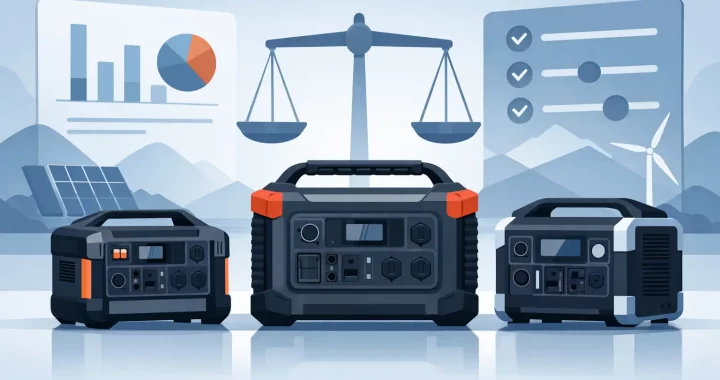
A portable power station can look perfect on paper until you ask it to run a refrigerator through an overnight outage, keep tools going on a jobsite, or recharge fast enough between campsite stops. That is where a real Fossibot portable power station comparison matters. The right model is not just about bigger numbers. It is about matching battery capacity, inverter output, recharge speed, and portability to the way you actually need power.
How to approach a Fossibot portable power station comparison
Fossibot units are generally built for people who need serious output without the noise, maintenance, or fuel storage that comes with a gas generator. That makes them attractive for homeowners preparing for blackouts, RV users, tailgaters, off-grid travelers, and anyone who wants a cleaner backup option for essential devices.
When comparing models, the most useful place to start is not the brand sheet. Start with your load. Think about what you need to power, for how long, and whether that use happens in one place or on the move. A power station that works well for weekend camping may fall short during a storm outage. A unit that can support large appliances may be more weight than you want to lift into a truck bed every weekend.
The four areas that matter most are battery capacity, inverter size, charging flexibility, and physical practicality. Capacity tells you how long the unit can run your gear. Inverter output tells you what it can run at all. Charging options affect how quickly you can recover during repeated use. Size and weight decide whether the system feels convenient or becomes a piece of equipment you avoid moving.
Capacity vs output: the difference that changes everything
One of the easiest mistakes in any Fossibot portable power station comparison is mixing up watt-hours with watts. Watt-hours measure stored energy. Watts measure running power. You need both.
A high-capacity unit with a modest inverter can run small electronics for a long time, but it may not start a microwave, coffee maker, or power tool. On the other hand, a strong inverter paired with a smaller battery may run heavier appliances, but only for a limited window. That trade-off matters most for home backup.
If your priority is outage readiness, capacity usually deserves more weight. Refrigerators, routers, lights, fans, CPAP machines, and device charging often need coverage over several hours, sometimes longer. If your priority is mobile work or outdoor cooking, inverter strength may matter more because startup loads and heating elements can demand more power at once.
For many buyers, the sweet spot is a model that balances both well enough to cover essentials without jumping straight to the largest and heaviest option. Bigger is not always better if you rarely use the extra headroom.
What smaller Fossibot models are best for
Smaller Fossibot power stations tend to make the most sense for light-duty and mobile use. Think phone charging, laptops, camera batteries, small fans, routers, portable fridges, and CPAP support within a manageable run time. They are easier to carry, easier to store, and generally easier to justify if your power needs are occasional rather than constant.
These models fit well for weekend camping, tailgating, road trips, and basic outage support for communications and lighting. They can also be a practical second unit in a larger preparedness setup. A compact station can stay ready for grab-and-go use while a larger system remains dedicated to home backup.
The limitation is straightforward. Once you start expecting a smaller unit to run kitchen appliances, heaters, air conditioners, or multiple devices at the same time, the convenience drops fast. Smaller units are efficient for essentials, not a substitute for whole-room or whole-home backup.
Mid-size Fossibot models: where most buyers land
In a practical Fossibot portable power station comparison, mid-size models are often the best fit for the broadest group of buyers. They usually offer enough battery and inverter capacity to handle a wider mix of needs without becoming too bulky for regular movement.
This category often works well for homeowners who want to cover the basics during an outage and RV users who need more than simple device charging. A good mid-size unit may support a refrigerator for a meaningful stretch, keep internet and phones online, run lights, power a TV, and still leave room for intermittent appliance use depending on the load.
The main advantage here is flexibility. You are less likely to outgrow the system immediately, and you are still within a size range that feels portable. The trade-off is that not every mid-size model recharges at the same speed or offers the same solar input. If you expect repeated use over several days, recharge performance becomes almost as important as battery size.
Large Fossibot power stations for serious backup
Large-capacity Fossibot units are built for users who want real backup strength. This is where you start looking at support for high-draw appliances, longer runtime, and in some cases expansion options that push the system beyond basic portability into home resilience territory.
These models make sense for households preparing for weather-related outages, RV users with heavier electrical demands, off-grid setups, and contractors running more power-hungry equipment. If you need to support a refrigerator, freezer, microwave, sump pump, power tools, or even certain air conditioning loads, this is the class worth focusing on.
But there is a practical cost. Large power stations weigh more, take up more space, and are less convenient if you are constantly loading and unloading them. They also cost more upfront. If your real use case is just keeping devices charged and lights on, buying the biggest model available can be unnecessary. If your concern is power security during unstable grid conditions, the extra reserve may be exactly what makes the purchase worthwhile.
Charging speed and solar input matter more than many buyers expect
A power station is only as useful as your ability to refill it. In a Fossibot portable power station comparison, charging speed is one of the clearest dividing lines between good emergency gear and gear that feels slow when you need it most.
Fast AC recharging is valuable for home users because it lets you top off quickly before a storm or recover faster between outage cycles. For RV, van, and off-grid users, solar compatibility matters just as much. A large battery with limited solar input can leave you waiting longer than expected, especially in mixed weather.
This is where it helps to be realistic. Solar charging sounds simple, but actual performance depends on panel size, sun exposure, season, and setup time. If solar is part of your plan, compare the maximum solar input carefully and consider whether the unit supports enough charging power to make daytime recovery practical. A station that can accept more solar input is usually the safer choice for longer trips or multi-day outages.
Ports, usability, and the small details that affect daily use
Not every comparison should revolve around battery and inverter numbers. The layout of AC ports, USB outputs, car ports, display readability, app controls if available, and wheel or handle design can make a real difference over time.
For home backup, a clear display and straightforward controls matter because outages are stressful enough without having to interpret confusing menus. For travel and recreation, portability features matter more. Wheels, telescoping handles, and a durable case can turn a heavy unit from manageable to frustrating if those details are missing.
Noise is another advantage worth noting. Portable power stations are much quieter than gas generators, but cooling fan behavior still varies. If you plan to use the unit in an RV, tent-adjacent campsite, bedroom, or office setting, fan noise under load is worth considering.
Which Fossibot model type fits your situation?
If you need basic emergency readiness for phones, lights, routers, and small electronics, a smaller model is usually enough and easier to live with. If you want a more complete backup plan for outages or a more capable RV setup, the mid-size range is often the better value. If your goal is running larger appliances, supporting more circuits, or covering longer outages with greater confidence, a large-capacity model is the smarter investment.
For families supporting medical devices, there should be extra caution. Runtime estimates should include a margin, not a best-case assumption. For jobsite use, check surge handling and outlet variety. For camping and overlanding, weight and recharge flexibility often matter just as much as output.
That is why the best Fossibot portable power station comparison is never just about choosing the most powerful unit. It is about choosing the one that gives you enough reserve, enough output, and enough recharge speed for the conditions you are actually preparing for.
Thundervolt Power focuses on this category because dependable backup should feel practical, not complicated. If you compare Fossibot models through the lens of real usage instead of spec-sheet hype, the right choice usually becomes clear.
When power is uncertain, the better decision is the one that leaves you with margin – not just enough power for a good day, but enough confidence for a difficult one.
