
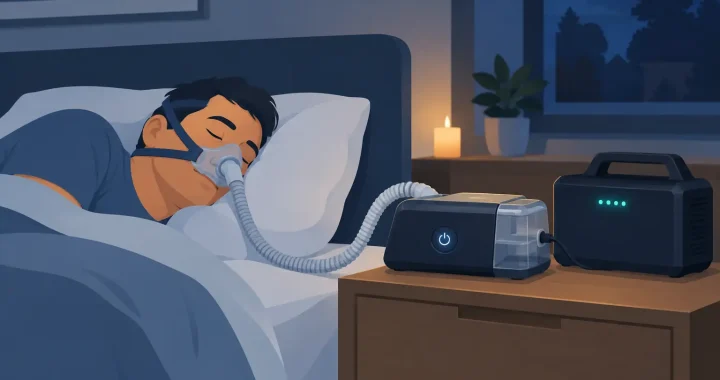
A CPAP machine is not optional equipment when you depend on it for restorative sleep. During an outage, the goal is not simply to keep it running. It is to learn how to run CPAP quietly without bringing generator noise, exhaust, extension-cord hazards, or an unreliable battery into the bedroom.
A properly sized portable power station can provide clean, quiet overnight electricity for many CPAP users. But runtime depends on more than the label on the machine. Your pressure, humidifier, heated hose, mask leaks, room temperature, and charging plan all affect how long a battery will last.
Start With the Source of the Noise
A modern CPAP or APAP machine usually produces only a soft airflow sound. If the setup seems loud, the machine itself may not be the main problem. Mask leaks can whistle or hiss. A loose humidifier chamber can rattle. A dirty or blocked filter can make airflow louder, and a machine placed on a hollow nightstand may amplify vibration.
Before planning backup power, make sure the CPAP is operating normally. Replace worn cushions and filters, secure the hose so it does not pull against the mask, and place the machine on a stable, solid surface. A thin non-slip mat beneath the unit can reduce vibration without blocking its air intake.
If you are hearing a high-pitched leak or experiencing dry mouth, address the mask fit first. Turning up the volume of a white-noise machine to cover a leak may help temporarily, but it does not solve the sleep-disrupting issue or preserve battery capacity.
How to Run CPAP Quietly With Battery Power
For quiet emergency power, use a portable power station rather than a conventional gas generator. A battery power station has no engine running outside the window, no refueling in the middle of the night, and no exhaust fumes. When equipped with a pure sine wave inverter, it supplies the clean AC power that sensitive electronics are designed to use.
Set the power station on the floor or a low, stable surface near the bed, with clearance around its ventilation ports. Do not place it under blankets, inside a cabinet, or directly against a wall where heat can build up. Most quality units are quiet at lower loads, though some may run an internal cooling fan occasionally. Keeping the CPAP load modest and avoiding unnecessary high-draw accessories can help minimize fan activity.
Use the shortest practical cord and avoid crowded power strips. Plug the CPAP directly into the station’s AC outlet if you are using its standard wall adapter. If your machine supports a manufacturer-approved DC power cable, that can be a more efficient option because it avoids the small energy loss that occurs when a battery station converts DC battery power to AC and the CPAP adapter converts it back to DC.
The trade-off is compatibility. Not every DC cable fits every model, and using an unapproved cable can damage equipment or create unreliable operation. Follow the CPAP manufacturer’s voltage and connector requirements exactly.
Size the Power Station for Your Actual Setup
Portable power stations are rated in watt-hours, or Wh. Watt-hours describe stored energy. A larger Wh rating generally means more CPAP runtime, but the usable runtime will always be lower than the printed battery capacity because of conversion losses and operating conditions.
A CPAP without heated humidity or a heated tube may use relatively little power overnight. The same machine with both heating features enabled can consume several times more energy, especially in a cold or dry room. Pressure settings also matter. There is no dependable one-size-fits-all runtime estimate.
A practical planning method is to find your CPAP’s typical wattage in its manual, on its power supply, or through a plug-in power meter. Multiply the average watts by the number of hours you sleep. Then add a safety margin for inverter losses, changing conditions, and the possibility that an outage lasts longer than one night.
For example, a machine averaging 15 watts for eight hours uses about 120 watt-hours. A machine averaging 45 watts with heated comfort features uses about 360 watt-hours over the same period. In both cases, choosing a station with substantially more available capacity provides better preparedness than selecting the smallest unit that appears to work on paper.
Do not focus only on watt-hours. Check the AC output rating, too. Most CPAP machines have modest startup demands, but the power station must still provide enough continuous output for the machine and any essential items you expect to run at the same time, such as a phone charger or small bedside light.
Reduce Power Draw Without Sacrificing Safe Therapy
The most effective way to extend quiet battery runtime is often reducing heat-related power use. If your clinician has said it is appropriate for you, consider turning off the heated humidifier and heated hose during an outage. Many people can use a non-heated humidification setting or run without humidity for a limited period, but comfort and therapy needs vary.
Do not change prescribed pressure settings just to conserve battery. Pressure affects treatment, and it should only be adjusted under guidance from your sleep-care provider. The same applies to ramp, exhalation relief, and other therapeutic settings when they are part of your prescribed setup.
There are several lower-risk ways to make the night easier while conserving energy. Keep the bedroom at a comfortable temperature before the outage begins, use a properly fitted mask to prevent leaks, and charge phones and other nonessential devices before bedtime. Run only the CPAP from the power station whenever possible.
If dry air makes therapy difficult, discuss a blackout plan with your clinician ahead of time. They may be able to recommend settings, accessories, or a backup approach suited to your medical needs.
Set Up for an Outage Before Bedtime
A quiet CPAP backup plan works best when it is ready before the grid goes down. Keep the power station charged, store the CPAP adapter or approved DC cable with the machine, and test the full setup for a normal night at home. A test run shows whether the station’s display, fan behavior, outlets, and capacity meet your expectations.
During the test, start with the exact configuration you would use in an outage. If you normally sleep with a humidifier and heated hose, test with those features on. Then test a lower-draw backup configuration. That gives you real-world information instead of a rough estimate.
For longer outages, establish a recharge plan. Solar panels can replenish a compatible portable power station during daylight, while vehicle charging may be useful when solar conditions are poor. Solar output changes with weather, panel angle, shade, and season, so it should be treated as part of a broader preparedness plan rather than a promise of a fixed recharge time.
Never run a gas generator indoors, in a garage, near open windows, or near air intakes. Carbon monoxide is odorless and dangerous. If a generator is your only way to recharge equipment, keep it outdoors and well away from the home, then recharge the battery station during the day so the bedroom remains quiet at night.
Avoid Common CPAP Backup Mistakes
The most common mistake is buying a battery based on a single advertised runtime claim. That claim may assume the humidifier and heated hose are off, a low pressure is used, or a particular machine model is connected. Your usage may be very different.
Another mistake is draining the power station on other comforts before bedtime. A portable fan, television, electric blanket, or cooking appliance can consume far more energy than the CPAP. Reserve the battery for medical needs first, then add other loads only after you understand the remaining capacity.
Also avoid relying on an old automotive jump pack, a small unregulated inverter, or a battery with unknown condition. These products may not offer enough capacity, stable power, or suitable outlets for dependable overnight operation. A purpose-built lithium power station with clear capacity information, regulated outputs, and battery management protections is easier to plan around.
A Quiet Night Is a Prepared Night
The best CPAP backup setup is one you have already tested, charged, and placed within reach before severe weather arrives. Select enough battery capacity for your real therapy settings, reduce optional heat features only when appropriate, and keep the station reserved for essential overnight power. That preparation can turn a disruptive outage into a quieter, safer night of sleep.
