
A portable power station is most valuable when an outage, storm, or road trip makes power non-negotiable. To store lithium batteries safely, treat that stored energy with the same care you would give a backup generator or fuel supply. The right location, charge level, and inspection routine protect your equipment and help ensure it is ready when you need it.
Lithium-based power systems are designed for dependable use, but they are not maintenance-free. Heat, physical damage, moisture, improper charging, and long periods of neglect can shorten battery life or create a safety concern. A few practical storage habits go a long way toward protecting both your investment and your home.
Choose a Cool, Dry, Stable Storage Location
The best place for a lithium battery or portable power station is indoors in a dry area with a steady temperature. A climate-controlled utility room, closet, office, or garage that stays within the manufacturer’s recommended range is generally a better choice than an attic, shed, vehicle, or unconditioned garage.
Heat is one of the biggest threats to long-term battery health. Avoid storing a power station beside a furnace, water heater, fireplace, radiator, sunny window, or other heat source. Do not leave it in a parked car, especially during summer. Vehicle interiors can reach temperatures far above what lithium batteries are built to handle.
Freezing conditions deserve attention as well. Many lithium batteries can be stored in cool temperatures, but charging a battery below its approved temperature range can cause damage. If your equipment has been in a cold garage, RV compartment, or vehicle, bring it inside and let it return to room temperature before plugging it in.
Dry conditions matter just as much. Keep batteries off damp concrete, away from plumbing leaks, and clear of areas prone to flooding. If a basement is susceptible to water intrusion, select a higher, dry storage location instead.
Keep Batteries Away From Heat, Fuel, and Clutter
A clear, dedicated shelf or cabinet is safer than a crowded corner filled with household supplies. Give portable power stations room for airflow and keep their vents unobstructed. Do not cover a unit with blankets, clothing, boxes, or plastic bins, particularly while it is charging or operating.
Keep lithium batteries away from gasoline, propane cylinders, paint, solvents, aerosol cans, oily rags, and other flammable materials. This is especially relevant in garages, workshops, RV storage bays, and jobsite trailers, where power equipment may share space with fuel-powered tools.
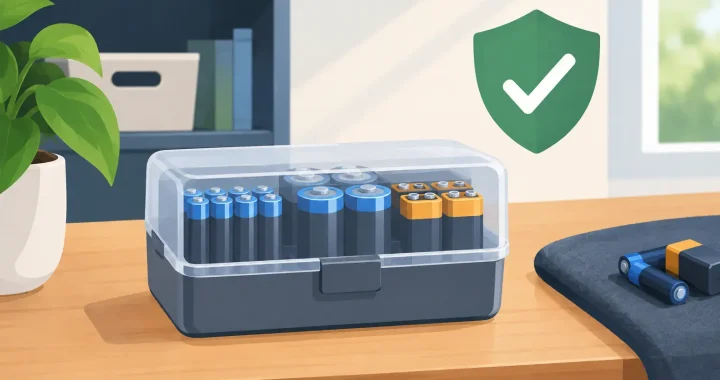
Do not place a power station where it can block a doorway, stairway, or emergency exit. A low-traffic area is best, provided it remains easy to access for periodic inspections and recharging. For small removable batteries, use a sturdy non-metal container or their original protective packaging. Cover exposed terminals with terminal caps when available, and prevent loose batteries from contacting keys, coins, screws, or other metal objects.
Store at the Charge Level Recommended by the Manufacturer
For longer storage, lithium batteries usually perform best when they are not left fully depleted or held at 100% for months at a time. For many portable power stations and lithium-ion batteries, a partial charge around 40% to 60% is a practical starting point. However, the owner’s manual for your specific model takes priority.
Battery chemistry and battery management systems vary. Many modern portable power stations use LiFePO4 batteries, a chemistry valued for its long cycle life and thermal stability. Even so, its ideal storage routine can differ from a conventional lithium-ion product. Some units include a storage mode, charge limit, or app-based setting that simplifies long-term care.
If you are preparing for hurricane season, wildfire season, or frequent winter outages, the trade-off is different. Readiness may matter more than maximizing long-term storage life. In that case, keeping a power station more fully charged may be appropriate, as long as you check it routinely and follow the manufacturer’s guidance. The key is to make a deliberate choice based on your risk, rather than leaving the unit forgotten at either 0% or 100%.
Check Stored Power Stations on a Schedule
Set a calendar reminder to inspect stored batteries every two to three months, or at the interval listed in the manual. Turn on the display, check the remaining charge, and look for warning indicators. Recharge the unit if its state of charge has dropped below the recommended storage level.
This is also the right time to inspect charging cables, AC adapters, solar connectors, and outlets. Look for frayed insulation, bent prongs, loose connectors, corrosion, or debris. A backup power system is only useful if the charging gear and cables are ready alongside it.
For emergency preparedness, a seasonal check works well. Before summer storms, winter weather, or a planned RV trip, verify that the unit charges normally and can power the devices you rely on. Test a phone charger, lamp, router, CPAP machine, or other priority load for a few minutes. This simple routine can reveal a problem before the grid is down.
Store Lithium Batteries Safely in an RV or Vehicle
RVs and overlanding rigs create special storage challenges because temperatures change quickly and equipment is exposed to vibration. A built-in battery system should be properly secured, protected from cargo shifts, and installed according to the equipment manufacturer’s instructions. A loose power station can be damaged by a sudden stop or rough road.
For a removable portable power station, take it indoors when the RV will sit through extreme heat or freezing weather. Avoid leaving it in an exterior compartment that bakes in the sun. If the unit must remain in the vehicle for a short period, keep it shaded, dry, secured, and disconnected from unnecessary loads.
Never charge a portable power station in a sealed compartment without adequate ventilation or where it can overheat. Solar charging is an excellent way to replenish power off-grid, but panels, cables, and the station should be set up on stable surfaces and monitored for excessive heat, damage, or poor connections.
Do Not Ignore Warning Signs
A battery that is swollen, leaking, cracked, unusually hot, discolored, making unusual noises, or producing an odor needs immediate attention. Stop using and charging it. Keep people and pets away, and move away from the area if you believe there is an active fire or immediate danger.
Do not place a damaged lithium battery in household trash, a standard recycling bin, or a donation box. Do not attempt to open, repair, puncture, or crush it. Follow local household hazardous waste instructions or contact the product manufacturer for appropriate disposal guidance. For a large portable power station that appears damaged, professional direction is particularly important.
If a battery begins smoking or burning, call 911 and follow instructions from emergency responders. Do not risk personal safety trying to manage a battery fire yourself. Evacuate the immediate area and keep others clear.
Charging Habits That Support Safe Storage
Safe storage starts with safe charging. Use the supplied charging cable and compatible power source whenever possible. Place the unit on a hard, stable surface while charging, away from bedding, upholstered furniture, paper, and direct sunlight. Avoid charging overnight in an unattended area unless the manufacturer specifically supports that use and the location is clear, dry, and suitable.
Do not use a damaged cable or adapter just because it still works. Worn equipment can create heat and connection problems that undermine the protections built into the battery system. After charging, disconnect accessories that do not need to remain attached, especially loads that could slowly drain the battery during storage.
A Practical Setup for Home Backup Power
For most homes, a ready-to-use storage setup is simple: keep the power station on a stable shelf in a cool interior room, store its charging cable and essential adapters beside it, and post a reminder for periodic battery checks. If you use expansion batteries, keep them on a level surface and inspect the connection cable before each use.
Consider keeping a short written list with the system. Note the date of the last charge, the preferred storage percentage, and the devices your household plans to power first. During an outage, that preparation saves time and reduces guesswork when phones, lights, refrigeration support, medical devices, or communication equipment need power.
Reliable backup power is not only about capacity and watt-hours. It is also about knowing that your equipment has been stored correctly, checked regularly, and kept ready for the moment stable power matters most.
