
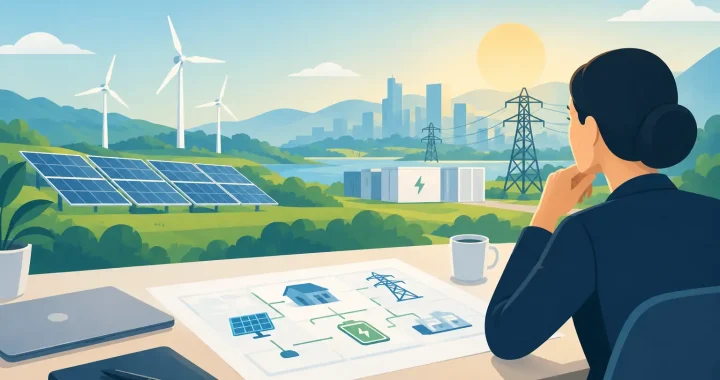
A power outage changes the rules fast. Refrigerated food starts warming, phones become a lifeline, sump pumps may stop, and a home office can go dark in the middle of a workday. For families, travelers, and anyone who depends on electricity, energy resilience means having a practical way to keep essential devices running when utility power is unavailable or out of reach.
That does not always mean installing a whole-home system or keeping fuel cans in the garage. A well-sized portable power station, paired with solar charging when appropriate, can provide quiet, clean electricity for the devices that matter most. The key is matching your backup plan to what you actually need to power.
What Energy Resilience Means at Home and Away
Energy resilience is the ability to maintain access to electricity during disruption. That disruption may be a storm outage, wildfire-related shutoff, damaged utility equipment, a campground without hookups, or a remote jobsite with no available outlet.
For some households, the priority is keeping phones, lights, a router, and a CPAP machine powered through an overnight outage. For others, it is operating a refrigerator, a sump pump, tools, or a window air conditioner for a limited period. RV owners may focus on charging electronics, running a coffee maker, or extending time off-grid without relying on a noisy generator.
The right solution depends on the loads, the runtime you need, and how you plan to recharge. Energy resilience is not one product or one number. It is a system of realistic decisions: what stays on, what can wait, and how you restore power after the battery has been used.
Start With the Loads That Cannot Wait
A backup power plan works best when it begins with priorities, not product size. Think about the first 24 hours of an outage or the first night away from shore power. Which devices protect health, safety, communication, food, or income?
Critical loads often include phones, medical devices, lights, a modem and router, refrigerators, fans, laptops, and sump pumps. A portable power station can also support many appliances, but higher-draw equipment needs careful planning. Space heaters, electric ranges, clothes dryers, central air conditioning, and large well pumps can require far more power than a portable system is designed to provide.
There are two numbers to understand. Watts measure how much power a device needs at a given moment. Watt-hours measure how much stored energy is available over time. A 60-watt light bulb uses 60 watts while it is on. If it runs for 10 hours, it uses about 600 watt-hours of energy.
Appliances with motors introduce another consideration: starting surge. A refrigerator may use a modest amount of power while cycling, then briefly demand more when its compressor starts. A power station needs enough inverter capacity to handle that surge, not only the appliance’s running wattage. Pure sine wave output is also a practical feature for sensitive electronics and many motor-driven devices.
Size Battery Capacity for Runtime, Not Just Wattage
A power station with a high wattage rating can run demanding devices, but its battery capacity determines how long those devices can operate. This is where many backup plans fall short.
Start by estimating daily energy use for each priority device. Multiply the device’s watts by the number of hours you expect to use it. Add the results, then allow room for conversion losses and changing conditions. If a device lists amps instead of watts, multiply amps by volts to get an approximate wattage for standard household power.
For example, a 10-watt LED light used for six hours consumes roughly 60 watt-hours. A 70-watt laptop used for four hours consumes about 280 watt-hours. A 40-watt CPAP used for eight hours consumes about 320 watt-hours before considering humidifier use, which can increase consumption substantially. A refrigerator is less predictable because it cycles on and off, but its energy label or a plug-in watt meter can provide a more useful estimate than its peak wattage alone.
Small power stations are well suited to charging personal electronics, lighting, and short-duration essentials. Mid-capacity systems can cover a broader mix of household and RV loads. Higher-capacity units and expansion batteries make more sense when refrigeration, medical support, longer outages, or several people sharing power are part of the plan.
There is a trade-off. Larger capacity provides more runtime, but it also adds cost, weight, and storage demands. A portable system should be large enough for your real priorities while remaining practical to move, charge, and use.
Choose Battery Chemistry With Long-Term Use in Mind
Many modern portable power stations use LiFePO4 battery cells. This chemistry is valued for long cycle life, thermal stability, and practical performance for frequent backup use. If you expect to use your system for recurring camping trips, jobsite power, and storm preparedness, cycle life matters as much as first-day capacity.
Battery capacity should also be expandable when needs may grow. An expansion battery can be a sensible path for a household that wants to begin with essential circuits and later add refrigerator runtime or more family devices. It is usually easier to plan expansion before an emergency than to discover capacity limits during one.
Recharging Is the Other Half of the Plan
Stored power is only part of energy resilience. The next question is how you will recharge during a multi-day outage or extended off-grid stay.
AC charging is typically the fastest and simplest option when grid power is available. Charge the power station fully before a forecasted storm, then keep it topped up according to the manufacturer’s storage guidance. Fast recharging can be especially useful when brief periods of utility power return between outages.
Vehicle charging adds flexibility for travel and roadside needs, although it is generally slower than wall charging. Solar panels can extend runtime without fuel, noise, or exhaust, making them useful for camping, RV use, and prolonged outages with adequate sun exposure.
Solar performance depends on panel wattage, weather, shade, panel angle, time of year, and the power station’s solar input limits. A 200-watt panel does not produce 200 watts every hour of every day. Plan for variability, keep panels clear of shade, and treat solar as a way to replenish critical energy rather than a guarantee that every appliance can run without limits.
Build a Power Plan for Your Situation
A homeowner in a flood-prone area may prioritize a sump pump, lights, communication, and a refrigerator. A family managing medical equipment may reserve battery capacity for the device first and use lower-power lighting everywhere else. A contractor may need a power station with sufficient AC output, multiple outlets, and a battery sized for tools and charging packs. An RV traveler may value solar input, compact panels, and enough capacity for evenings away from hookups.
The most useful plan is specific. Label the devices you will power, record their approximate wattage, and decide how long each needs to run. Test the setup before an emergency. Confirm that cables reach, the refrigerator starts properly, the CPAP settings are correct, and every member of the household knows which devices are priority loads.
Keep the power station in a dry, accessible location with ventilation around it. Avoid placing it in direct rain or extreme heat. Store compatible charging cables, solar adapters, and a few efficient LED lights together so the system is ready when it is needed. A printed list of device priorities is valuable when conditions are stressful and decisions need to be quick.
Portable Power Has Clear Limits
Battery backup is a practical alternative to traditional generators for many needs, particularly where quiet operation, indoor-safe use, and low maintenance matter. But it is not a substitute for every high-demand electrical system in a home.
If you need to run central HVAC, an electric water heater, a large well pump, or an entire house for days, you may need a larger installed solution, generator support, or a combination of systems. Portable power stations are most effective when they are assigned a defined role: maintaining essential loads, reducing dependence on fuel, and giving you time to respond safely.
Thundervolt Power focuses on portable energy storage and solar-ready systems because preparedness should be usable, not complicated. A system that you understand and can deploy in minutes is more valuable than a larger plan that sits untested.
The best time to find the limits of your backup power is on a normal afternoon, not when the lights have already gone out. Choose your priorities, measure what they use, charge your system, and practice once. When the grid is not stable, that preparation gives you options.
