
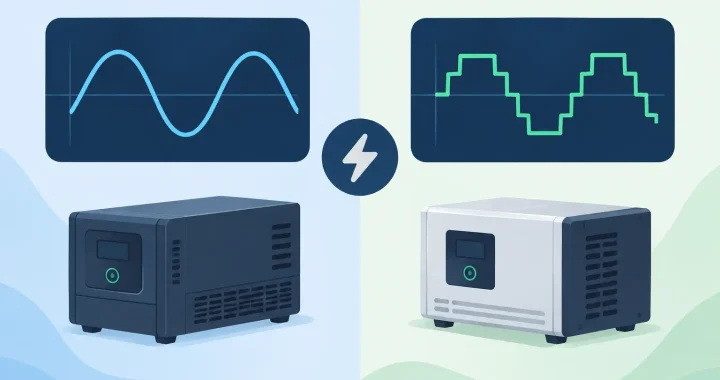
When the grid goes down, the question is not only how much battery capacity you have. It is also the quality of the AC power coming out of the inverter. In the pure sine versus modified sine decision, that difference can determine whether your equipment runs quietly and reliably, runs poorly, or should not be connected at all.
For a phone charger or a basic incandescent light, either waveform may work. For a modern refrigerator, CPAP machine, laptop, variable-speed power tool, or the electronics that manage an appliance, power quality deserves more attention. Choosing the right inverter is a practical preparedness decision, especially when your backup system may need to support the devices your household depends on.
Pure Sine Versus Modified Sine: The Practical Difference
AC electricity from the utility grid follows a smooth, repeating wave. A pure sine wave inverter recreates that smooth waveform as closely as possible. This is the type of power sensitive electronics and motor-driven appliances are generally designed to receive.
A modified sine wave inverter produces power in stepped blocks rather than a smooth curve. The name can sound minor, but the waveform is noticeably different to electrical components. Modified sine wave units were once common in low-cost inverters because their design could be less expensive. They can still serve certain simple loads, but the lower upfront price comes with limitations.
Think of it as the difference between a smooth road and a road made of small, sharp steps. A simple device may travel either route without much trouble. Equipment with precise electronic controls, motors, or audio circuitry is more likely to perform better on the smooth route.
What Pure Sine Wave Power Supports
Pure sine wave output is the safer default for a portable power station intended for mixed household, work, RV, or off-grid use. It is compatible with a broad range of loads, including devices that may be difficult to replace during an outage.
Modern electronics use internal power supplies that expect stable AC input. Many appliances also contain electronic control boards, even if their main job is heating, cooling, or moving air. A pure sine wave inverter helps these components operate as intended, without the added electrical noise and strain a stepped waveform can create.
Sensitive electronics and charging equipment
Laptops, tablets, phones, camera batteries, networking equipment, monitors, and many battery chargers can often turn on with modified sine power. That does not make it the preferred choice. Some chargers may run warmer, buzz, charge inconsistently, or shut down due to the waveform.
Pure sine wave power is a better fit when you need to keep communication and work equipment operating through an outage. If your home backup plan includes a modem, router, laptop, phones, and rechargeable lights, choosing clean output removes one more uncertainty when conditions are already stressful.
Appliances with motors and compressors
Refrigerators, freezers, fans, pumps, power tools, and many kitchen appliances use motors. Their starting demands can be much higher than their running wattage, and their performance depends on more than the watt number printed on the label.
With modified sine power, some motors can run hotter, make extra noise, lose efficiency, or fail to start. Compressor-driven appliances are particularly worth treating carefully. A power station must have enough continuous output and surge capacity, but it should also provide pure sine wave power for the best chance of reliable operation.
Medical and comfort equipment
For critical equipment, always follow the manufacturer’s power requirements and confirm compatibility before relying on any backup source. Many people use portable power stations for CPAP machines, oxygen concentrators, mobility-device chargers, and other essential devices. These are not situations for trial and error during a storm.
Pure sine wave output is commonly recommended for sensitive medical and electronic equipment, but the inverter is only one part of the plan. Check required wattage, startup demand, expected runtime, cable requirements, and whether the device needs a specific grounding arrangement. Test the complete setup before you need it.
Where Modified Sine Wave Can Still Make Sense
Modified sine wave power is not automatically useless. It can be acceptable for uncomplicated resistive loads, such as certain incandescent bulbs, simple electric heaters, basic hot plates, or mechanical devices without electronic controls. Its value is usually cost, not versatility.
The problem is that many products that look simple are no longer simple internally. A coffee maker may have digital controls. A fan may use an electronically controlled motor. A refrigerator certainly combines a compressor with control electronics. Even a basic charger may be more waveform-sensitive than expected.
That means modified sine wave is best considered only when you know exactly what you will power and have verified that each device works properly. It is a narrower solution for a predictable load list, not the strongest foundation for emergency backup or flexible mobile power.
Why the Difference Matters During an Outage
During normal conditions, you can replace a charger, move an appliance to another outlet, or wait for the utility to restore service. During a prolonged outage, your priorities shift toward keeping food cold, communication available, work possible, and essential devices operating safely.
A pure sine wave power station gives you more flexibility because you do not have to second-guess as many devices. That matters when you are rotating power between a refrigerator, a fan, laptops, a Wi-Fi router, and phone chargers. It also matters in an RV or at a jobsite, where the next device you need may not be part of the original plan.
Quiet battery power already offers major advantages over a gas generator: no gasoline storage, no exhaust at the point of use, and far less noise. Clean inverter output adds another layer of readiness by making that stored energy useful for a wider range of modern equipment.
Do Not Confuse Waveform With Capacity
Pure sine wave power does not mean every appliance will run. It means the AC waveform is suitable for a broader range of equipment. You still need to match the power station to the job.
Start with running watts, which are the watts a device needs while operating. Then account for surge watts, the short burst some motors and compressors need at startup. A refrigerator that runs at a modest wattage may demand several times more for a moment when its compressor starts.
Battery capacity is measured in watt-hours, and it determines runtime. A 1,000Wh power station does not provide a full 1,000 watt-hours of usable AC power after conversion losses and real-world operating conditions. If you are planning for a refrigerator, CPAP, or workstation, estimate daily energy use rather than focusing only on inverter wattage.
Recharging also matters. Solar panels can extend runtime during daylight, while AC wall charging, vehicle charging, or a compatible external battery can support different preparedness plans. The right system balances pure sine wave output, inverter capacity, battery watt-hours, recharge speed, and expansion options.
How to Choose the Right Inverter for Your Needs
For home backup, pure sine wave is the practical standard. It gives you the flexibility to support the electronics and appliances that make an outage manageable, from communication devices to refrigeration and comfort equipment. If your system may be used by different family members, it also reduces the need for a complicated approved-device list.
For RV travel and camping, pure sine wave is equally valuable. You may be charging camera gear, running a laptop, using a fan, powering a small appliance, or connecting to equipment with built-in electronics. A portable power station with clean output keeps your setup simpler and more adaptable.
For a limited, budget-focused application with only known resistive loads, modified sine wave may be sufficient. Be honest about that limitation. Savings on the inverter can disappear quickly if a device runs inefficiently, makes persistent noise, or cannot be used when you need it.
Before buying or deploying a power station, read appliance labels, check the manufacturer’s instructions, and test your priority devices. Pay close attention to compressors, variable-speed motors, medical devices, audio equipment, and anything with a sophisticated charger or control board. If the device is essential, build margin into both wattage and battery capacity.
A dependable power plan is not built around the cheapest specification. It is built around the equipment you cannot afford to lose access to. Before the next outage, identify those devices and choose clean, capable power that is ready when the grid is not.
