
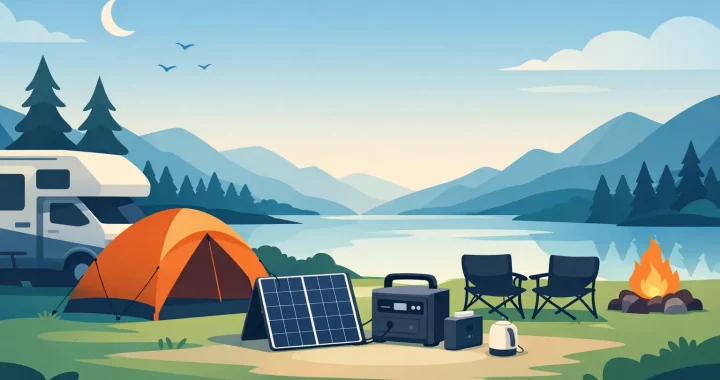
A loud generator can change the whole feel of a campsite fast. What should sound like wind through the trees starts sounding like a jobsite. If you are looking for a quiet generator alternative for camping, the better answer for most campers is not a quieter gas unit. It is a portable power station, sometimes paired with solar panels, built to run your essentials without fuel, fumes, or constant engine noise.
For many campers, that shift matters more than convenience. It means no gas cans in the trunk, no pull-start at sunrise, and no worrying about whether your setup will bother the next site over. It also means a different way to think about power. Instead of asking, “What generator should I bring?” the better question is, “What do I actually need to run, and for how long?”
Why a quiet generator alternative for camping makes more sense
Traditional generators still have a place. If you need to run high-wattage tools all day or keep multiple large appliances going for extended periods without sun, fuel-powered equipment can still be the practical choice. But that is not how most camping trips look.
Most campers need to charge phones, power lights, run a fan, keep a CPAP operating overnight, top off camera batteries, or maybe use a small electric cooler. Those are battery-power jobs. A modern portable power station handles them quietly and with far less setup.
That matters at campgrounds with noise restrictions, in dispersed camping where you want to keep the site low-impact, and on family trips where simple power is better than mechanical power. There is also less maintenance. No oil changes, carburetor issues, stale fuel, or engine troubleshooting after the unit sat in the garage for six months.
What actually replaces a generator at camp?
The most practical replacement is a portable power station with a lithium battery, AC outlets, USB ports, and enough inverter capacity to support the gear you plan to use. If you camp longer than a weekend or stay off-grid regularly, adding portable solar panels makes the setup more self-sufficient.
This is why the term solar generator has become so common, even though the core device is really a battery power station. The solar panel does not generate stored power by itself. It recharges the battery system. That distinction matters because battery size, inverter output, recharge speed, and battery chemistry affect your real-world performance much more than the marketing name.
If your goal is quiet, reliable camping power, the key categories are simple. You need enough battery capacity for the devices you use, enough output wattage for anything with a motor or heating element, and a recharge plan that fits your trip length.
How to choose the right quiet generator alternative for camping
Start with your actual loads, not the biggest unit you can afford. Bigger systems are useful, but they are also heavier and more expensive. A compact station may be perfect for tent camping, while a larger expandable setup may fit RV travel better.
For light camping power
If you mainly charge phones, tablets, cameras, lights, and maybe a laptop, a smaller power station often does the job. This is the easiest place to replace a generator completely. These devices draw relatively little power, and many campers overestimate what they need.
A weekend setup for light use usually benefits more from multiple charging ports and fast wall recharging before the trip than from oversized battery capacity.
For overnight comfort and medical devices
If you run a CPAP, fan, heated blanket on low settings, or similar overnight gear, battery capacity becomes the priority. You want enough watt-hours to get through the night with margin, not a unit that barely makes it until dawn.
This is also where pure sine wave AC output matters. Sensitive electronics and medical devices generally perform better with stable, clean power. It is not just about whether a device turns on. It is about dependable operation when you are away from home.
For coolers, cooking, and larger loads
Portable fridges, coffee makers, induction cooktops, microwaves, and electric grills change the equation. Some of these are manageable with a mid-size or large power station. Others will drain battery storage quickly, even if the inverter can handle the startup load.
That is the trade-off many campers miss. Output wattage tells you what a power station can run right now. Watt-hours tell you how long it can keep running it. A device with a heating element may be technically compatible and still be impractical for battery power if you expect long runtime.
The biggest advantages over gas generators
The most obvious benefit is noise, but it is not the only one. Battery-powered systems are easier to use in almost every part of a camping trip.
There are no exhaust fumes, which makes placement simpler and safer when you are managing a tight site. There is no need to store gasoline in your vehicle. Startup is instant. Most units are as simple as pressing a power button and plugging in your gear.
Recharge flexibility is another major advantage. You can charge from a wall outlet before leaving home, top up from your vehicle while driving, or use solar panels at camp. That gives you more ways to stay powered without committing to fuel.
For preparedness-minded buyers, there is also value beyond camping. A quality power station can serve at home during outages, on road trips, at tailgates, or in a work truck. A gas generator is often single-purpose. A battery system fits more situations.
Where battery power still has limits
Portable power stations are not magic, and treating them like unlimited power leads to disappointment. If you want to run a rooftop RV air conditioner for long periods, support multiple kitchen appliances, or keep power-hungry devices operating for days without sun or shore power, capacity adds up fast.
Weight can also become a factor. A small unit is easy to move from car to picnic table. A high-capacity power station with expansion batteries is a different category. It may still be quieter and cleaner than a generator, but it is not always the best match for minimalist camping.
Weather matters too. Solar charging sounds simple, but production depends on sunlight, panel size, angle, temperature, and shading. Under tree cover or during stormy stretches, your recharge rate may be limited. That means your battery size should cover your baseline needs without assuming ideal solar every day.
Features that matter most at camp
A camping power system should be judged by use, not just specs. LiFePO4 battery chemistry is a strong fit because it offers long cycle life and better durability for repeated use. Fast charging helps when you are prepping between trips. A clear display matters more than people think because you want to see input, output, and remaining battery quickly.
Port variety also matters. USB-C is useful for modern devices, regulated 12V output can help with vehicle-style accessories, and AC outlets cover the broader range of camping gear. If you plan to grow into longer trips, expansion battery capability can be worth considering from the start.
For shoppers comparing brands and categories, this is where curated systems stand out. A dependable unit from an established portable power line is often a better long-term buy than chasing the cheapest battery box online. At Thundervolt Power, that practical mindset drives the focus on portable power stations and solar-ready systems built for quiet, stable power in real-world conditions.
A realistic camping setup looks different for everyone
For a tent camper, a compact unit and a folding solar panel may be enough for lights, phones, and a fan. For a family in a travel trailer, a larger station with more AC output can support a cooler, device charging, and overnight essentials. For off-grid campers staying out longer, battery expansion and solar input become more important than outlet count.
The right system depends on whether you prioritize portability, runtime, or appliance support. Usually, you get to maximize two of those three before trade-offs start showing up in cost or weight.
That is why the best quiet generator alternative for camping is usually not one product. It is the right size power station for your actual load, with a recharge plan that matches the length and style of your trip.
If your goal is a campsite that stays peaceful while your essentials stay powered, quiet battery-based power is no longer a compromise. For many campers, it is the better system from the start. Choose for the way you camp now, but leave enough room for the trip that runs a little longer than planned.
