
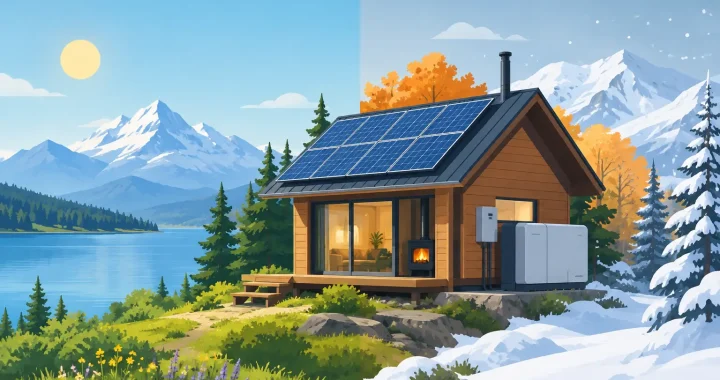
A cabin can feel truly remote until a dead battery pump, dark freezer, or cold morning makes electricity the limiting factor. Remote cabin electrification is not about bringing every convenience of a grid-connected house into the woods. It is about building a dependable power system around the loads that protect comfort, food, water, work, and safety.
The right setup is usually quieter and easier to live with than a fuel-only generator. Solar panels collect energy while you are away, a lithium battery bank holds it for when you need it, and an inverter delivers household-style AC power without engine noise. The key is sizing the system for real use, including the difficult days when clouds, short winter daylight, and higher heating demands all arrive at once.
Start Remote Cabin Electrification With Your Loads
The most common mistake in off-grid planning is buying a power station or solar array before calculating what the cabin actually uses. A high-wattage inverter can run a demanding appliance briefly, but battery capacity determines how long it can run. Those are two separate numbers, and both matter.
Begin by identifying the appliances that must work during a typical stay and the equipment that must stay powered when the cabin is vacant. A refrigerator, well pump, cellular booster, security camera, lights, laptops, charging stations, and small kitchen appliances are common starting points. Add medical equipment if it is part of your plan. Heating appliances, electric water heaters, full-size ranges, central air conditioning, and resistance space heaters can change the system size dramatically.
For each item, estimate its wattage and the hours it runs per day. Multiply watts by hours to find watt-hours. A 60-watt refrigerator that averages eight hours of compressor run time uses roughly 480 watt-hours per day. A 1,200-watt microwave used for 10 minutes uses about 200 watt-hours. This exercise reveals why brief high-power loads and all-day background loads need to be considered together.
Do not forget startup surge. Pumps, refrigerators, freezers, and power tools may draw several times their running wattage for a moment when the motor starts. A pure sine wave inverter with sufficient surge capacity helps these appliances start reliably and protects sensitive electronics from rougher power output.
Separate Essential Loads From Convenience Loads
A cabin system becomes more affordable and more reliable when it is built in tiers. Essential loads should continue operating through bad weather or an unexpected extended stay. Convenience loads can wait for strong sun, a generator recharge, or the next trip.
Essential loads often include refrigeration, water pumping, LED lighting, phone charging, communications, a router or satellite internet terminal, and a modest amount of laptop use. Convenience loads might include a toaster oven, coffee maker, hair dryer, power-hungry entertainment equipment, or air conditioning. There is nothing wrong with running those items, but they should not determine the minimum capacity needed to keep the cabin functional.
This distinction also guides behavior. Running a coffee maker at noon when solar production is strong has a different impact than running it before sunrise from stored battery power. A well-designed system gives you options, but it still rewards smart timing.
Choose Battery Capacity for the Weather You Actually Get
Battery storage is the reserve that carries the cabin through nighttime use, storms, and days when solar output falls short. For a weekend cabin with light loads, a portable power station may be enough. For a cabin used frequently, with refrigeration and water pumping, a larger expandable battery system offers more practical autonomy.
Lithium iron phosphate, often labeled LiFePO4, is a strong fit for remote cabins because it provides long cycle life, stable performance, and usable capacity in a comparatively compact package. It also avoids the routine maintenance associated with lead-acid battery banks. Still, cold weather deserves attention. Many lithium batteries should not be charged below freezing unless they include low-temperature charging protection or built-in heating. A battery stored in an insulated utility room is easier to manage than one left exposed in an unheated shed.
A sensible target for many cabins is one to three days of essential-load runtime without meaningful solar input. The right number depends on location, season, occupancy, and your backup plan. A summer retreat in Arizona can rely on very different solar conditions than a hunting cabin in northern Michigan during November.
Portable systems are especially useful when the cabin does not need a permanent electrical overhaul. They can power selected appliances directly, move between the cabin and vehicle, and be expanded with compatible batteries as needs grow. For a more permanent installation, a qualified electrician can connect an inverter and battery system to a dedicated essential-loads subpanel. This keeps critical circuits organized and prevents a large appliance from draining the system unexpectedly.
Size Solar for Recharge, Not Just Sunny-Day Use
Solar panels need to replace the energy used each day while leaving enough margin for clouds, panel angle, shade, and charging losses. A cabin that consumes 2,000 watt-hours daily should not be paired with only enough panels to produce 2,000 watt-hours under ideal laboratory conditions. Real conditions are less forgiving.
Panel placement matters as much as panel rating. Shade from trees, rooflines, and nearby ridges can cut production sharply, especially during low-angle winter sun. A south-facing installation with a clear solar window is generally the best choice in the continental United States, although roof orientation and local terrain may call for a ground mount. Ground-mounted panels are easier to angle seasonally and clear of snow, but they need protection from wind, wildlife, and accidental damage.
Portable solar panels make sense for smaller systems, seasonal cabins, and users who want to place panels in the sun while keeping the power station inside. Rigid mounted panels are usually the stronger choice when daily energy needs are larger or the cabin must remain powered while unoccupied.
Solar should be treated as the primary recharge source, not the only one. During multi-day storms or winter stretches, a fuel generator can provide a practical backup recharge method. Because the battery system absorbs the generator’s output and supplies loads afterward, you can run the generator for a shorter, more efficient charging window rather than leaving it on all day.
Plan the Electrical Side for Safety and Simplicity
A remote setting does not reduce the need for safe electrical work. It raises the stakes. Moisture, wildlife, rodents, lightning exposure, and long wire runs all require careful planning. Use correctly sized wiring, proper overcurrent protection, weather-rated equipment, grounding designed for the system, and protected cable routes.
If you are wiring AC circuits into the cabin, work with a licensed electrician familiar with off-grid or backup-power installations. Local permit requirements and National Electrical Code rules can apply even when the building is far from utility service. A transfer switch or dedicated critical-loads panel is essential when there is any possibility of connecting generator, utility, or inverter power to the same building wiring. Never backfeed power through a receptacle.
Keep the system understandable for every family member. Label circuits, disconnects, cables, and operating steps. Store a simple one-page startup and shutdown procedure near the equipment. Reliability is not only a matter of battery chemistry and panel wattage. It also comes from knowing what to do when a breaker trips after dark.
Build in Expansion Before You Need It
Cabin power needs rarely stay still. A weekend retreat can become a work-from-cabin location, a longer seasonal home, or a place where friends and family gather. A small system that supports lights and charging may later need to run a refrigerator, internet equipment, additional water pumping, or a window air conditioner.
Choose equipment with room to grow when the budget allows. Expandable battery configurations let you add stored energy without replacing the core unit. Multiple solar inputs or higher charging limits can make future panel additions easier. Extra inverter capacity may be worthwhile if you expect motor loads or tools, but oversizing every component from day one can waste money that would be better spent on battery storage or solar collection.
The practical balance is to build for today’s essential loads and leave a clear path for tomorrow. A system that is easy to add onto is usually a better investment than one oversized around occasional use.
Test the Cabin Before the Next Storm
Do not wait for an outage or a holiday weekend to find the weak point. Run the refrigerator, pump, lights, communications equipment, and typical charging loads from battery power for a full day. Watch how much energy is consumed, how quickly solar restores the battery, and whether any appliance causes an overload alarm.
Repeat the test in the season that places the greatest demand on your system. For many cabins, that is winter, when solar production drops and refrigeration, water protection, and lighting needs remain. Keep a backup charging plan, spare fuses where applicable, and a way to monitor battery status before making a long trip.
A cabin power system earns its value when conditions are inconvenient, not when the sun is high and every appliance is off. Plan around the loads you cannot afford to lose, give the battery and solar array enough margin, and your cabin will stay ready when the road out is long and the grid is nowhere close.
