
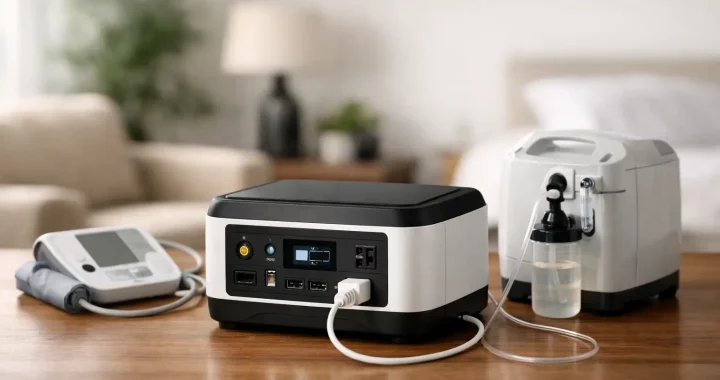
A power outage is never convenient, but it becomes urgent when a CPAP machine, oxygen concentrator, feeding pump, mobility device, or other essential equipment depends on electricity. A home medical backup battery gives your household a quiet, fuel-free source of power while the grid is down, helping protect the time you need to sleep safely, arrange assistance, recharge a device, or move to another location if necessary.
The right system is not simply the largest battery you can afford. It must match the medical device’s electrical requirements, provide enough runtime for the outage you are preparing for, and recharge in a realistic timeframe. Start with the device, then build a power plan around the person who relies on it.
Start With the Medical Device’s Power Requirements
Look at the equipment label, owner’s manual, AC adapter, or power supply. You need three numbers: running watts, startup or surge watts, and expected hours of use. If the label lists amps instead of watts, multiply volts by amps for a close estimate. For example, a device rated at 120 volts and 2 amps may draw up to 240 watts.
Running watts tell you how much power the device needs while operating. Surge watts matter for equipment with a motor or compressor, including many oxygen concentrators. A unit may use modest power once running but require a much higher burst of electricity to start. Your power station’s AC inverter must support that surge, not just the device’s regular wattage.
Do not rely on a generic estimate when the equipment is medically necessary. Settings, humidifiers, heated tubing, battery charging cycles, room temperature, and the age of the equipment can all change actual energy use. A CPAP without heat features may require far less power than one operating with a heated humidifier. An oxygen concentrator’s draw may change with flow setting and model.
If a device can run directly from DC power, ask the manufacturer which approved cable or external battery option is compatible. Avoid improvised adapters. Direct DC operation can sometimes extend runtime by avoiding AC inverter losses, but only when the device manufacturer specifically supports it.
Calculate the Battery Capacity You Actually Need
Battery capacity is measured in watt-hours, or Wh. This is the amount of energy stored, while watts describe the rate at which a device consumes energy. The basic planning formula is straightforward:
Device watts x hours of operation = watt-hours needed
A 60-watt device used for eight hours needs about 480Wh. That does not mean a 500Wh power station will reliably cover the full eight hours. AC conversion, temperature, charging accessories, and the station’s own operation use some energy. Plan for a meaningful buffer, especially for overnight use or storm-related outages that can last longer than expected.
For a device that needs 60 watts for eight hours, a battery in the 700Wh to 1,000Wh range may provide a more practical margin than a 500Wh unit. For equipment drawing 300 watts for eight hours, the energy requirement starts at 2,400Wh before accounting for losses. That is where a higher-capacity power station, an expansion battery, or a second independent unit may make sense.
Capacity planning should also account for the rest of the household’s immediate needs. A phone, lamp, internet equipment, or small fan can make an outage more manageable, but critical medical equipment gets priority. Do not size a battery based on running a refrigerator, television, and medical device together unless the power station and battery capacity can handle all of them with room to spare.
Plan for the Outage You Are Most Likely to Face
A short outage and a multiday storm call for different solutions. For a few hours, a compact portable power station may be enough for a lower-wattage device. For overnight protection, consider a larger battery with enough stored energy to cover the full sleep period without depending on a recharge.
For longer outages, recharge capability becomes part of the calculation. AC wall charging restores the battery before and after an event. Solar panels can provide valuable daytime replenishment when grid power remains unavailable. Vehicle charging can be another backup option, though it is usually slower and should not be your only plan.
Solar output depends on weather, season, panel placement, and available daylight. Treat solar as a way to extend your operating window, not as a guarantee that replaces stored battery capacity during a severe storm.
The Features That Matter in a Home Medical Backup Battery
Not every portable power station is suited to supporting sensitive equipment. A dependable setup should include the following practical capabilities:
- Pure sine wave AC output. This produces clean electricity similar to household wall power and is the preferred choice for sensitive electronics and many medical devices.
- Adequate continuous and surge output. The inverter must exceed the device’s running demand and accommodate any startup surge.
- LiFePO4 battery chemistry. Lithium iron phosphate batteries are valued for long cycle life, stable performance, and practical ownership over many years.
- Clear displays and accessible controls. In a nighttime outage, you should be able to see remaining battery percentage, input power, output load, and estimated runtime without guesswork.
- Multiple recharge options. Wall, solar, and vehicle charging give the household more ways to restore power when conditions change.
Expansion capability can be especially useful for families who need a smaller system for routine portability but want more stored energy for severe weather. An expandable station lets you increase capacity without replacing the core unit, provided the model supports the battery configuration you need.
Do Not Assume UPS Mode Solves Every Situation
Some power stations offer UPS or pass-through charging modes, allowing connected devices to run from wall power while the station charges. When utility power fails, the station switches to battery power. This can be useful, but transfer time and compatibility vary by model and by medical device.
Before relying on this setup, review the device manufacturer’s instructions and perform a controlled test when the patient is safe and awake. Plug the equipment into the power station, charge the station from the wall, and briefly disconnect utility power to see whether the device continues operating as expected. Never conduct a test that could put someone at risk.
For equipment where even a brief interruption is unacceptable, speak with the medical equipment provider, device manufacturer, and care team. A portable battery can be a valuable preparedness layer, but it may not be an appropriate standalone solution for every life-sustaining device.
Build a Backup Plan Around the Battery
A battery is one part of readiness, not the whole plan. Keep the power station charged, store it in a dry location with moderate temperatures, and inspect it regularly. Run a scheduled test every few months so you know the actual runtime, understand the controls, and confirm every cable is where it should be.
Keep the device manual, provider contact information, and local emergency numbers in a visible location. If a family member relies on power-dependent medical equipment, ask the utility about medical baseline or outage notification programs available in your area. Your equipment provider may also offer emergency instructions, replacement batteries, or guidance on approved backup options.
Have a clear escalation plan for an extended outage. That may include a nearby family member with power, a hotel outside the outage zone, an emergency shelter that can support medical needs, or calling emergency services when the person’s condition requires immediate help. Do not wait until the battery is nearly depleted to make that decision.
Use Safe Placement and Charging Practices
Portable power stations do not produce carbon monoxide, unlike gas generators. That makes them practical for indoor use when operated according to their instructions. Still, place the unit on a stable, dry surface with open airflow around its vents. Keep cables organized to reduce trip hazards, and keep the station away from direct heat, water, children, and pets.
If oxygen is in use, follow the oxygen supplier’s safety rules carefully. Keep all ignition sources away, do not smoke, and avoid placing electrical equipment where oxygen could collect or where cables could be damaged. The battery should support the oxygen equipment only as directed by its manufacturer.
Choose for Confidence, Then Test for Reality
The best home medical backup battery is sized for your specific device, your required runtime, and the outages your household can realistically face. A low-cost unit that runs out before morning is not real preparedness. A system with adequate watt-hours, pure sine wave power, enough inverter capacity, and a practical recharge plan gives you a far stronger foundation.
Thundervolt Power helps households compare portable power stations, expansion batteries, and solar charging options built for dependable backup use. Once you choose your system, charge it, test it with the actual equipment, and make it part of a larger emergency plan. Preparedness is most valuable before the lights go out.
