
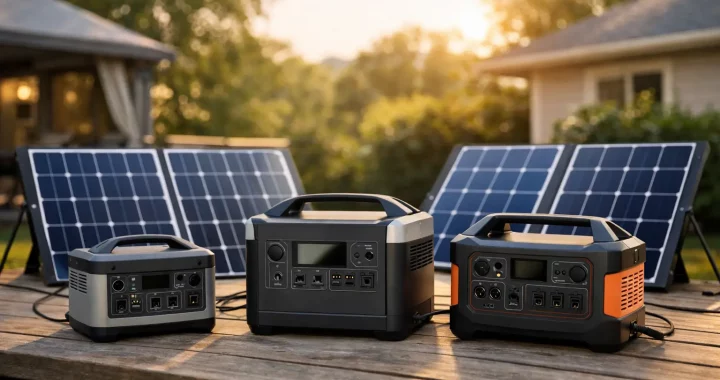
A refrigerator full of food, a CPAP machine beside the bed, and a phone that needs to stay connected all create very different backup-power demands. A useful solar generator comparison starts with those real loads, not the biggest watt-hour number on a product page. The right system gives you stable power when the grid is down, without fuel storage, engine noise, or the hassle of starting a gas generator in bad weather.
A solar generator is typically a portable power station paired with compatible solar panels. The power station stores electricity in its battery, converts it into usable AC power through an inverter, and supplies DC and USB power for smaller devices. Solar panels recharge the battery when grid power is unavailable. That combination can support emergency readiness, RV travel, jobsite work, and off-grid weekends, but only when its capacity and output match the equipment you actually plan to run.
Solar Generator Comparison Starts With Two Numbers
The first number is battery capacity, measured in watt-hours, or Wh. This is the amount of stored energy available. A 1,000Wh power station can theoretically run a 100W device for about 10 hours. Real runtime will be lower because power conversion uses energy, and some appliances cycle on and off rather than drawing a steady load.
The second number is AC inverter output, measured in watts. This tells you how much power the station can deliver at one time. Capacity determines how long a device can run. Inverter output determines whether the station can start and operate it in the first place.
For example, a 500Wh unit with a 600W inverter may be a practical choice for phones, laptops, lights, a modem, and a small fan. It may not be enough for a microwave, coffee maker, or many full-size refrigerators. A larger power station with 2,000Wh or more can provide far more meaningful outage coverage, especially if it has a 2,000W-class inverter and expansion battery support.
Do not overlook surge power. Refrigerators, pumps, air conditioners, and power tools can draw a brief burst of wattage as their motors start. A station must handle both the appliance’s running wattage and its startup demand. If the inverter cannot support that surge, the appliance may fail to start even if its listed running wattage looks acceptable.
Estimate Runtime Before You Buy
Start by listing the devices that matter most during an outage or trip. Then estimate each device’s wattage and how many hours it will run per day. A 60W CPAP used for eight hours needs roughly 480Wh before conversion losses. A refrigerator is more variable because its compressor cycles, but it can consume several hundred watt-hours to well over 1,000Wh per day depending on its size, age, room temperature, and how often the door opens.
For planning purposes, leave a margin. Avoid sizing a system to meet only the exact calculated load. Extra capacity helps account for inverter losses, cold weather, unexpected use, and a longer outage than expected. It also reduces the pressure to drain the battery to empty every day.
Compare Battery Chemistry and Expected Service Life
Most buyers looking for dependable backup power should prioritize LiFePO4 battery chemistry. LiFePO4 batteries are known for long cycle life, thermal stability, and practical durability. They are well suited to power stations that may sit charged and ready for storm season, then see repeated charging and discharging during an extended outage or off-grid trip.
Battery capacity still matters, but chemistry affects the long-term value of that capacity. A lower-priced unit with a battery that wears out sooner may not be the better preparedness purchase. Check the stated cycle-life rating, warranty terms, and the manufacturer’s guidance for storage and operating temperatures.
Cold conditions deserve special attention. Batteries can discharge in cold weather, but charging limitations may apply at low temperatures. If you expect winter outages, keep the power station indoors or in a protected area when possible, and review its temperature specifications before relying on solar charging outside.
Charging Speed Matters as Much as Stored Power
A large battery is only as useful as your ability to recharge it. Compare AC charging, solar input, and vehicle charging separately. Fast AC charging is valuable when a storm warning gives you only a few hours to prepare. A high solar-input limit becomes more important when the outage lasts beyond the first night.
Solar-panel ratings can be misleading if viewed in isolation. A 200W panel does not produce 200W all day. Output changes with sun angle, cloud cover, heat, shade, panel orientation, and time of year. In real conditions, solar charging requires patience and planning. A larger compatible solar array provides more recovery potential, but it also costs more and takes up more storage space.
When comparing systems, confirm the maximum solar input in watts and the accepted voltage range. A power station may work with multiple panels, yet still cap how much solar energy it can accept. The best arrangement balances panel output with the station’s input limit rather than paying for panel capacity the station cannot use.
Decide Whether Expansion Is Worth It
Expansion batteries change the role of a solar generator. A compact station can be ideal for weekend camping, but a system that accepts extra batteries can grow into a more serious home-backup solution. This is especially useful for homeowners who want to begin with essential loads and add storage later.
Expansion makes sense when your priorities include refrigerator runtime, overnight medical-device support, remote work during outages, or running a window air conditioner for limited periods. It is less necessary when your main goal is charging phones, lighting a tent, and keeping a small cooler running for a day or two.
Before choosing an expandable system, look beyond the maximum advertised capacity. Check how many batteries it supports, whether expansion batteries are available separately, how they connect, and whether the inverter output changes with expansion. More battery storage extends runtime, but it does not automatically increase the watts available to run an appliance.
Match Outputs to Your Equipment
A dependable power station should make daily use straightforward. Pure sine wave AC output is the right choice for sensitive electronics and motor-driven appliances because it delivers clean power similar to household electricity. Multiple AC outlets are helpful when a home outage requires a modem, lamp, fan, and refrigerator connection at the same time.
USB-C ports matter for modern laptops and tablets, while standard USB ports cover phones, headlamps, and smaller accessories. A regulated 12V output can be useful for coolers, routers, portable radios, and vehicle-oriented equipment. For RV users and contractors, outlet placement, port covers, cable length, and overall unit weight can matter just as much as the headline specifications.
Some power stations include a UPS or emergency power supply function that switches connected devices to battery power when grid electricity fails. This can be useful for a modem, desktop computer, or certain medical equipment, but switch time, load limits, and device compatibility vary. Critical medical equipment should always be tested with the selected power station before an emergency.
Compare by Use Case, Not Just Price
The least expensive unit is rarely the best value if it cannot cover the load that matters when power fails. A smaller system is often the practical choice for car camping and personal electronics. Mid-capacity models fit many RV users, remote workers, and families who want to protect food and communications through short outages. High-capacity, expandable systems are better suited to longer outages, larger appliance loads, and households building a layered emergency-power plan.
Weight is the trade-off many buyers discover late. More capacity means more battery mass. If one person must carry the unit from storage to the kitchen or RV, consider manageable form factors, sturdy handles, and whether a wheeled setup would make deployment easier. A system that is too heavy to move quickly is less useful when weather is already closing in.
At Thundervolt Power, the most practical choice is the one that gives your essential equipment enough runtime, accepts the charging options you can realistically use, and leaves room for future needs. Compare watts, watt-hours, recharge capability, battery chemistry, and expansion support together. Then choose the system you can set up confidently before the next outage puts that decision to the test.
