
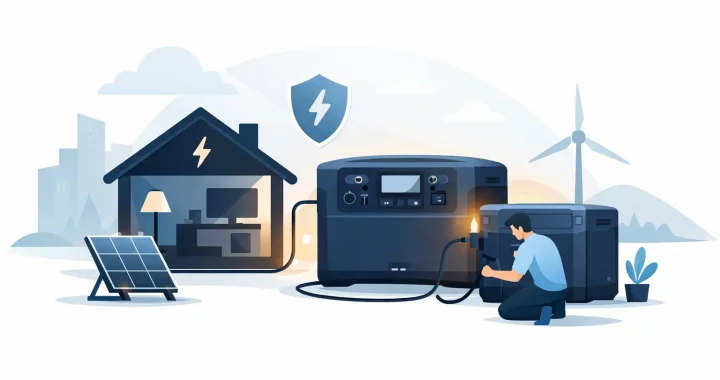
A portable power station can keep essential devices running during an outage. An expansion battery changes the equation by giving that station more stored energy for longer runtimes. Knowing how to use an expansion battery correctly helps you build backup power that matches your real needs, whether that means keeping a refrigerator cold overnight, working from an RV, or supporting critical medical equipment.
An expansion battery is not usually a standalone power source. It is designed to work with a compatible portable power station, using that station’s inverter, outlets, display, and charging system. The battery adds capacity. The power station controls how that capacity is delivered.
Start With Compatibility, Not Capacity
The first rule is simple: use only an expansion battery approved for your specific power station model. Expansion batteries are not universal, even when connectors appear similar. Each brand and model may use different communication protocols, voltage requirements, firmware, and cable designs.
Check the product manual or model specifications before connecting anything. Confirm the exact power station model, the supported expansion battery model, and the maximum number of batteries the system allows. Some stations support one extra battery, while larger systems can accept two or more.
Capacity matters, but compatibility comes first. A large battery that cannot communicate correctly with the power station will not provide dependable power. Never try to adapt an unsupported battery with homemade wiring, third-party connector changes, or improvised cables. That can damage equipment and may create a fire or shock hazard.
What the expansion battery actually does
Your portable power station contains the inverter that converts stored DC battery energy into the AC power used by household appliances. It also manages the USB ports, DC outputs, charge inputs, display, and battery protection systems. The expansion battery increases the total watt-hours available to that system.
For example, a 2,000Wh power station paired with a compatible 2,000Wh expansion battery provides roughly 4,000Wh of stored energy. Actual usable energy at AC outlets will be somewhat lower because power conversion uses energy. That is normal and should be factored into your runtime expectations.
How to Use an Expansion Battery Step by Step
Set up the system on a stable, dry, well-ventilated surface. Keep both units away from direct rain, standing water, high heat, and blocked air vents. Expansion batteries are heavy, so place them where they will not need to be moved often during an emergency.
With the power station and expansion battery turned off, inspect the expansion cable and ports. Look for bent pins, debris, moisture, or damage to the cable insulation. Use the manufacturer-supplied expansion cable whenever possible. It is built for the current load and communication requirements of the system.
Connect the cable firmly to the designated expansion ports on both units. Do not force the connector. Most systems use keyed connectors that align in one direction. Once connected, turn on the expansion battery if it has a separate power button, then turn on the portable power station.
The station display should recognize the added battery. Depending on the model, you may see increased total capacity, a battery icon, or a separate expansion battery status screen. If the display does not recognize it, turn both units off, disconnect the cable, inspect the connections, and reconnect carefully. If the issue continues, stop using the system until you can verify the setup with the product documentation or customer support.
After the connection is confirmed, charge the complete system. Many compatible systems manage charging automatically and balance energy between the main unit and expansion battery. Still, the charge time will be longer because you are filling more stored capacity. A fast AC charge input can be useful before a forecasted storm, while solar charging can extend your energy supply during a prolonged outage or off-grid trip.
Size Your Battery for the Loads That Matter
An expansion battery extends runtime. It does not increase the power station’s maximum AC output unless the manufacturer specifically states that it does. This distinction prevents a common mistake.
If your power station can supply 2,000 running watts, adding an expansion battery may let it run a 200-watt refrigerator for much longer, but it will not necessarily allow it to start a 3,000-watt appliance. Check both the appliance wattage and the station’s continuous and surge ratings.
To estimate runtime, start with watt-hours. Divide your available battery capacity by the appliance’s average wattage, then reduce the estimate by roughly 10% to 20% for inverter losses, temperature, and changing appliance demand.
A 4,000Wh system powering a 100-watt average load could run for roughly 32 to 36 hours in practical conditions. A refrigerator is more complicated because its compressor cycles on and off. Its label may show a higher running wattage, but its average daily use can be lower. A watt meter is the best way to measure the actual demand of appliances you plan to support.
Prioritize loads that protect safety, food, communication, and basic comfort. During an outage, that may include a refrigerator, modem and router, phones, lights, CPAP equipment, and a small fan. High-draw heating appliances, electric ranges, clothes dryers, and central air systems can drain stored energy quickly. A window air conditioner may be workable with a properly sized power station, but startup surge and runtime should be checked before relying on it during hot weather.
Charge for Readiness and Recharge With a Plan
For home backup, keep the main power station and expansion battery charged according to the manufacturer’s storage guidance. Many LiFePO4 systems are well suited to frequent use and long-term ownership, but every battery benefits from sensible storage practices.
If severe weather is expected, fully charge the system early. Do not wait until the outage begins, when charging options may be limited. Test the setup beforehand by running your intended essentials for an hour or two. This confirms that the expansion battery is recognized and gives you a realistic view of energy use.
During an extended outage, manage charging as carefully as you manage consumption. Solar panels can provide quiet, fuel-free replenishment when sunlight is available. Panel output changes with weather, season, angle, shade, and panel size, so treat solar as a daily energy source rather than an instant replacement for wall charging.
If you use a gas generator to recharge your battery system, operate the generator outdoors and well away from doors, windows, and vents. The battery system can then provide quiet power indoors while the generator runs only when recharging is needed. This approach can reduce fuel use and overnight generator noise.
Use It Safely During an Outage or Off-Grid Trip
Portable power stations and expansion batteries are safer and quieter than traditional fuel generators in many situations, but they still require basic care. Keep them dry, avoid covering them with blankets or storage bins, and leave space around vents. Do not place heavy objects on cables or stack equipment unless the manufacturer specifically permits it.
Use appropriately rated extension cords and avoid overloading power strips. Plug essential devices directly into the station when practical. For appliances with motors or compressors, allow for startup surge and avoid switching on several high-demand devices at the same time.
If you need to power home circuits, do not plug the power station into a wall outlet to feed your house wiring. This dangerous practice, often called backfeeding, can injure utility workers and damage equipment. Use a properly installed transfer switch or power inlet installed by a qualified electrician if you want to supply selected home circuits.
For travel, secure both the power station and expansion battery so they cannot slide or tip while driving. Avoid leaving lithium battery equipment in a vehicle during extreme heat whenever possible. For camping and RV use, keep connections protected from dust and moisture, and plan a charging routine around your expected daily consumption.
When an Expansion Battery Is the Right Upgrade
An expansion battery makes the most sense when your existing power station already has enough output for your appliances but not enough runtime. It is especially useful for overnight refrigerator backup, multi-day communication and lighting, remote work setups, RV stays, and family emergency plans.
It may not be the right answer if your real limitation is output wattage. If your station cannot handle the starting or running demand of an appliance, more battery capacity alone will not solve the problem. In that case, consider a higher-output power station or reduce the loads you intend to run.
A dependable backup system is built before the emergency, not during it. Connect your compatible expansion battery, test the loads that matter most, and keep a practical recharging plan ready. When power becomes unstable, that preparation gives your household more time, more options, and greater peace of mind.
