
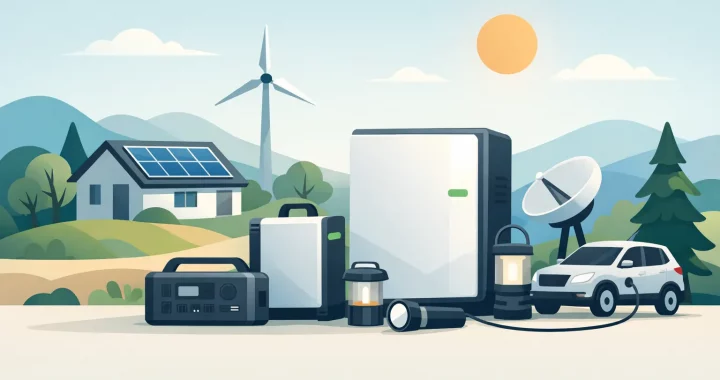
A storm does not wait for a convenient time to cut power. Neither does a dead vehicle battery at a remote campsite, a jobsite without an outlet, or an RV parked miles from shore power. Off grid power storage gives you a practical reserve of electricity that is ready when the grid is unavailable, unreliable, or simply out of reach.
For many households and mobile users, the goal is not to power every circuit forever. It is to keep the things that matter working: phones, lights, refrigerators, internet equipment, CPAP machines, laptops, tools, and selected appliances. The right battery system turns that goal into a plan you can use immediately.
What Off Grid Power Storage Actually Does
Off-grid power storage is a battery-based system that stores electricity for later use. It can be charged from a wall outlet before an outage, from portable solar panels while away from the grid, from a vehicle outlet, or from a compatible generator. When power is needed, an inverter converts the battery’s DC electricity into the AC power used by most household devices and appliances.
Portable power stations make this process far simpler than building a fixed battery bank from separate components. A single unit can combine the battery, inverter, charge controller, display, and output ports in one enclosed system. You can place it in a kitchen during an outage, move it to an RV, or bring it to a work area without dealing with fuel, exhaust, or generator noise.
That convenience does have limits. A portable station is not automatically a whole-home backup system, and its usable capacity must match the loads you expect to run. Planning around real wattage and runtime is what separates a reassuring backup from an expensive device that cannot carry the job.
Start With the Loads That Cannot Wait
The most useful way to size a system is to identify your priority loads before comparing models. During a short outage, that may mean a refrigerator, several lights, phones, a modem and router, and a CPAP machine. For travel, it may be a cooler, laptop, camera batteries, fan, and small cooking appliance. At a jobsite, it may be chargers, lights, and specific corded tools.
Every device has two power questions: how many watts it draws while running and how long it needs to run. Watts describe the immediate demand. Watt-hours describe stored energy and are the more useful number for estimating runtime.
A 1,000Wh power station, for example, does not usually provide a full 1,000Wh through its AC outlets. Inverter conversion and normal system losses reduce usable output. As a practical planning margin, assume you may have roughly 80 to 90 percent available for AC-powered equipment, depending on the system and load.
If a refrigerator averages 100 watts over time, a 1,000Wh station may keep it running for several hours, but the result changes with room temperature, compressor cycling, door openings, and startup demand. A laptop drawing 60 watts has a much lighter energy requirement. This is why one battery can feel oversized for electronics yet undersized for heating appliances.
Running Watts and Starting Watts Are Different
Motors and compressors often require a brief surge when they start. Refrigerators, freezers, pumps, and some power tools may draw far more power for a few seconds than their listed running wattage suggests. Your power station’s inverter must support that surge, not just the appliance’s normal draw.
Pure sine wave output is also worth prioritizing. It delivers clean AC power similar to standard household electricity and is a better fit for sensitive electronics, modern appliances, medical devices, and equipment with motors. Modified sine wave systems can cost less, but they may cause noise, heat, or poor performance with certain devices.
Choose Capacity for the Situation, Not the Biggest Number
Higher capacity generally means longer runtime, but it also adds cost, weight, and recharge time. The best system is the one you can realistically transport, recharge, and use when conditions are difficult.
For personal electronics, lighting, communications, and occasional small devices, a compact power station can provide meaningful emergency coverage. For a refrigerator, multiple family devices, internet equipment, and overnight medical needs, a larger unit in the 1,000Wh to 2,000Wh range is often a more realistic starting point. If you need to support high-demand appliances or cover longer outages, expandable battery capacity becomes especially valuable.
Expansion batteries let you begin with a manageable core power station and add stored energy as your needs grow. That approach is useful for homeowners who want basic outage coverage now but may later add solar charging, a freezer circuit, an RV setup, or longer-duration backup. Capacity can scale without replacing the entire system.
Do not confuse battery capacity with inverter output. A large battery can store plenty of energy but still be unable to run a high-wattage appliance if the inverter is too small. Likewise, a powerful inverter may run an appliance briefly but drain a modest battery quickly. Both specifications need to work together.
Solar Charging Extends Your Independence
A charged battery is useful. A battery that can recharge from sunlight is far more capable during a prolonged outage or extended off-grid trip. Portable solar panels give you a fuel-free way to replace energy during daylight hours, provided weather, panel size, and solar exposure cooperate.
Solar charging is not instant, and advertised panel ratings are best viewed as peak potential rather than a guaranteed hourly result. Clouds, shade, panel angle, temperature, and the season all affect output. A 200W panel may not produce 200 watts continuously, particularly early or late in the day.
The practical question is whether your solar input can keep pace with daily consumption. If you use 800Wh each day and your solar setup reliably returns 500Wh, the battery will slowly decline. If it returns more than you use, you have a workable cycle for continued use. For long-term off-grid power storage, this daily energy balance matters more than a single large battery rating.
Position panels in direct sun, keep them clear of shade, and move portable panels as the sun changes position when possible. Even partial shade on one section of a panel can cut output significantly. A power station with fast solar input capability can make better use of favorable sunlight, but the panels and conditions still determine how much energy is available.
Why LiFePO4 Fits Preparedness Use
LiFePO4, or lithium iron phosphate, battery chemistry has become a strong choice for portable backup power. It is valued for long cycle life, stable performance, and a safety profile well suited to repeated charging and discharging. For users who expect to keep a station ready year after year, cycle life is not a minor specification. It affects the long-term value of the system.
Lithium-based systems are also generally lighter and more energy-dense than older lead-acid alternatives. That matters when you need to carry a unit from a garage to a kitchen, load it into an RV, or set it up at a remote site. Weight still increases sharply with capacity, so consider where the unit will live and who will need to move it.
Cold weather deserves attention. Batteries can discharge in low temperatures, but charging lithium batteries below their approved temperature range can cause damage. If winter outages are a concern, store and charge equipment in a protected area and follow the manufacturer’s operating guidance.
Build a Backup Plan You Can Use Under Pressure
Equipment only helps when it is charged, accessible, and matched to the task. Keep your power station topped up according to its storage recommendations and test it before storm season. Run the devices you depend on most, including the actual cables and adapters you would use during an outage.
For a refrigerator or freezer, pre-plan where the station will sit and use an appropriately rated extension cord if needed. Avoid routing cords through doorways where they can be damaged or create a trip hazard. Never operate a fuel generator indoors, but a battery power station can be used indoors when used as directed because it produces no exhaust.
It also helps to separate essential loads from convenience loads. A microwave, coffee maker, space heater, hair dryer, and electric kettle can drain a battery rapidly. That does not mean they are forbidden. It means each use should be intentional when stored power is limited. Heat-producing appliances are often the fastest way to turn hours of backup into minutes.
For families relying on medical equipment, verify the device’s power needs with the manufacturer or care provider and maintain a backup plan beyond one battery. For contractors, check tool startup loads and consider charging tool batteries during daylight if solar is available. For RV travelers, measure actual usage over a typical day before committing to capacity.
Thundervolt Power focuses on portable, lithium-based systems because readiness should not require fuel runs, loud engine noise, or a complicated installation. The right station gives you stable power where you need it, with the option to expand as your needs change.
A Better Standard for Being Prepared
Off-grid power is not about pretending you can control the weather, the grid, or every unexpected stop along the road. It is about reducing the disruption when those things change. Choose a system around the devices you truly need, allow room for surge power and real-world losses, and add solar or expansion capacity when longer independence matters.
A fully charged power station, a clear list of priority loads, and a practiced setup can turn a stressful outage or remote workday into a manageable problem. That is the kind of readiness worth keeping close at hand.
