
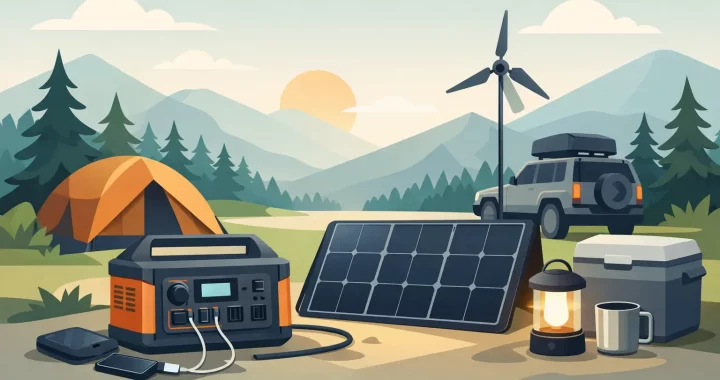
When your campsite gets dark, the wrong power setup shows itself fast. A phone dies before morning, the cooler stops holding temp, and the fan that mattered all afternoon is suddenly useless. Camping power station essentials are not about having more gear. They are about having the right capacity, outputs, and charging options so your trip stays comfortable and your power stays dependable.
What camping power station essentials actually mean
A portable power station for camping is not just a big battery with outlets. It is your charging hub, backup source, and in some setups, the difference between basic convenience and real off-grid capability. The essentials come down to matching the unit to how you camp, what you need to run, and how long you plan to stay out.
That means looking at watt-hours, inverter output, battery chemistry, charging speed, and solar compatibility as one system, not separate features. A power station that looks impressive on paper can still be a poor fit if it recharges too slowly, lacks the ports you need, or forces you to ration power by the second day.
Start with battery capacity, not marketing claims
Battery capacity is where most buying decisions should begin. This is measured in watt-hours, and it tells you how much stored energy the unit has available. If your campsite needs are basic – charging phones, running LED lights, and topping off a speaker – a smaller unit can be enough. If you want to power a portable fridge, CPAP machine, laptop, electric blanket, or fan overnight, you need more reserve.
The trade-off is simple. More watt-hours usually means more runtime, but also more weight and a higher cost. For car camping, extra capacity is often worth it because you are not carrying the unit far. For tent camping where portability matters, a lighter station may be the smarter choice, even if it means being more selective with what you run.
As a practical baseline, think about your heaviest daily users first. A campsite light setup barely moves the needle compared to a fridge cycling all day or a CPAP running through the night. Once you know those loads, capacity becomes less of a guess and more of a plan.
Output power matters just as much as battery size
A large battery does not help if the inverter cannot handle the device you want to plug in. Output is measured in watts, and it determines what the station can run at one time. Some devices also need a brief startup surge that is higher than their normal running wattage, especially anything with a motor or compressor.
This is one of the most common mistakes in camping setups. Buyers focus on battery size, then discover the unit will charge phones and laptops just fine but struggles with a coffee maker, induction cooktop, or portable cooler. If you plan to run AC devices, a pure sine wave inverter is the standard to look for. It delivers clean, stable power that is safer for sensitive electronics and more dependable for a wider range of equipment.
For simple camping use, lower output can work well. For more comfort-oriented setups, especially family camping or RV-style convenience without hookups, stronger inverter capacity gives you more flexibility and fewer limitations.
The best camping power station essentials include the right ports
Port selection sounds minor until everyone needs to charge at once. A practical camping unit should offer a mix of AC outlets, USB-A, USB-C, and 12V options. That mix gives you better efficiency because not every device should be charged through an AC adapter when a direct DC port will do the job with less wasted energy.
USB-C is especially useful now because many phones, tablets, cameras, and laptops can all charge from the same standard. A 12V car port can also be important for coolers, air pumps, and travel accessories. More ports are not automatically better, but the right variety makes the station easier to use in the real world.
If your camp setup includes multiple people, think beyond your own phone. Headlamps, watches, tablets, cameras, Bluetooth speakers, and portable fans add up fast. Good output flexibility keeps the whole group powered without juggling adapters all day.
Battery chemistry affects long-term value
Not all portable power stations are built the same, and battery chemistry is a major reason why. LiFePO4 batteries have become a strong choice for buyers who care about safety, longer cycle life, and dependable performance over time. For camping, that matters because your power station is not just for one trip. It may also serve as emergency backup at home, tailgate power, or mobile energy for road travel.
A cheaper unit with older battery chemistry may seem fine if you only compare price tags. But long-term durability, charge cycles, and stability under repeated use often make LiFePO4 the better investment. If you camp regularly or want one system to cover recreation and outage readiness, this feature deserves real attention.
Recharging speed can make or break a weekend
A portable power station is only as useful as your ability to refill it. If your campsite plan includes two or three days away from reliable wall power, charging options become essential. Fast AC charging is helpful before you leave home. Solar charging matters once you are out there.
This is where many buyers underestimate their needs. A station with large capacity but weak solar input can take too long to recover during the day, especially with inconsistent weather. If you plan to stay off-grid for more than a quick overnight, look at solar input limits and realistic recharge times, not just whether solar is technically supported.
Portable solar panels make the most sense for longer stays, sunny environments, and users who want a quieter, fuel-free system with less dependency on vehicle charging. They are not magic. Cloud cover, season, panel angle, and shade all affect performance. But with a compatible setup, solar can keep lights, device charging, and low-draw appliances going much longer than battery power alone.
Weight, portability, and campsite layout matter
Camping power station essentials are not only about electrical specs. Physical design matters too. Handles, wheel options on larger units, cable organization, display visibility, and overall portability affect how easy the station is to use once you arrive.
A high-capacity unit is great if it sits next to your vehicle or RV. It is less appealing if you need to carry it across uneven ground to a tent site. Think honestly about your setup. Car campers can usually prioritize capacity. Campers walking gear into a site may need to balance power needs against manageable weight.
Placement matters as well. If the station will sit in a tent vestibule, under an awning, or in the back of an SUV, cord length and access to ports become more important than they seem on a product page.
Weather readiness and quiet operation are part of the value
Traditional generators still have their place, but many campers want power without fuel storage, exhaust, pull starts, or engine noise. That is why quiet battery-based systems continue to gain ground. They are easier to use at family campgrounds, better for overnight operation, and more practical when you want power close to where you sleep or relax.
That said, you still need to treat any power station as gear that requires care. Keep it dry, avoid extreme heat inside a closed vehicle, and understand the operating temperature range. If your trips include shoulder-season cold or intense summer sun, those conditions should factor into your choice.
Choosing the right size for your camping style
The best system depends on how you camp. Minimalist campers often do well with compact stations focused on lights, phones, and camera batteries. Families usually need more capacity because multiple people mean multiple devices, plus comfort items that run longer. RV users or base-camp setups may need enough inverter power to support appliances that bring a more home-like experience.
There is also a middle ground that fits many buyers well: a portable unit large enough for overnight essentials, fast enough to recharge quickly, and compatible with solar for longer trips. That kind of setup covers recreation while also giving you backup value at home. For many practical buyers, that flexibility matters as much as camping performance itself.
Thundervolt Power focuses on this kind of dependable, real-world capability because the goal is not just to own portable energy. It is to have stable power where and when you need it.
What to prioritize before you buy
If you are comparing models, start with the devices you actually plan to run. Check both running wattage and estimated daily use. Then compare that against battery capacity, inverter output, and recharge options. After that, look at battery chemistry, port selection, and physical portability.
Do not pay for oversized capacity if your trips are simple and short. At the same time, do not undersize your system so much that every weekend becomes an exercise in rationing battery life. The right choice usually sits between those extremes.
Camping is easier when power stops being a question mark. Choose a setup that fits your real usage, leaves room for the unexpected, and gives you one less thing to worry about after sunset.
