
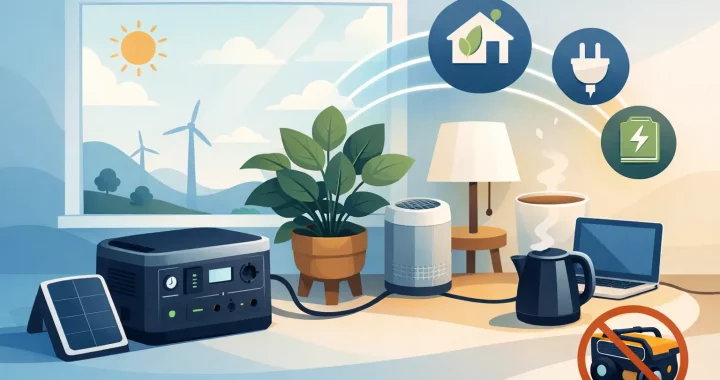
When the power goes out, a gas generator may seem like the obvious answer. But it cannot be used in a house, garage, basement, shed, or enclosed porch. Carbon monoxide can build up quickly and create a deadly emergency. A portable generator alternative for indoors is a battery power station: stored electricity that delivers quiet, fume-free backup power where your family actually needs it.
For homeowners, RV travelers, and anyone preparing for unstable weather, the question is not whether battery power can replace every generator. It cannot. The better question is what you need to keep running, for how long, and how quickly you need to recharge. A correctly sized portable power station can handle essential electronics, lighting, communication, refrigeration support, work equipment, and many medical devices without fuel storage, engine maintenance, or generator noise.
Why Gas Generators Do Not Belong Indoors
Conventional portable generators burn gasoline, propane, or diesel to make electricity. Their exhaust contains carbon monoxide, an odorless gas that can be fatal. Opening a window, placing the unit near a door, or running it in an attached garage does not make it safe. A generator must operate outside, well away from doors, windows, and vents.
That limitation matters during a storm, overnight outage, or winter emergency. You may need power inside for a CPAP machine, modem, phone charger, lamp, refrigerator, or laptop. Moving fuel, managing extension cords, and monitoring a running engine in bad weather can add stress when the priority should be keeping your household safe and comfortable.
Battery power stations create electricity from stored energy instead of combustion. They have no exhaust and no fuel tank, so they are suitable for indoor use when operated according to the manufacturer’s instructions. They also run quietly, which is valuable in apartments, campgrounds, shared homes, and any situation where generator noise would be disruptive.
The Best Indoor Alternative: A Portable Power Station
A portable power station combines a lithium battery, inverter, charging system, and multiple outlets in one portable unit. Plug in devices directly through AC outlets, USB ports, or 12V outputs. Recharge the station from a wall outlet, vehicle outlet, solar panels, or sometimes a compatible generator.
Most serious backup systems use a pure sine wave inverter. This produces power that is appropriate for sensitive electronics, including laptops, televisions, networking equipment, and modern appliances. For long-term preparedness, look for LiFePO4 battery chemistry. LiFePO4 batteries are known for long cycle life, stable performance, and a useful balance of capacity and safety for home backup applications.
A portable power station is not simply a large phone charger. Higher-capacity models can support a refrigerator, microwave, coffee maker, power tools, or a window air conditioner, depending on the unit’s output rating and the appliance’s startup demand. Some systems also accept expansion batteries, allowing you to begin with practical daily backup power and add more stored energy as your needs grow.
How to Choose a Portable Generator Alternative for Indoors
The right unit depends on watts, watt-hours, and the equipment you consider essential. These ratings answer different questions, and confusing them is one of the fastest ways to buy too little power.
Start With Running Watts and Surge Watts
Watts measure the amount of power a device needs at a given moment. A 60-watt lamp needs far less than a refrigerator compressor, microwave, or air conditioner. Check the label on each device or appliance and add the running watts for items you expect to use at the same time.
Then account for surge power. Motors in refrigerators, sump pumps, and air conditioners can draw a higher burst of electricity when starting. A power station may have enough continuous output for an appliance but still fail to start it if its surge rating is too low. This is why a 300-watt unit can be excellent for phones and laptops yet unsuitable for a refrigerator, even if the refrigerator’s average running draw appears modest.
For a basic outage kit with phones, lights, a router, and a laptop, lower output may be enough. For kitchen essentials, a full-size refrigerator, or a jobsite tool, step up to a unit with substantially higher AC output and adequate surge capacity.
Size the Battery by Watt-Hours
Watt-hours, shown as Wh, measure stored energy. Think of watts as speed and watt-hours as the size of the fuel tank, except the energy is stored in a battery.
A 1,000Wh power station could theoretically run a 100-watt load for 10 hours. Real-world runtime is lower because inverters use some power and appliance demand changes as compressors cycle on and off. A practical estimate is to use about 80 to 90 percent of the stated capacity for AC-powered devices.
If your priority is keeping a router, phones, lights, and a laptop available through an evening outage, a compact unit may be sufficient. If you need refrigeration support overnight or want to run multiple household essentials, 1,000Wh to 2,000Wh is often a more realistic starting range. Extended outages may call for expansion batteries, solar input, or a plan to recharge from a vehicle or outdoor generator.
Match the Charging Plan to the Emergency
Stored energy is only as useful as your ability to replenish it. Wall charging is ideal before a storm and for everyday readiness. Fast AC charging can bring a large unit back to usable capacity quickly when grid power returns or when you have access to a compatible outdoor power source.
Solar charging adds resilience during multi-day outages, camping, and off-grid travel. Output depends on panel size, weather, sun angle, and time of year, so treat solar as a recharge strategy rather than a guaranteed instant replacement for grid power. A portable solar panel can still make the difference between a battery that lasts one night and a system that supports essential devices for days.
Vehicle charging is another useful backup option, especially for travelers. It is typically slower than wall charging, but it can keep communication devices and smaller loads available while you are on the road.
What an Indoor Battery System Can and Cannot Replace
Battery power stations are especially effective for quiet, essential loads. They can keep phones charged, maintain internet equipment, power LED lights, run laptops, support a CPAP machine, and help preserve food by powering a refrigerator in intervals. They are also a practical choice for tailgates, remote work, RV use, and outdoor recreation where a fuel generator would be excessive.
The trade-off is runtime under heavy loads. Electric space heaters, electric dryers, central air conditioning, electric water heaters, and full-home electric ranges consume large amounts of power. A portable battery station can sometimes run a small window air conditioner or microwave, but not necessarily alongside other high-draw appliances for long. For whole-home loads or extended operation of major HVAC equipment, a permanently installed backup system or carefully managed outdoor generator setup may be more appropriate.
That does not make a battery system less valuable. It means planning around essentials. During an outage, use the refrigerator, communication gear, medical equipment, and lighting first. Avoid wasting stored energy on resistive heating appliances and nonessential loads. This approach turns a portable power station from a convenience device into a dependable part of an emergency plan.
Use It Safely and Get More From Every Charge
Even though battery power stations do not produce exhaust, they still need sensible operation. Keep vents clear, place the unit on a dry, stable surface, and protect it from direct rain or standing water. Use undamaged cables and avoid overloading the AC outlets. If you are powering a medical device, confirm the device’s electrical requirements and speak with the equipment provider about an appropriate backup plan.
Test your setup before storm season. Plug in the devices you expect to use, watch their actual power draw, and measure how long they run. This is far more reliable than guessing from appliance labels alone. Keep the station charged to the manufacturer’s recommended storage level, and recharge it after each use.
For households that need more than a compact unit can deliver, consider an expandable system from a specialist such as Thundervolt Power. Expansion capacity, fast charging, pure sine wave output, and solar compatibility are not luxury features when an outage stretches from hours into days.
Preparedness works best when it is specific. Choose the devices that matter most, calculate the power they need, and build an indoor battery setup around that real-world plan. When the grid is unstable, quiet stored power can keep the essentials within reach without bringing exhaust or fuel concerns into your home.
