
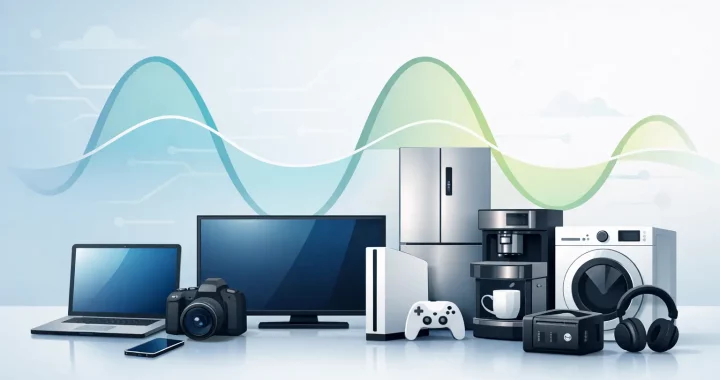
A power outage is the wrong time to find out that a device hums, overheats, or refuses to start on backup power. Understanding what appliances need pure sine wave power helps you choose a portable power station that protects the equipment your household, RV, or jobsite actually depends on.
Pure sine wave electricity closely matches the smooth AC power supplied by a standard wall outlet. It gives sensitive electronics, variable-speed motors, and modern control boards the stable waveform they were designed to use. Modified sine wave power is less smooth and can run some basic loads, but it may create extra heat, noise, poor performance, or error codes in certain equipment.
What Appliances Need Pure Sine Wave Power?
The short answer is that most modern electronics and many motor-driven appliances perform best with pure sine wave power. Some devices may operate on modified sine wave output, but pure sine wave removes the guesswork and provides cleaner power for equipment you cannot afford to damage or lose during an outage.
Devices that are especially likely to need, prefer, or benefit from pure sine wave power include:
- CPAP and BiPAP machines, oxygen concentrators, and other approved medical equipment
- Laptops, desktop computers, monitors, routers, modems, and network storage devices
- TVs, game consoles, audio equipment, cameras, and battery chargers
- Refrigerators, freezers, window air conditioners, fans, and dehumidifiers
- Microwaves, coffee makers, blenders, and other appliances with electronic controls
- Power tools, chargers, pumps, and appliances with variable-speed or brushless motors
- Furnace blowers, pellet stoves, garage door openers, and modern home systems with control boards
That list does not mean every item will fail on modified sine wave power. A basic incandescent lamp or simple resistive heater generally does not care much about waveform quality. The practical question is not only whether an appliance turns on. It is whether it runs efficiently, quietly, and reliably for the duration of the backup event.
Why a Smooth Waveform Makes a Difference
Household AC power alternates direction in a smooth, repeating wave. Pure sine wave inverters reproduce that shape closely. This matters because many appliances use electronic circuits to regulate voltage, manage battery charging, control speed, or communicate with sensors.
Modified sine wave inverters produce a stepped approximation of AC power. That lower-cost approach can work for uncomplicated loads, but the sharp transitions can make transformers buzz, motors run warmer, and electronics behave unpredictably. A device may also draw more power than expected, reducing useful runtime from your battery.
For preparedness, clean output is as valuable as high battery capacity. A large battery cannot solve a compatibility problem caused by an inverter waveform. When your backup plan includes a refrigerator, CPAP machine, laptop, or furnace blower, pure sine wave output is the practical baseline.
Electronics and chargers
Most current electronics use switching power supplies that convert AC power into the DC power used inside the device. Many are designed to tolerate a range of input conditions, but they still operate more cleanly on pure sine wave power. Laptop adapters, USB charging bricks, television power supplies, and professional camera chargers are common examples.
With modified sine wave power, you may hear a charger buzz or notice that it runs unusually warm. In some cases it will work normally. In others, it may charge slowly, cycle on and off, or fail to operate. For expensive electronics and communication gear, there is little reason to accept that uncertainty.
Appliances with motors and compressors
Motors are one of the biggest reasons to choose pure sine wave power. Refrigerators, freezers, fans, pumps, air conditioners, and many power tools use motors that need a strong surge of power to start. Compressor-based appliances are especially demanding because their startup wattage can be several times higher than their running wattage.
Pure sine wave output helps these motors start and run with less noise and heat. It does not eliminate the need for adequate inverter capacity or battery storage, however. A 150-watt refrigerator may briefly need 800 watts or more when its compressor starts. A window air conditioner can require an even larger surge.
Before relying on a power station, check both the appliance’s running watts and starting watts. If the label lists amps instead of watts, multiply volts by amps for an estimate. In the US, most standard household devices use approximately 120 volts. A 5-amp appliance therefore uses roughly 600 watts while running, though motor startup can still be much higher.
Medical and comfort equipment
For many families, the question is not convenience. It is continuity of care. CPAP and BiPAP machines commonly recommend pure sine wave power because their motors and electronic controls are designed around utility-grade AC. A pure sine wave portable power station can support overnight use when sized correctly, but runtime depends on pressure settings, humidifier use, heated tubing, and the machine’s actual draw.
Always check the manufacturer’s power requirements and follow its guidance for medical devices. If an appliance is critical to health or safety, test your setup before an emergency and maintain an appropriate backup plan. Do not assume that a power station, extension cord, or adapter is suitable without confirming the equipment specifications.
Appliances That Usually Do Not Require Pure Sine Wave
Simple resistive loads are generally less sensitive to waveform quality. These include traditional incandescent bulbs, basic electric heaters, toasters, hot plates, and some simple coffee makers. They turn electrical energy into heat or light without relying heavily on electronic controls or motors.
Even so, “can run” is different from “should be part of your backup plan.” Heating appliances consume a great deal of energy and can drain a portable power station quickly. A 1,500-watt space heater may be compatible with a large inverter, yet it can use 1,500 watt-hours of battery capacity in about an hour before accounting for conversion losses. That is rarely the best use of limited emergency power.
Choose backup loads by priority. Keep food cold, maintain communication, run lights, charge tools, and support necessary medical or comfort equipment first. High-draw heat appliances are better reserved for systems with enough battery capacity and recharge capability to support them safely.
Pure Sine Wave Is Only One Part of the Sizing Decision
A pure sine wave inverter is essential for clean power, but it is not the whole specification. The right power station must also supply enough continuous watts, surge watts, battery capacity, and usable outlets for your plan.
Start by listing the appliances you expect to run at the same time. Add their running wattage, then compare that total with the station’s continuous AC output. Next, identify the highest startup surge from a refrigerator, pump, air conditioner, or power tool. The inverter must handle that surge without shutting down.
Battery capacity is measured in watt-hours. A 1,000Wh power station could theoretically run a 100-watt load for about 10 hours, but real-world runtime is lower due to inverter losses, changing appliance cycles, and environmental conditions. Refrigerators cycle on and off, while a CPAP machine may draw differently with humidity or heated tubing enabled.
For longer outages, consider recharge speed and expansion options. Solar panels can restore energy during daylight, while vehicle charging and AC charging provide additional flexibility. Expandable battery systems are especially useful for households that need to cover overnight essentials and recharge the next day.
A practical outage example
A compact outage setup might power a refrigerator, Wi-Fi router, several LED lights, and phone chargers. All of these benefit from clean pure sine wave output, but the refrigerator’s startup surge determines the minimum inverter size. The total battery capacity determines how long the system can keep those essentials running.
An RV setup may add a coffee maker, induction cooktop, TV, vent fan, or portable air conditioner. A jobsite may add battery chargers, laptops, radios, and corded tools. The loads change, but the planning method stays the same: verify waveform compatibility, calculate running demand, account for startup surge, then match battery capacity to the time you need.
When Pure Sine Wave Is the Safer Default
If you are buying a portable power station for emergencies, travel, or off-grid use, pure sine wave is the safer default even when your first use is only charging phones. Your needs tend to grow when conditions change. A station that can safely support electronics, appliances with motors, and sensitive control boards gives you more options when grid power is not stable.
Thundervolt Power focuses on portable energy systems built for that reality: quiet, fuel-free backup power that can move from a home outage to an RV campsite or remote work location without changing how you protect your essential equipment.
Before the next storm or trip, test the appliances that matter most with your planned power station. A few minutes of real-world testing can confirm startup behavior, runtime, and outlet needs while power is still available – not when you need your backup system most.
