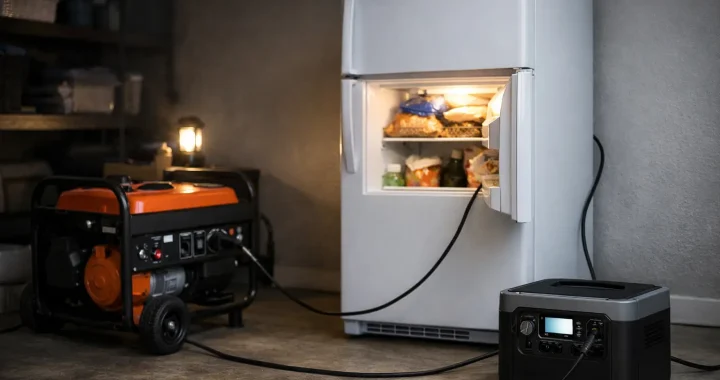
A freezer full of food can represent hundreds of dollars in groceries, and it starts becoming a time-sensitive problem the moment the grid goes down. Knowing how to power a freezer before severe weather, a utility failure, or an off-grid trip gives you more control over your food supply and less reason to make rushed equipment decisions.
The right backup setup depends on your freezer’s actual power draw, how long you need to run it, and whether you can recharge your battery system. A small chest freezer may run efficiently on a portable power station, while a large upright freezer used for long outages may need an expandable battery bank, solar input, or a properly sized generator.
Start With Your Freezer’s Power Requirements
Do not size backup power from the freezer’s size alone. Two freezers with similar cubic-foot ratings can have very different electrical demands based on their age, insulation, compressor design, ambient temperature, and defrost features.
Check the appliance label, usually found inside the door, on the rear panel, or near the compressor. Look for watts, amps, volts, or annual energy use in kilowatt-hours. If the label lists amps, use this basic calculation:
Watts = volts × amps
Most household freezers in the United States operate at 120 volts. A freezer labeled at 2 amps, for example, may use roughly 240 running watts. That does not tell the whole story, however. The compressor needs a brief burst of extra electricity when it starts.
This is called startup or surge power. A freezer that runs at 150 watts might momentarily need 600 watts, 1,000 watts, or more to start its compressor. Your backup power source must handle both the running load and this startup surge. If the inverter is too small, the unit may shut down or display an overload warning even when the battery has plenty of stored energy.
A power meter is the most dependable way to measure real-world consumption. Plug the freezer into the meter for at least 24 hours under normal use. You will see how many watt-hours it consumes over a full compressor cycle instead of relying on a single label number.
Choose an Inverter That Can Start the Compressor
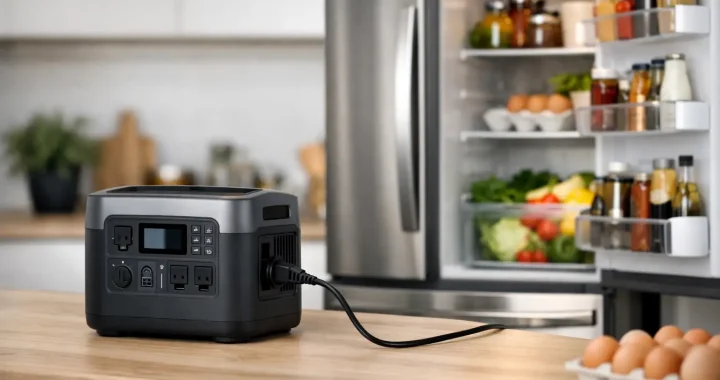
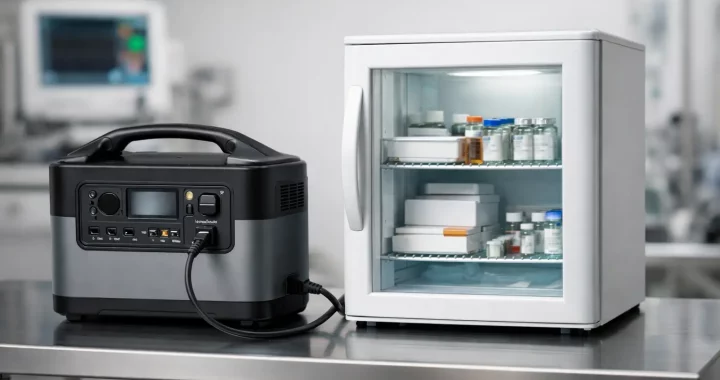
For a portable power station, inverter capacity is the first checkpoint. Select a unit with a pure sine wave inverter and enough continuous AC output for your freezer’s running wattage, plus meaningful room for startup power.
Pure sine wave power matters because it closely matches household electricity. It is the appropriate choice for compressor-driven appliances and helps support stable operation. Modified sine wave inverters may be less expensive, but they can create extra heat, noise, or performance problems with motors and sensitive electronics.
As a practical starting point, a freezer with a 150- to 300-watt running load often pairs well with a power station offering at least 1,000 watts of continuous AC output. Larger upright, commercial-style, or older freezers may require 1,500 watts or more. Check the manufacturer’s stated surge rating, not just the continuous output number.
Avoid connecting other heavy appliances to the same power station while the freezer is starting. A microwave, space heater, coffee maker, or electric skillet can consume the inverter capacity you need for the compressor’s startup cycle.
Size Battery Capacity for the Runtime You Need
Inverter watts determine whether the freezer can start. Battery watt-hours determine how long it can run.
A watt-hour, shown as Wh, measures stored energy. A 2,000Wh power station can theoretically provide 2,000 watts for one hour or 200 watts for 10 hours. Actual runtime is lower because of inverter losses, battery management, temperature, and changing compressor cycles.
Use this estimate to begin sizing:
Battery capacity needed = freezer daily watt-hours × days of backup ÷ 0.85
The 0.85 adjustment accounts for typical conversion losses. If your freezer uses 1,000Wh per day and you need two days of backup, you would need about 2,350Wh of usable battery capacity. Choosing a 2,500Wh to 3,000Wh system gives you more practical operating margin.
A freezer does not draw its running wattage every minute. Once cold, the compressor cycles on and off. That is why a 200-watt freezer may use only 800Wh to 1,500Wh over a day, depending on conditions. Opening the door frequently, placing warm food inside, or operating in a hot garage can increase energy use substantially.
For many households, these ranges are useful planning targets:
- A 1,000Wh to 1,500Wh power station can often support an efficient freezer overnight or through part of a day.
- A 2,000Wh to 3,000Wh system is a more realistic starting point for a full day or longer with many standard freezers.
- An expandable battery system is better suited to multi-day outages, larger appliances, or homes that need to run a refrigerator and freezer together.
- Solar charging or generator charging becomes essential when an outage lasts longer than the stored battery capacity.
These are planning ranges, not guarantees. Your freezer’s measured consumption should guide the final decision.
Use Solar to Extend Freezer Runtime
Solar panels can turn a portable power station from short-term backup into a more resilient outage system. During daylight, solar charging replaces some or all of the energy the freezer used overnight. Whether it keeps up depends on panel wattage, sun exposure, weather, panel orientation, and the freezer’s daily energy use.
For example, a freezer using 1,000Wh per day needs roughly that much energy returned to the battery each day. A 400-watt solar array may produce far less than 400 watts for much of the day, but it can still generate enough energy in favorable conditions to make a major difference. Cloud cover, winter sun angles, tree shade, and dirty panels all reduce output.
Plan solar conservatively. If food protection is critical, do not assume a single sunny forecast will carry the entire system. Start with enough battery capacity to cover the night and poor-weather periods, then use solar to extend runtime and restore your reserve.
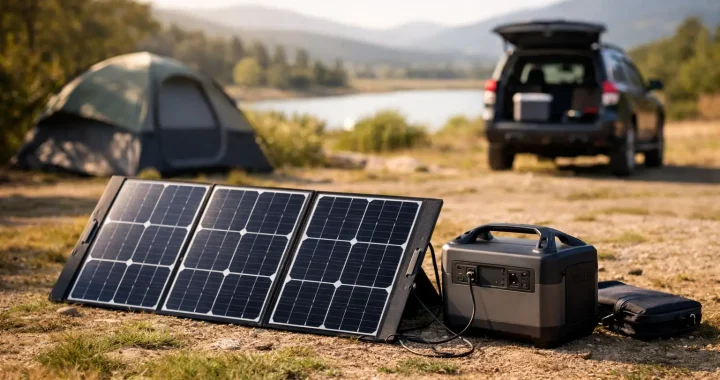
Portable solar panels work well for RV travel, cabins, camping, and emergency use because they can be positioned where sunlight is strongest. Keep panels clear of shade and use compatible charging inputs and cables rated for your equipment.
When a Generator May Be the Better Choice
A gas generator can be a practical option for extended outages, especially when you need to run several large appliances or recharge a battery system quickly. It also has trade-offs: fuel storage, noise, maintenance, exhaust, and the need for safe outdoor placement.
A portable power station is quiet, has no exhaust, and can run indoors. It is often the better fit for overnight freezer protection, apartment living, RV use, and short-to-medium outages. For longer events, many prepared households use both: a battery system for quiet, immediate power and a generator or solar array to recharge it when needed.
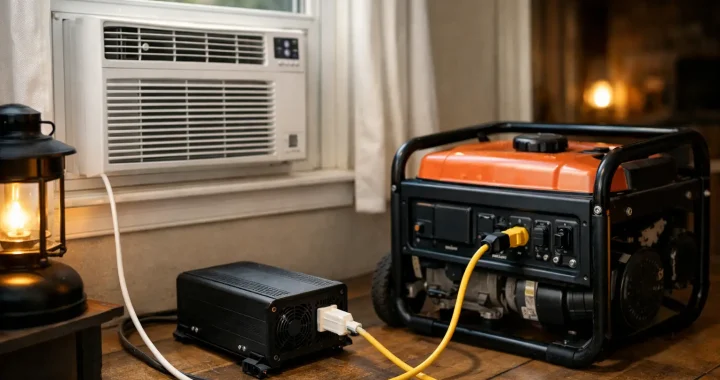
Never run a gas generator in a garage, basement, enclosed porch, shed, or near open windows and doors. Carbon monoxide can become deadly quickly. Use only heavy-duty outdoor-rated extension cords sized for the load, and plug the freezer directly into the backup source unless a licensed electrician has installed a proper transfer switch or inlet system.
Set Up Your Freezer Backup Plan Before the Storm
Backup power works best when it is tested under normal conditions. Do not wait until a blackout to find out whether your freezer’s compressor trips the inverter.
Start by fully charging the power station. Connect only the freezer, turn on the AC output, and observe at least several compressor cycles. Check that the power station remains stable and that its battery percentage drops at a rate close to your expectations. If you use solar panels, test their charging performance in the location where you expect to deploy them.
Keep the freezer as cold as possible before an expected outage. Set it to 0°F, avoid unnecessary door openings, and consider adding ice packs or containers of frozen water if there is unused space. A full freezer holds cold longer than an empty one, though air still needs room to circulate.
During an outage, leave the freezer door closed. A closed freezer can often keep food safe for about 48 hours when full, or about 24 hours when half full, but room temperature and door openings matter. Backup power gives you more protection, yet reducing heat entry lowers the energy demand on every system.
Build for the Outage You Are Most Likely to Face
The best answer to how to power a freezer is not always the largest power station available. It is the system matched to your appliance, your expected outage length, and your ability to recharge. A homeowner facing brief storm interruptions may need a reliable 2,000Wh battery system. A rural household, RV traveler, or family in an outage-prone area may benefit more from expandable LiFePO4 battery capacity and portable solar panels.
At Thundervolt Power, the practical focus is readiness: choose enough inverter power to start the freezer, enough battery capacity to carry it through the night, and a charging plan that does not depend on luck. Test the system while the grid is stable, and when the next outage arrives, your freezer backup will be one less urgent problem to solve.