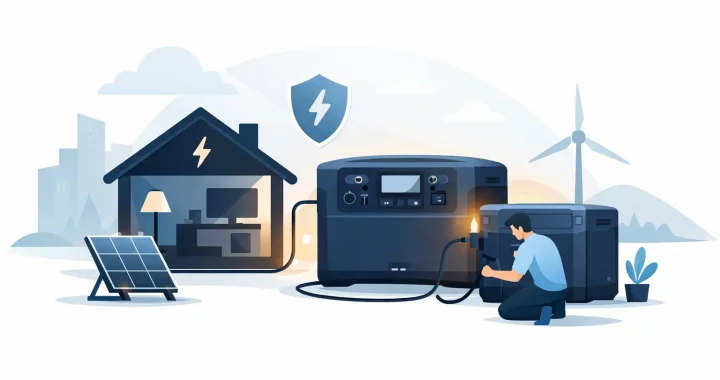
How to Power Medical Devices Safely

How to Power Medical Devices Safely

When the power goes out, the question is not whether your backup system can charge a phone. The real test is whether it can keep a medical device running safely, steadily, and long enough to matter. If you are figuring out how to power medical devices safely, you need more than extra battery capacity. You need the right type of power, the right runtime plan, and a setup you can trust under pressure.

For families supporting CPAP machines, oxygen concentrators, nebulizers, feeding pumps, mobility equipment, or refrigerated medications, power is not a convenience category. It is part of care. That changes how you should shop, how you should size your backup, and how carefully you should test your system before you ever need it.

How to power medical devices safely starts with the device

The first step is knowing exactly what the device needs. Many people start with battery size, but the safer approach is to start with the equipment label, power brick, or user manual. Look for the device’s required voltage, wattage, and whether it runs on AC wall power, DC input, or both.

That matters because not all power sources behave the same way. A medical device that plugs into a standard wall outlet may still be sensitive to the quality of incoming power. Devices with motors, compressors, or heating elements can draw more power at startup than they do during normal operation. If you only match the running wattage and ignore surge demand, your backup system may shut off when the device first turns on.

It is also worth checking whether the manufacturer offers a DC power option or external battery pathway. In some cases, running directly from DC can be more efficient than converting battery power to AC and then back down again through the device’s adapter. That can extend runtime. In other cases, the approved path may be AC only. The right answer depends on the device.

Clean power matters more than many buyers realize

A low-cost backup unit can look fine on paper and still be the wrong fit for sensitive medical equipment. This is why pure sine wave output is one of the most important features to check.

Pure sine wave power closely matches the electricity delivered by your home outlets. That makes it a better match for electronics and medical devices that expect stable, consistent current. Modified sine wave systems may work for some basic loads, but they can cause performance issues, added heat, odd noises, or outright incompatibility with sensitive equipment. When health support is involved, this is not the place to cut corners.

Stable output is only part of the equation. You also want a system with enough inverter capacity to handle startup demand and enough battery storage to cover the real duration of an outage, overnight use, travel day, or evacuation delay. A backup that runs a device for one hour is very different from one that can support it through the night.

Calculate runtime before you buy

Runtime planning is where many people either overspend or end up underprepared. The basic math is straightforward. Start with the device’s power draw in watts, then compare that to the battery’s usable watt-hours. A 500Wh battery will not deliver a perfect 500Wh to the device because there are conversion losses, especially when using AC output. Real-world usable energy is usually lower.

If a device draws 50 watts and your power station delivers about 400 usable watt-hours after losses, you may get around 8 hours of runtime. If the same device has a heated humidifier, compressor cycle, or variable output mode, the runtime may be shorter than expected. That is why estimated runtime should be treated as a planning number, not a guarantee.

For medical use, build in a safety margin. If you need 8 hours, plan for more than 8. If your area sees extended outages, think in layers: the primary power station, an expansion battery if supported, vehicle charging as a backup, and solar charging if daylight recovery is realistic for your location and season.

Matching backup power to common medical devices

Different devices place very different demands on a battery system. CPAP machines are one of the most common use cases. Some run efficiently, especially without a heated humidifier or heated tubing. Others consume much more power when comfort features are active. If you are planning overnight use, measure for your actual settings, not best-case assumptions.

Portable oxygen concentrators can vary significantly by model and flow setting. Some include internal batteries that reduce external demand, while others rely heavily on outside power for longer use. Continuous flow and pulse dose modes can have very different power profiles.

Nebulizers and feeding pumps may use less energy overall, but they still need reliable output and enough runtime for treatment windows. Mobility devices, lift chairs, and battery chargers for power wheelchairs can require much larger systems, especially if charging is part of your outage plan. Medical refrigerators or compact coolers for temperature-sensitive medication add another layer, since compressor startup and cycling affect runtime.

This is where a larger portable power station can make sense. For households preparing for outages, a properly sized lithium backup system with pure sine wave AC output, multiple charging options, and expandable capacity can cover far more than a single small battery pack. It can support essential medical equipment while still leaving room for lights, phones, or communications.

Safe setup at home, in transit, and during outages

Knowing how to power medical devices safely is not just about the battery you buy. It is also about how you use it.

At home, place the power station in a dry, ventilated area with enough clearance for airflow. Do not block cooling vents or stack items on top of the unit. Keep cords organized and avoid overloaded adapters or questionable extension cords. If a device is mission-critical, do a full test run before storm season or before relying on the setup overnight.

During travel, secure both the medical device and the power source so they do not shift in a vehicle. Protect the system from extreme heat, freezing temperatures, and moisture. If you plan to recharge from the car, confirm that your vehicle outlet can support the required input and understand how long charging will actually take.

During outages, conserve power where medically appropriate. For example, if a clinician has already approved alternative settings for emergency use, those settings may help extend runtime. But medical decisions should come from the care team, not from battery limitations in the middle of a blackout. Preparedness means handling the power side early so you are not forced into a compromise later.

What to ask before choosing a power station

A good backup system for medical use should answer a few practical questions clearly. Does it offer pure sine wave AC output? What is the rated inverter wattage and surge capacity? How many watt-hours does the battery provide, and can that capacity expand? How fast can it recharge from the wall, from a vehicle, or from solar panels? Is the display easy to read in low light? Can you test and monitor output without guesswork?

Battery chemistry matters too. LiFePO4 systems are a strong fit for preparedness because they offer long cycle life, thermal stability, and dependable performance over time. If you expect to use your backup regularly, not just once every few years, that durability becomes more valuable.

For many households, the best solution is not the smallest unit that technically works. It is the unit that gives you breathing room. A little extra capacity can mean the difference between one overnight cycle and a full day of resilience.

When portable power is appropriate – and when it is not enough

Portable backup power can be an excellent solution for many home, travel, and emergency scenarios, but there are limits. Some medical equipment has strict manufacturer guidance, hospital-grade requirements, or runtime needs that call for a dedicated backup system, utility priority service, or generator plan. Some users need redundant power layers because interruption is not acceptable.

That is why the safest path is to confirm the device requirements with the manufacturer and speak with your clinician or equipment provider if there is any doubt. A portable power station should support your medical plan, not replace professional guidance.

Thundervolt Power focuses on dependable battery-based backup because quiet, fuel-free energy can make emergency planning more practical for real households. But the product only helps if the planning is right.

If you are preparing for a family member, think beyond the product page. Know the device, size the runtime honestly, choose clean output, and test the setup before the next outage forces the issue. Reliable power is not just about staying comfortable. For medical equipment, it is about staying ready when the grid is not.

Can Portable Power Stations Run Heaters?

Can Portable Power Stations Run Heaters?

A space heater can empty a battery faster than most people expect. That is why the real question is not just can portable power stations run heaters, but which heaters, for how long, and whether it makes sense in an outage or off-grid setup.

The short answer is yes, some portable power stations can run some heaters. The catch is that electric heaters are among the most demanding household devices you can plug in. Many portable power stations can handle a small heater or a low setting for a limited time. Fewer can support a full-size space heater at high output, and even then the runtime is usually shorter than people want.

If you are buying backup power for winter storms, RV travel, or emergency use at home, this is one of the most important limits to understand before you need it.

Can portable power stations run heaters in real use?

They can, but it depends on two numbers more than anything else: the heater’s wattage and the power station’s inverter and battery capacity.

A portable power station has to do two jobs at once. First, its inverter has to supply enough continuous AC output to start and run the heater. Second, the battery has to store enough energy to keep that heater going for a useful amount of time. A unit might technically run a heater, but only for 30 to 90 minutes. That may help in a cold room or short outage, but it is not the same as all-night heating.

This is where many buyers get tripped up. They see a large-capacity power station and assume it can replace a home heating system. In most cases, that is not realistic. Portable power stations are excellent for quiet, fuel-free backup power, but resistance heating is one of the hardest loads you can ask them to carry.

Why heaters are so hard on battery power

Most electric heaters use resistance heating. That means they convert electricity directly into heat, and they do it at high wattage.

A typical personal heater may draw 200 to 600 watts. A common ceramic space heater often runs at 750 watts on low and 1,500 watts on high. Oil-filled radiators and infrared heaters can land in a similar range. By comparison, a laptop may use 60 watts, a Wi-Fi router 10 watts, and a full-size refrigerator often cycles on and off instead of pulling maximum power nonstop.

Heaters are different because the draw is steady and heavy. If you run a 1,500-watt heater, the battery drains fast. There is no getting around that. Even with an efficient inverter and a large lithium battery, the runtime math stays pretty unforgiving.

The runtime math that matters

Battery capacity is usually measured in watt-hours. Heater demand is measured in watts. To estimate runtime, divide the power station’s usable watt-hours by the heater’s wattage, then allow for some energy loss through inversion and real-world conditions.

For example, if you have a 1,024Wh power station and plug in a 500W heater, you might get roughly 1.7 to 1.9 hours of runtime under ideal conditions, and often a bit less in practice. If that same power station runs a 1,500W heater and the inverter supports it, the runtime may be closer to 35 to 45 minutes.

Now scale that up. A 2,000Wh class unit running a 1,500W heater may still only last around 1 to 1.2 hours. That is useful for spot heating, but not for heating a room through the night.

The practical lesson is simple: high battery capacity helps, but heaters consume power so quickly that runtime remains limited unless you move into very large or expandable systems.

Which heaters are most realistic for portable power stations?

Small personal heaters are the easiest match. If a heater draws 200W to 400W, many mid-size and larger portable power stations can run it without stress, and the runtime may be enough to warm a small work area, tented indoor emergency zone, or desk space.

Compact ceramic heaters on low are often the next best fit. A low setting around 700W to 800W is still substantial, but more manageable than 1,500W high mode. This can make sense if you need temporary heat in a small room and you have a power station with both the inverter headroom and enough battery capacity.

Full-size 1,500W space heaters are the toughest case. Some high-output power stations can run them, especially models built with strong pure sine wave inverters and larger lithium battery banks. But even when they work, the runtime is usually short enough that you need to think of them as targeted, short-duration heat rather than sustained room heating.

Heating pads, heated blankets, and low-draw warming devices are often a smarter battery-powered option. They use far less power and can keep people comfortable much longer than a space heater can keep a room warm.

What to check before plugging in a heater

Start with the heater label. Do not guess. Check the rated wattage and whether there is a lower setting.

Then look at the power station’s continuous AC output, not just the surge rating. A heater is not a startup-surge problem like some motors, but it does require sustained output. If your heater draws 1,500W, your power station must support at least that much continuous AC output, with some margin being preferable.

Next, look at battery capacity. This tells you whether the setup is merely possible or actually useful. A power station that can technically run the heater for 20 or 30 minutes may not meet your needs.

Battery chemistry matters too. LiFePO4 systems are especially well suited for preparedness because they offer long cycle life, thermal stability, and dependable performance over time. For buyers building a serious backup plan, that matters as much as peak output.

Better ways to use portable power during cold-weather outages

In most winter outages, the smartest use of a portable power station is not trying to heat the whole room electrically. It is preserving comfort, communication, and essential devices while stretching available energy.

That usually means powering lights, phones, internet equipment, radios, medical devices, a furnace blower if the system setup allows it, or a small electric blanket instead of a high-draw space heater. If you have solar input available, you may be able to extend runtime further during daylight, but winter weather and limited sun can reduce charging performance.

For RV users and off-grid travelers, the same logic applies. Running a heater from battery power can work for short bursts or low-wattage heating, but it is rarely the most efficient way to stay warm. Managing insulation, using layered bedding, and reserving battery power for critical electronics often delivers better results.

When a portable power station makes sense for heating

A portable power station is a good fit if you need temporary, localized heat. It also makes sense if you want a quiet indoor-safe power source for low-wattage warming devices, or if you are pairing a larger expandable system with careful energy planning.

This is especially true for people who want clean backup power without fuel storage, exhaust, or generator noise. Brands and retailers focused on preparedness, including Thundervolt Power, increasingly center their systems around practical resilience rather than unrealistic whole-home promises. That is the right approach here.

When it does not make sense

If your goal is to run a 1,500W space heater for many hours, a portable power station alone is usually not the best answer. The energy demand is just too high for most compact systems.

It also may not make sense if you are trying to heat a large room, support multiple heaters, or depend on battery heating as your primary overnight winter plan. In those cases, you need to rethink the load, increase battery capacity dramatically, or use another heating strategy while reserving the power station for essentials.

A practical buying mindset

If heater use is part of your plan, buy for continuous output first, then battery capacity second. Make sure the unit can comfortably support the heater’s wattage. After that, be honest about runtime. A large inverter without enough battery storage solves only half the problem.

Expandable systems can improve the picture because they add stored energy, but even then, electric resistance heat remains a heavy load. It is often better to size your system for a mix of essentials and low-draw comfort devices than to chase full-time electric heating from a battery.

Portable power stations can absolutely play a role in cold-weather preparedness. Just use them where they perform best: dependable backup for critical loads, quiet indoor operation, and selective heating choices that do not burn through your battery in a hurry. If staying warm is the goal, the smartest setup is usually the one that balances heat, runtime, and readiness before the next outage hits.

Aferiy Power Station Review: Worth It?

Aferiy Power Station Review: Worth It?

When the grid drops in the middle of a storm, specs stop being abstract. What matters is whether your power station starts fast, runs the devices you care about, and recharges without turning the process into a project. That is the real lens for an Aferiy power station review – not just capacity on paper, but how well these units hold up for backup power, travel, and daily use.

Aferiy has built a name around high-capacity portable power stations aimed at people who want quiet, fuel-free backup without stepping into overly complex systems. For many buyers, that means one question: can Aferiy cover the gap between small grab-and-go battery packs and loud gas generators? In many cases, yes. But the right answer depends on what you need to run, how long you need it, and whether portability or runtime matters more.

Aferiy power station review: what stands out

Aferiy units tend to appeal to practical buyers for a simple reason. They usually combine solid battery capacity, pure sine wave output, multiple ports, and LiFePO4 battery chemistry in a package that feels built for real backup use rather than occasional gadget charging.

That battery chemistry matters. LiFePO4 is widely favored for longer cycle life, better thermal stability, and stronger long-term value than older lithium-ion formulations. If you are buying for outages, RV weekends, or regular off-grid use, that is more than a technical footnote. It affects how confidently you can rely on the system over time.

Another strength is output flexibility. Aferiy models commonly include AC outlets, USB-A, USB-C, DC outputs, and car ports, which makes them useful for mixed loads. You can charge phones and laptops while also powering a router, CPAP, mini fridge, or work tools, assuming the inverter rating supports the load.

The practical appeal is clear: quieter operation than gas, no fuel storage, no engine maintenance, and much easier indoor-safe use when ventilation rules make fuel generators a poor fit. For homeowners and families building a backup plan, that alone puts Aferiy in the right conversation.

Where Aferiy performs well in real use

The strongest case for Aferiy is mid-range to high-capacity backup. If your goal is to keep essentials running during a short outage, many Aferiy power stations are well suited to the job. Lights, phones, tablets, routers, laptops, fans, televisions, and medical devices with modest draw are generally realistic use cases.

For RV travel and camping, Aferiy also makes sense if quiet power matters. You can run personal electronics, small appliances, and some cooking devices within the unit’s inverter limit. That said, heavy resistive loads change the equation fast. A coffee maker, electric kettle, microwave, or space heater can drain even a large battery sooner than many buyers expect.

On jobsites, Aferiy can be useful for lighter-duty cordless tool charging, laptops, test equipment, and mobile office setups. It is less ideal if your day revolves around sustained high-draw saws, compressors, or multiple power tools running back to back. In that environment, runtime and surge handling become critical.

Battery capacity, inverter size, and the real buying question

The biggest mistake buyers make is focusing on just one number. A large watt-hour rating sounds reassuring, but it only tells part of the story. You also need enough inverter output to start and run your devices.

Here is the practical way to think about it. Battery capacity tells you how much energy is stored. Inverter wattage tells you what the power station can deliver at one time. If you have plenty of stored energy but not enough inverter headroom, the unit still will not run your appliance.

That is why an Aferiy power station review has to be tied to your load profile. For home backup, some users need a station for communications, charging, lighting, and refrigeration support. Others want to add a sump pump, window AC, or kitchen appliances. Those are different purchase decisions.

As a rule, Aferiy becomes more compelling when your power plan is defined clearly. If you know your refrigerator startup surge, your CPAP wattage, or your router and modem load, you can size the station much more accurately. If you are guessing, you risk buying either too small or paying for more capacity than you will ever use.

Charging speed and solar readiness

Charging performance is one of the more important differences between good and frustrating portable power stations. Aferiy models often support multiple charging methods, including wall charging, car charging, and solar input. That flexibility is useful because backup power is only as good as your ability to refill it.

Wall charging is usually the fastest and easiest option for most households. If your unit can recover a meaningful percentage of its battery in a few hours, it becomes much more practical during repeated outages or frequent travel use.

Solar compatibility is a major advantage, but expectations need to stay realistic. Solar charging depends on panel size, weather, angle, and time of day. It works best as part of a plan, not as wishful thinking after the power is already out. For off-grid users and RV owners, Aferiy’s solar-ready design can be a strong selling point. For emergency buyers, solar adds resilience, but only if you have enough panel input to make a difference.

Portability versus power

This is one of Aferiy’s main trade-offs. The more capacity and inverter output you buy, the less portable the unit becomes. That is not a brand-specific flaw. It is the reality of battery power.

Smaller stations are easy to move, store, and deploy. Larger ones are much better at serious backup, but they can be heavy enough that placement matters. If you expect to move your station between the garage, the RV, the backyard, and a second floor room, weight and handle design should matter almost as much as battery specs.

For some buyers, the better move is not simply buying the largest model available. It may be choosing the unit that covers your core loads reliably while staying manageable enough to use often. A power station that is too heavy to reposition quickly may be less useful than a slightly smaller one that gets used without hassle.

How Aferiy compares on value

Aferiy generally competes well when buyers want strong feature sets without jumping straight into premium pricing territory. You often get the core specifications people now expect – LiFePO4 chemistry, pure sine wave inverter, multiple outputs, and solar charging support – at a price point that feels more attainable than some top-tier competitors.

That does not automatically make every model the best buy. Value depends on how much usable output, battery capacity, charging speed, and expandability you are getting for the price. Some users will prioritize a lower cost per watt-hour. Others care more about recharge time, app controls, or the ability to add expansion batteries.

If you are comparing brands, Aferiy tends to make the most sense for buyers who want dependable backup capability and modern battery chemistry without paying extra for features they may not use. If your priorities are advanced ecosystem controls or very large expandable systems, your decision may lean elsewhere.

Who should buy an Aferiy power station

Aferiy is a strong fit for homeowners preparing for outages, RV travelers who want quiet energy, campers who need more than phone charging, and families supporting essential electronics or light medical equipment. It is also a practical option for users who want cleaner indoor-safe backup than gas generators can offer.

It is less ideal for buyers expecting all-day support for high-draw heating devices, whole-home backup, or heavy-duty contractor loads without careful planning. In those cases, you may need a larger class of system, expansion capacity, or a different backup strategy altogether.

For many people, the sweet spot is essential-load coverage. That means refrigeration support, communication devices, lights, fans, laptops, and selected appliances during outages or while away from shore power. In that role, Aferiy can be a dependable part of a readiness plan.

Final take on this Aferiy power station review

Aferiy gets a lot right where it counts: stable battery chemistry, useful output variety, quiet operation, and practical backup capability for real household and mobile scenarios. The brand’s main strength is not novelty. It is giving buyers a cleaner, simpler path to reliable portable power.

The trade-offs are the same ones you should expect in this category. Bigger capacity means more weight. Higher-draw appliances still demand careful sizing. Solar helps, but only when your setup is built for it. If you match the model to your actual loads instead of shopping by headline specs alone, Aferiy can be a very solid choice.

If preparedness is the goal, the best power station is the one sized for the devices you truly need and ready before the weather turns.

Best Backup Battery for Pellet Stove Use

Best Backup Battery for Pellet Stove Use

A pellet stove during a winter outage is not a luxury – for many households, it is the difference between staying comfortable and watching indoor temperatures drop by the hour. The right backup battery for pellet stove operation keeps the stove running without gasoline, noise, or the hassle of starting a generator in bad weather.

Pellet stoves do not use as much power as many people assume, but they are not simple plug-and-play loads either. They rely on fans, an auger motor, a control board, and an igniter. That mix matters because a stove may draw one amount of power while running normally and a much higher amount during startup. If you want dependable heat when grid power fails, sizing the battery correctly is the first decision that counts.

Why a backup battery for pellet stove heat makes sense

Most homeowners start looking at backup power after they have already dealt with one outage too many. A pellet stove can keep heating efficiently during normal conditions, but it becomes vulnerable the moment utility power cuts out. Even if you have pellets on hand, the stove still needs electricity to feed fuel, move air, and manage combustion safely.

A battery-based system solves a real problem here. It is quiet, indoor-friendly when used properly, and available the moment the lights go out. Unlike a gas generator, there is no fuel stabilizer, no pull cord, and no engine noise outside your home at midnight. For many families, that simplicity is the whole point.

There is also a safety and convenience advantage. Pellet stoves are designed around controlled airflow and automated feeding. If power is interrupted, the stove stops working as intended. A properly sized portable power station can bridge that gap and keep the system stable long enough to ride out a short outage or buy time during a longer one.

How much power does a pellet stove actually need?

This is where buyers either get the setup right or end up disappointed. Most pellet stoves run on a modest amount of continuous power once they are operating, often somewhere around 80 to 200 watts. The issue is startup. The igniter can push demand much higher, sometimes into the 300 to 500 watt range, and in some models even above that for a short period.

That means you should not shop by battery capacity alone. You need to look at two numbers: inverter output in watts and battery capacity in watt-hours. The inverter has to handle startup demand. The battery capacity determines how long the stove can run.

A simple example helps. If your pellet stove averages 120 watts after startup and your power station has 1,000 watt-hours of usable capacity, you might expect around 8 hours of runtime under favorable conditions. Real-world runtime is usually lower because of inverter losses, temperature, battery reserve, and the fact that the stove may cycle up and down. That same unit might deliver closer to 6 to 7 hours in actual use.

If your stove uses 150 watts on average, a larger battery becomes more practical fast. A 2,000 watt-hour class unit may provide overnight coverage where a smaller station falls short. This is why runtime planning matters more than just asking whether the stove will turn on.

Startup surge vs. running load

Many people focus on the stove’s normal wattage and forget the startup cycle. That is a mistake. The igniter often creates the biggest power spike, and if your backup battery cannot support that surge, the stove may fail to start even though it could easily run afterward.

If you want more margin, some users light the stove before an outage is expected and then use the battery mainly to support continued operation. But outages do not always give warning. A better approach is choosing a unit with enough inverter headroom to handle both startup and steady use.

What size backup battery for pellet stove use is enough?

For short outages, a power station around 500Wh to 1,000Wh may work if your stove is efficient and you only need a few hours of coverage. For overnight heating or more confidence during winter storms, many households are better served by 1,500Wh to 2,000Wh or more.

The right answer depends on your stove, your climate, and how you plan to use it. If the pellet stove is supplemental heat and your home has other options, smaller backup may be fine. If it is your main heat source during freezing weather, undersizing the battery is not a risk worth taking.

A practical target is to calculate runtime based on average operating wattage, then add margin. If you think you need 8 hours, shop for 10 to 12 hours on paper. Batteries perform best when you are not pushing them to the limit every time the grid fails.

A quick sizing approach

Check the stove label or manual for running watts and startup watts. If only amps are listed, multiply amps by 120 volts for a rough estimate. Then take the battery’s usable watt-hours and divide by the stove’s average running watts.

For example, 1,500Wh divided by 125W suggests about 12 hours in ideal math. In real use, plan for less. That conservative mindset is what keeps backup power dependable instead of frustrating.

What to look for in a battery power station

Not every battery unit is a good fit for heating equipment. A pellet stove has electronics and motors, so clean power matters. A pure sine wave inverter is the standard to look for. It supports sensitive controls more reliably than lower-grade power output.

LiFePO4 battery chemistry is also worth prioritizing. It is known for long cycle life, better thermal stability, and strong durability for emergency readiness. If you are buying backup power for repeated use over many winters, battery longevity matters.

Recharging speed is another practical factor. After one outage, you may need to get the unit ready for the next. Fast AC charging helps, and solar charging can add resilience if the grid is down longer than expected. Expansion battery options are useful for homeowners who want to start with one unit and build a longer-runtime system later.

The best setup is not always the biggest one. It is the one that starts your stove reliably, runs it for the hours you actually need, and can be recharged without creating new headaches.

Common mistakes when choosing a pellet stove battery backup

The most common mistake is buying by price and not by runtime. A low-cost unit may power the stove briefly, but that does not help much during an overnight outage in January. The second mistake is ignoring startup demand. If the inverter cannot support ignition, the battery setup fails at the first step.

Another issue is assuming all pellet stoves behave the same way. They do not. Older models, larger stoves, and units with different ignition systems can vary meaningfully. Checking the manual is better than guessing.

There is also the question of what else you want the battery to support. During an outage, many homeowners end up plugging in phones, a modem, lights, or a CPAP machine. That extra load shortens stove runtime. If the pellet stove is the priority, size the system around it first and treat everything else as secondary unless you are moving into a larger-capacity solution.

Battery backup vs. generator for pellet stove outages

A generator still has a place, especially for extended outages and whole-home demands. But for a pellet stove by itself, a battery system often makes more sense. It is quieter, easier to use, and suitable for people who do not want to manage fuel or maintenance.

The trade-off is runtime. A battery has finite stored energy. A generator can keep going as long as fuel is available. That means battery backup is often the best choice for short to medium outages, while a generator may be better for multi-day heating support if no recharging plan exists.

For many households, the practical answer is not either-or. It is matching the tool to the job. A well-sized portable power station handles immediate, silent backup for the pellet stove, and a larger backup plan can cover the longer events.

When it pays to go bigger

If winter outages are common in your area, buying just enough power can backfire. A larger unit gives you longer runtime, more inverter capacity, and room for a few essential devices beyond the stove. That extra margin is often what turns backup power from a temporary patch into a reliable household solution.

This is especially true if you want the option to recharge from solar or expand later. Thundervolt Power focuses on systems built for that kind of real-world readiness – clean, quiet backup that is easy to deploy when conditions turn against the grid.

A pellet stove can be one of the smartest heating tools in your home, but only if it keeps running when utility power does not. Choose a battery setup with enough headroom, enough runtime, and enough simplicity that anyone in the house can use it when the weather gets serious.

Portable Power Station Buying Guide

Portable Power Station Buying Guide

A power station that looks great on a product page can still leave you short when the grid goes down, the campsite gets hot, or a jobsite tool pulls more startup power than expected. That is why a portable power station buying guide should start with one question: what do you need to keep running, and for how long?

The right unit is not just about getting the biggest battery you can afford. It is about matching battery capacity, inverter output, recharge speed, and portability to real use. For some buyers, that means keeping phones, lights, and a router online through an overnight outage. For others, it means running a fridge, CPAP, power tools, or even a window AC with enough reserve to matter.

How to use this portable power station buying guide

Start with your actual loads, not marketing categories. A family preparing for storm outages has different needs than an RV traveler, and both are different from a contractor who needs reliable AC power away from an outlet.

If you buy too small, you will constantly manage around limitations. If you buy too large, you may spend more than necessary and end up with a system that is harder to move than you expected. The goal is dependable power that fits your situation without guesswork.

Capacity comes first: watt-hours tell you runtime

Battery capacity is usually measured in watt-hours, or Wh. This number tells you how much stored energy the power station holds. In simple terms, more watt-hours usually mean longer runtime.

A 300Wh unit can cover phones, tablets, lights, and a laptop for short trips or brief disruptions. A 1,000Wh to 2,000Wh class unit is where backup power starts to feel more serious for home use, RV travel, and longer off-grid time. Once you move higher, you begin to support heavier daily loads and more demanding appliances, especially if the system allows expansion batteries.

Runtime is never one-to-one because there are inverter losses and device cycling. A refrigerator does not pull the same wattage every minute, and a CPAP may use much less power without a heated humidifier. Still, watt-hours are the clearest place to begin because they tell you whether a unit is built for convenience or real backup.

Output matters: continuous watts and surge watts

The second number to watch is inverter output, shown in watts. This tells you how much power the unit can deliver at one time. A power station may have enough battery capacity to run an appliance for hours, but if the inverter cannot handle the load, the device will not start.

Continuous output covers the normal running load. Surge output covers short startup spikes from devices like refrigerators, microwaves, pumps, and air conditioners. If you need to run anything with a motor or compressor, surge capability matters.

This is where many buyers make the wrong call. They see a large battery and assume it can run anything. In reality, a 2,000Wh unit with modest inverter output may still be a poor fit for higher-draw appliances. On the other hand, a well-designed unit with a pure sine wave inverter and solid surge capacity can power sensitive electronics and tougher loads more reliably.

Match the station to the job

For home backup, think beyond charging phones. Most households want to keep the essentials going: refrigerator, Wi-Fi, lights, fans, laptops, and possibly medical devices. If outages are frequent or weather-related, fast recharging and solar compatibility become more important because you may need to refill the battery while using it.

For RVs and overlanding, the balance shifts. Portability, recharge speed, and output variety become just as important as raw capacity. You may need to power a 12V fridge, laptops, lighting, a coffee maker, or intermittent appliance loads while also recharging from solar or vehicle input.

For camping and tailgating, smaller and mid-size units often make more sense. Quiet operation is a major advantage over gas generators, and you are usually powering lower-draw devices unless you bring cooking appliances, projectors, or cooling equipment.

For jobsites, look hard at inverter output, port durability, and recharge time. Contractors and mobile workers often need dependable AC power for tools, chargers, and electronics, and downtime costs money.

Battery chemistry is not a minor detail

If you plan to use your power station regularly or depend on it during emergencies, battery chemistry matters. LiFePO4 batteries have become the preferred choice for many higher-quality systems because they offer longer cycle life, better thermal stability, and strong long-term value.

That does not mean every buyer needs the same thing. A smaller occasional-use unit may still serve well for light travel or backup. But if your plan involves frequent cycling, storm readiness, or larger capacity systems, LiFePO4 is often the smarter long-term investment.

The practical trade-off is weight and cost. More durable battery systems can be heavier, and higher-capacity models are never ultra-light. That is why portability should be judged honestly. If you need to carry the station up stairs, move it between the garage and the campsite, or load it into an RV often, dimensions and handle design matter just as much as the spec sheet.

Recharge speed can make or break the experience

A power station is only as useful as your ability to recharge it. AC wall charging is the fastest and simplest option for most users, especially before a storm or between trips. Fast AC recharge is a real advantage because it lets you top off quickly instead of planning around all-day charging windows.

Solar charging adds resilience, especially during extended outages or off-grid use. But solar input capacity varies a lot. Some units accept enough solar to meaningfully recover during the day, while others support solar in a more limited way. If solar matters to you, check both the maximum solar input and the realistic conditions where you will use it.

Vehicle charging can be useful for topping up during travel, but it is usually slower. It is best treated as a supplementary option unless your setup is specifically built around mobile charging.

Ports, expandability, and daily convenience

The best system is not just powerful. It is easy to live with. That means enough AC outlets for your core devices, regulated 12V options for vehicle and camping gear, USB outputs for personal electronics, and a display clear enough to show input, output, and remaining runtime at a glance.

Expandability matters if your needs may grow. A base unit that supports extra batteries can be a practical path for buyers who want to start with a strong core system and scale later. That is especially useful for home backup, RV living, and users planning for longer outages.

You should also consider pass-through use, app controls if you value remote monitoring, and overall layout. A power station that is awkward to plug into or hard to read in low light can become frustrating fast.

The portable power station buying guide mistake to avoid

The most common mistake is shopping by headline claims instead of usage. “Runs appliances” sounds good, but which appliances, for how long, and under what startup load? “Solar generator” sounds flexible, but solar performance depends on panel size, weather, and the unit’s actual charging limits.

A better approach is to build a short list of must-run devices and estimate both runtime and simultaneous load. If you need to support a fridge, router, lights, and phone charging during an outage, your target system will look different from one meant for weekend camping. If you want to add a microwave or window AC, your output needs rise quickly.

This is also where quality matters. Dependable units with pure sine wave output, stable battery management, and proven charging performance are worth more than inflated specs on paper. When power is not stable, you do not want surprises.

What size should most buyers choose?

If your priority is light recreation or device charging, a compact station can be enough. If you want meaningful outage support or versatile RV power, mid-size to larger systems are usually the better fit. If you need to run heavier appliances, longer backup windows, or future expansion, you should be looking at high-capacity models with stronger inverter output and optional battery expansion.

For many households, the sweet spot is not the smallest unit that can technically work. It is the one with enough headroom to handle real-life use without constant compromises. That is the difference between backup power and actual peace of mind.

A good buying decision should leave you feeling ready, not uncertain. Choose the power station that fits your most important loads, gives you room for the unexpected, and can recharge fast enough to stay useful when you need it most.

Aferiy vs Fossibot: Which Power Fits?

Aferiy vs Fossibot: Which Power Fits?

Power station comparisons usually get reduced to one number – watt-hours, inverter size, or price. That misses the point. In a real Aferiy vs Fossibot decision, the better choice depends on what you need to keep running, how long you need it to run, and whether you are buying for outages, travel, or daily off-grid use.

If you are shopping for dependable portable power, both brands are in the conversation for a reason. They are built around the same core promise: quieter, cleaner backup energy than a gas generator, with enough output to handle anything from phones and laptops to refrigerators, power tools, and some higher-draw appliances. The differences show up in the details, and those details matter when the grid is down.

Aferiy vs Fossibot at a glance

Aferiy tends to appeal to buyers who want straightforward backup power with solid capacity, practical output options, and a setup that does not feel overly complicated. Many shoppers looking at Aferiy are trying to cover the basics first – food preservation during an outage, device charging for the family, CPAP support overnight, and enough inverter headroom for common household gear.

Fossibot often stands out with high-output models, strong fast-charging capability, and systems aimed at users who expect heavier loads or longer runtimes. That can make Fossibot especially attractive for RV users, jobsite applications, or households that want a portable solution that starts getting closer to whole-room or multi-device backup.

That does not mean one brand is always entry-level and the other is always premium. It means their strongest cases can feel different. Aferiy often fits buyers who want a balanced, dependable system without overbuying. Fossibot often fits buyers who know they need more overhead from the start.

Start with your use case, not the logo

The biggest mistake in comparing portable power stations is shopping by brand before shopping by scenario. A unit that looks excellent on paper can still be the wrong fit if it misses your actual runtime or surge needs.

For home backup, focus first on what has to stay on. A refrigerator, modem, lights, phones, a fan, and small medical devices create a very different load profile than a microwave, space heater, sump pump, or window AC. If your goal is outage readiness, battery capacity and inverter output need to be sized together. A large battery with limited output can run for a long time but still fail to start the appliance you care about most.

For RV and camping use, charging flexibility matters just as much as raw capacity. You may want solar input, vehicle charging, and fast wall charging before a trip. Noise level, portability, and outlet mix also matter more when you are moving the unit or sharing power across several smaller devices.

For work and off-grid use, consistency matters. You need stable AC output, enough surge handling for tool startup, and a battery chemistry that can take repeated cycles without falling off quickly. In this kind of use, build quality and recharge speed often become more important than advertised peak power.

Battery capacity and output: where the real comparison starts

In any Aferiy vs Fossibot comparison, capacity and output should be read together. Watt-hours tell you roughly how much energy is stored. Continuous wattage tells you how much the inverter can deliver at one time. Neither number means much alone.

Aferiy models often make sense for buyers who want enough stored power to cover essentials without moving into oversized, harder-to-store equipment. That can be a smart middle ground for apartment dwellers, homeowners building a basic emergency kit, or families that want backup for communication, refrigeration, and overnight essentials.

Fossibot models can be compelling if your loads are more demanding or less forgiving. If you plan to run a full-size fridge, coffee maker, electric cooler, or several devices at once, the extra inverter room on some Fossibot systems can make daily use less restrictive. You spend less time managing what has to be unplugged before something else can turn on.

Still, higher output is not a free win. Bigger systems usually weigh more, take up more storage space, and cost more. If your real need is just emergency essentials and modest weekend use, paying for extra output you rarely use may not improve your preparedness much.

Charging speed and solar performance

Fast recharging is one of the most practical differences buyers notice after purchase. It is easy to care about battery size before a storm. It is just as important to care about how quickly you can refill that battery between outages or on limited sun.

Aferiy generally appeals to buyers who want charging options that are reliable and easy to understand. For many people, that means plugging into the wall, topping off before weather events, and using solar as a useful supplement rather than the only recharge path.

Fossibot often gets attention from shoppers who want more aggressive recharge performance. Faster AC charging can be a serious advantage if you have a narrow weather window, limited generator backup, or a travel schedule where you only have a short time to recharge before moving again.

Solar charging deserves a realistic look. Both brands can be part of a solar generator setup, but solar results depend on panel size, sunlight conditions, input limits, and charging losses. If solar is central to your plan, the better question is not whether Aferiy or Fossibot supports solar. The better question is how much solar input your specific model accepts and how that lines up with your actual daily power use.

Portability, noise, and day-to-day usability

Portable power is not just about emergency backup. It is also about whether the system is practical enough to use often. That starts with weight and handling.

Aferiy can be a strong fit if you want a system that is easier to move from closet to kitchen, garage to backyard, or home to campsite. If the unit is too heavy or awkward for regular use, many owners end up treating it as a last-resort device instead of an everyday resilience tool.

Fossibot may be worth the extra size if your priority is capability first. A heavier station can still be the right call if it saves you from needing multiple smaller units, especially for RV travel or backup of larger appliances.

Both brands offer a major advantage over gas generators where indoor-adjacent use is concerned: quiet operation and no fuel storage. That matters during overnight outages, in campgrounds, and in neighborhoods where noise becomes part of the problem.

Expandability and future-proofing

Not every buyer needs expansion batteries. But if your energy needs are likely to grow, this is where the comparison can shift.

Aferiy may be enough if you are buying for a defined use case and want a self-contained system. If your plan is simple and stable, a fixed-capacity power station can be easier to budget for and easier to manage.

Fossibot can make more sense for buyers who want room to scale. If you expect longer outages, larger appliance support, or a gradual move toward more serious off-grid capability, expandable platforms can protect you from replacing the whole system later.

This is one of those areas where it depends. Expandability sounds great, but it only pays off if you realistically expect to use it. Otherwise, you may be better served by choosing a well-sized standalone unit and keeping the setup simple.

Which is better for home backup?

If your main concern is storm season, grid instability, or keeping a few critical loads alive during an outage, Aferiy can be a very practical choice. It aligns well with households that want dependable backup without turning the purchase into a major electrical project.

If your outage plan includes more appliances, longer runtimes, or less tolerance for load management, Fossibot may be the better fit. It can give you more breathing room when several essentials need power at the same time.

For many customers, the right answer comes down to whether they are backing up essentials or backing up convenience too. Essentials usually point to balanced systems. Convenience usually pushes you toward more output and more stored energy.

Which is better for RV, camping, and off-grid use?

Aferiy works well for travelers who want quiet, clean power for lights, device charging, portable fridges, fans, and occasional appliance use. It makes sense when mobility and practicality matter as much as top-end output.

Fossibot often has the edge for users with bigger RV loads, longer stays, or more demanding daily consumption. If you are running more from your battery bank and want to recharge quickly between stops, that added performance can be worth the trade-off in size and price.

At Thundervolt Power, this is where many buyers realize the best portable power station is rarely the one with the biggest spec sheet. It is the one that matches your routine closely enough that you can trust it before, during, and after the power goes out.

A good buying decision here is not about picking a winner on paper. It is about choosing the system you will actually rely on when the weather turns, the campsite goes dark, or the work still needs to get done.

Emergency Backup Power Planning Guide

Emergency Backup Power Planning Guide

The worst time to figure out your backup power needs is after the lights go out and your phone is down to 8 percent. A good emergency backup power planning guide starts with one simple question: what absolutely needs to stay on when utility power fails? If you answer that first, every other decision gets easier, from battery size to charging options to runtime expectations.

Most people make one of two mistakes. They either buy too small and find out their backup system only covers a few hours of basics, or they buy too big without a clear plan and spend more than they need. The right setup sits in the middle. It covers your real priorities, charges in a practical amount of time, and gives you dependable power without the noise, fumes, and fuel storage issues of a gas generator.

How to use this emergency backup power planning guide

Start by separating your needs into critical, important, and optional power loads. Critical loads are the devices that protect safety, health, communication, and food. That usually means phones, lights, a refrigerator, internet equipment, medical devices, and a way to recharge batteries. Important loads may include laptops, fans, a television, a coffee maker, or a microwave. Optional loads are comfort items that are nice to have but not worth building your whole backup plan around.

This matters because backup power is not just about running appliances. It is about managing limited stored energy. A portable power station with a high-quality inverter and enough battery capacity can cover a lot, but every added device reduces runtime. Planning ahead helps you reserve power for what matters most.

The next step is to think in two numbers: watts and watt-hours. Watts tell you how much power a device needs at one time. Watt-hours tell you how much stored energy your battery has available. If you only look at one of those numbers, you can end up with a system that technically turns something on but cannot run it for long, or a battery with plenty of capacity that cannot handle the startup surge of the appliance.

Build your backup power plan around real loads

Look at the label on each device you want to run. You are usually looking for running watts, and for some appliances, startup or surge watts. Refrigerators, freezers, sump pumps, and window AC units often need more power for a few seconds when they start. That startup demand can be the difference between a system that works and one that shuts down for overload protection.

For example, a phone charger and Wi-Fi router are easy loads. A refrigerator is a moderate load with cycling behavior. A space heater, electric oven, or central AC system is usually in a different category entirely. Those high-draw heating and cooling loads can drain battery power fast, even if the unit can technically run them.

That is why smart planning is more useful than chasing the biggest number on the screen. If your goal is overnight resilience, you may be better off powering a refrigerator, lights, phones, and a fan than trying to run every convenience appliance in the house. If your goal is medical support, the plan changes again. In that case, protected runtime and charging redundancy matter more than entertainment loads.

Estimate runtime without guessing

A practical way to estimate runtime is to total the wattage of the devices you expect to use at the same time, then compare that to battery capacity. If you have a 1000Wh power station and your connected devices average 200 watts, you are not getting five perfect hours in real-world use. Inverter losses, cycling loads, and charging inefficiencies reduce that number. A safer planning approach is to leave a margin instead of counting every last watt-hour.

That margin becomes even more important in extended outages. Day-one usage is usually disciplined. By day two, people plug in extra things, open the refrigerator more often, and start charging more devices. Your power plan should assume human behavior, not ideal behavior.

If you live in a storm-prone area, it also helps to plan in time blocks. Ask what you need for the first four hours, the first overnight period, and the first full 24 hours. A short outage plan and a multi-day outage plan are not the same. One may rely mostly on stored battery capacity. The other should include a realistic recharge strategy.

Choose the right type of backup system

Not every backup setup needs to power an entire home. For many households, a portable power station is the most flexible place to start. It can be stored indoors, deployed quickly, moved where power is needed, and recharged from a wall outlet, car outlet, or solar panels depending on the model.

For longer runtimes, expansion batteries can make more sense than replacing the main unit. That is especially true if your power needs are steady but not extreme. Expandability gives you room to start with essentials and scale up as your requirements become clearer.

Battery chemistry matters too. LiFePO4 systems are popular for a reason. They are known for long cycle life, stability, and strong suitability for repeated backup use. For customers who want dependable, low-maintenance emergency power, that matters more than flashy claims.

Inverter quality matters just as much. Pure sine wave output is the better choice for sensitive electronics, work equipment, and many household devices. It gives you broader compatibility and greater confidence during outages when troubleshooting is the last thing you want.

Don’t overlook recharging in your emergency backup power planning guide

Stored energy is only half the plan. Recharging determines whether your backup system is useful for a few hours or for several days. If your local outages are typically short, fast AC wall charging may be enough. If you face hurricane season, wildfire shutoffs, or winter storm disruptions, you need more than one path to recharge.

Solar can be a strong fit, especially for extended outages, RV use, or off-grid situations. But it is not magic. Solar charging depends on panel size, weather, season, and placement. A compact panel may help maintain phones and lights. Running a refrigerator and replenishing a large battery bank requires a much more serious solar input plan.

Vehicle charging adds another layer of resilience. It is slower than wall charging in many cases, but it can be valuable when the grid is down and sun conditions are poor. The best emergency setup is rarely built around one charging method alone.

Match your plan to your outage scenario

A city apartment, a suburban house, an RV, and a remote cabin all need different backup strategies. If you are in an apartment, your focus may be portability, quiet indoor-safe operation, and enough power for food preservation, device charging, and small comfort loads. If you own a home with a basement, sump pump planning may be central. If you travel in an RV, you may care more about solar recovery, compact storage, and powering appliances away from hookups.

Families supporting medical devices should plan more conservatively than average buyers. That means extra runtime, clear load prioritization, and at least two ways to recharge. Contractors and mobile professionals may need similar redundancy if work depends on keeping tools, batteries, or communication devices running.

Weather also changes the plan. In summer outages, fans, refrigeration, and maybe a small window AC unit become key. In winter, people often underestimate how difficult electric space heating is on battery power. If heat is the main concern, battery backup may need to be paired with a separate safe heating strategy rather than carrying the full load alone.

Common planning mistakes to avoid

The biggest mistake is assuming the listed battery size tells the whole story. It does not. You need to look at output limits, surge capacity, charging speed, battery chemistry, and the mix of devices you actually plan to run.

Another common mistake is buying for rare peak use instead of normal emergency use. If you size your entire backup system around a microwave, hair dryer, or portable heater you only use occasionally, you may overspend while still not improving your outage readiness much. Start with essentials first, then add comfort capacity if the budget allows.

The third mistake is waiting too long. Backup power equipment is easiest to compare and choose when there is no storm track on the map and no urgency in the market. Preparedness is cheaper and calmer before you need it.

For shoppers who want a practical path, Thundervolt Power focuses on portable backup solutions that make sense for real outage use – quiet operation, clean indoor-safe power, expandable capacity, and output options that can handle everything from phones and laptops to larger household devices.

A solid power plan does not have to be complicated. It just has to be honest about what you need, how long you need it, and how you will recharge when the outage lasts longer than expected. Build around the loads that matter most, leave yourself margin, and choose a system you will actually be ready to use when the grid goes down.

Best Backup Battery for Sump Pump Picks

Best Backup Battery for Sump Pump Picks

A sump pump usually fails at the worst possible moment – during a storm, after hours of heavy rain, or right when the power drops. That is exactly why choosing the best backup battery for sump pump protection matters. If your basement takes on water when the grid goes down, a battery backup is not just a convenience. It is part of your home protection plan.

The right setup keeps your pump running long enough to move water out when utility power is unstable or completely unavailable. But this is also where many homeowners get tripped up. Not every battery system can handle a sump pump’s startup surge, and not every backup option gives you meaningful runtime.

What makes the best backup battery for sump pump use?

The short answer is this: the best system has enough inverter power to start the pump, enough battery capacity to keep it running, and battery chemistry that can hold up over years of standby use. If one of those three pieces is weak, the backup plan is weak.

Sump pumps do not draw power the same way a phone charger or lamp does. Even a modest pump can pull a much higher surge wattage at startup than its running wattage suggests. A pump that runs at 800 watts might need well over 1,500 watts for a brief startup burst. That is why a small emergency battery pack that looks good on paper can still fail when you actually need it.

For most homeowners, the safest approach is to size around both the pump load and the storm scenario. If your basement only sees occasional water and your pump cycles briefly, you may not need a massive battery bank. If your area gets long outages or constant pumping during storms, capacity becomes far more important than the minimum startup requirement.

Start with your sump pump’s actual power demand

Before comparing batteries, look at the pump itself. Check the motor plate, owner’s manual, or existing power label. You want to know the running wattage or amperage, plus the likely startup surge.

Many residential sump pumps fall somewhere between 1/3 HP and 1/2 HP. A 1/3 HP unit may run in the 600 to 800 watt range, while a 1/2 HP pump can easily run higher, with startup surges that jump well beyond the continuous draw. These numbers vary by model, age, head height, and plumbing conditions, so estimates help, but the real specs are better.

If you cannot find exact wattage, calculate a cautious estimate. It is better to oversize a battery and inverter than to buy a unit that shuts off every time the motor kicks on. A pure sine wave inverter is also the safer choice for motor-driven equipment. It delivers cleaner power and is generally better suited for appliances with electric motors.

Capacity matters more than most buyers expect

People often focus on wattage first, and that makes sense because the pump has to start. But watt-hours determine how long your backup lasts. That is where the difference between a short-term stopgap and dependable outage coverage becomes clear.

If a battery system stores 1,000 watt-hours, that does not mean a sump pump drawing 1,000 watts will run for a full hour in real-world conditions. You have inverter losses, battery reserve margins, and the pump’s cycling behavior to consider. Real runtime will be lower than the simple math suggests.

The good news is that sump pumps usually do not run continuously. They cycle on and off based on water level. That means a battery can often last much longer than expected if water inflow is moderate. The bad news is that during severe flooding, the pump may run frequently enough that a small battery drains fast.

For that reason, the best backup battery for sump pump coverage is usually not the smallest unit that can start the motor. It is the one that gives you enough stored energy for repeated cycles during the kind of outage your area actually experiences.

Why LiFePO4 batteries are a strong fit

For home backup applications, lithium iron phosphate, or LiFePO4, has real advantages. It offers long cycle life, better thermal stability than many other lithium chemistries, and reliable performance for standby and repeated-use scenarios. It is also much lighter and easier to manage than traditional lead-acid battery setups with comparable usable energy.

Lead-acid systems still exist in the sump pump backup market, and they can work. But they tend to offer less usable capacity, shorter lifespan, more maintenance concerns, and slower charging. If your goal is dependable, low-hassle backup power, LiFePO4 is usually the better long-term value.

This matters even more if you want a flexible system that can serve more than one purpose. A lithium-based portable power station can potentially support your sump pump during outages and still be useful for other emergency loads, mobile power, or general home preparedness.

Portable power station or dedicated sump pump backup?

This is where the decision gets practical. A dedicated sump pump battery backup system is built for one job. It may integrate directly with a compatible backup pump system and stay in place full time. That can be a smart solution if you want a fixed, appliance-specific setup.

A portable power station is different. It gives you a battery, inverter, charging system, and outlets in one package. For many homeowners, that flexibility is appealing because the same unit can power a sump pump, charge phones, keep internet equipment online, run lights, or support a refrigerator for part of an outage.

The trade-off is that you need to confirm compatibility carefully. The portable power station must have enough continuous and surge output for the pump, and you may need to think through charging, cable routing, and how you will deploy it when weather turns bad. If you want one backup solution for several household essentials, the portable route can make more sense. If sump protection is the only priority, a dedicated system may feel simpler.

Features worth paying for

If you are comparing battery systems for sump pump use, a few features matter more than flashy extras.

A pure sine wave inverter should be near the top of the list because pumps are motor loads. High surge output is just as important, since startup demand can be the deal-breaker. Battery expansion is also valuable if you live in an area where outages can stretch for many hours.

Fast recharging helps after the storm passes or during short power returns between outages. Clear displays and app-based monitoring are useful, but they are secondary to the core performance numbers. Quiet operation matters too. One advantage of a battery system over a gas generator is that it works indoors without fuel storage, engine noise, or exhaust concerns.

How to size your system without guessing

A practical way to choose is to build around three questions: How large is your pump, how often does it cycle during heavy rain, and how long do outages typically last where you live?

If you have a smaller pump and your outages are usually brief, a mid-capacity battery system with strong surge capability may be enough. If your pump runs often during storms or your grid is unreliable for long stretches, it makes sense to step up to a larger-capacity power station or a system with expansion batteries.

It also helps to think in terms of margin. Buying a battery backup that only barely covers your pump’s startup wattage leaves little room for real-world performance changes. Pumps age, conditions change, and storms do not follow ideal test conditions. A little overhead buys peace of mind.

For many buyers, this is where brands like Thundervolt Power fit naturally into the conversation. The value is not just having battery capacity on hand. It is having a dependable lithium-based backup system with the inverter strength, expandability, and recharge flexibility to handle more than one emergency load.

Common mistakes to avoid

The biggest mistake is choosing based on running watts alone. If the surge rating is too low, the pump may never start. The second mistake is underestimating runtime needs. A battery that covers a few cycles may not help much in a multi-hour storm outage.

Another common issue is ignoring recharge strategy. If your area sees back-to-back weather events, quick AC charging or solar support can matter. Finally, do not assume every portable battery is suitable for motor loads just because it has a large watt-hour rating. Inverter quality and surge capability still decide whether it works.

The best backup battery for sump pump reliability depends on your risk

There is no single battery that is best for every basement, every pump, and every storm pattern. The right choice depends on how much water you typically handle, how severe your outages get, and whether you want a single-purpose solution or a more flexible backup power system.

If your priority is dependable protection, focus on a pure sine wave system with enough surge output to start the pump, enough watt-hours for repeated cycles, and LiFePO4 battery chemistry for long-term reliability. That combination gives you a much better shot at keeping water under control when the grid is not.

Storm prep is easiest when it happens before the forecast turns ugly. If your sump pump is part of your home’s first line of defense, your backup battery should be ready to do the same job without hesitation.

Portable Battery Backup That Fits Real Needs

Power problems rarely arrive at a convenient time. A portable battery backup earns its place when the lights go out at home, when your RV needs quiet overnight power, or when a job site has no easy outlet nearby. The right unit is not just a bigger phone charger. It is a practical backup system that can keep essentials running without gas, engine noise, or the constant maintenance that comes with a traditional generator.

For most buyers, the challenge is not deciding whether backup power matters. It is figuring out what actually fits their situation. Capacity, output, battery chemistry, recharge speed, and expansion all matter, but not in the same way for every household or every trip. A good buying decision starts with what you need to power, how long you need to run it, and whether you want emergency coverage, portable convenience, or both.

What a portable battery backup really does

A portable battery backup stores electricity in an onboard battery and delivers it through AC outlets, USB ports, DC ports, or specialty outputs. In practical terms, that means it can run a phone, laptop, CPAP machine, router, mini fridge, power tool charger, or even larger appliances if the unit has enough inverter output.

The appeal is straightforward. These systems are quiet, easy to use, and clean to operate indoors when used properly. There is no fuel to rotate, no pull cord, and no exhaust. For homeowners, that makes them useful during outages. For campers and RV travelers, it means power without generator noise. For contractors and mobile workers, it means electricity where extension cords are not realistic.

That said, a portable battery backup is not a universal replacement for every gas generator. If you need to run central air, an electric range, or a whole house continuously for days without solar or wall charging, battery power alone may not be the best fit. The strength of these systems is targeted resilience – keeping critical devices and key comforts available when power is unstable or unavailable.

How to size a portable battery backup

The biggest mistake buyers make is shopping by price or battery size alone. What matters more is the match between the unit and your real load.

Start with inverter output, measured in watts. This tells you how much power the system can deliver at one time. If you want to run a microwave, coffee maker, fridge, or window AC, output matters just as much as battery capacity. A unit with plenty of stored energy but limited output may still fail to start the appliance you care about.

Then look at battery capacity, usually shown in watt-hours. This tells you how long the unit can run your devices. A 100-watt load on a 1000Wh power station will not run for a full 10 hours in the real world because of inverter losses and other inefficiencies, but it gives you a useful baseline. More watt-hours means more runtime.

If your priority is phones, tablets, lights, and a router, a smaller unit may be enough. If you need to support a refrigerator through an outage, run a CPAP overnight, or keep a laptop and monitor setup powered for remote work, you will likely want a mid-size or larger system. If you plan to use electric cooking devices, power tools, or an air conditioner, you should look closely at high-output models and possibly expandable battery options.

Battery chemistry matters more than many buyers realize

Battery chemistry affects service life, safety, weight, and long-term value. For many shoppers today, LiFePO4 batteries are the strongest fit because they offer a long cycle life and solid thermal stability. That matters if you expect to use your system often, not just keep it in a closet for emergencies.

Older lithium-ion systems can still be useful, especially when weight and compact size are a priority, but they may not offer the same lifespan. If you are buying for home backup, RV use, off-grid time, or frequent travel, a longer-lasting chemistry usually makes more sense. Paying a little more up front can be worth it when the unit is expected to perform for years.

This is one area where spec sheets can be misleading if you only compare the headline numbers. Two units with similar capacity can differ significantly in expected battery cycles, recharge performance, and long-term durability.

The outputs you need depend on where you use it

A portable battery backup should fit the devices you actually plan to use, not just look good on paper. AC outlets are essential for household gear and many tools. USB-C is increasingly important for laptops, tablets, and fast device charging. Regulated DC outputs can matter for certain travel and off-grid setups.

If the backup will live in your home, think about refrigerator plugs, modem and router power, fans, lamps, and medical equipment. If it is for RV or camping use, consider portable fridges, lighting, communication devices, and outdoor cooking accessories. If it is for work, look at chargers, saws, drills, and mobile office devices.

You should also think about surge requirements. Some appliances draw a higher startup load than their running wattage suggests. Refrigerators, pumps, and air conditioners are common examples. A system that can handle running watts but not startup surge may still leave you short.

Charging speed changes how useful the system feels

Recharge speed is one of the most overlooked parts of the buying process. A large power station that takes too long to refill can be frustrating in a real outage. Fast AC charging can make the difference between a system that is ready again in a few hours and one that stays tied up most of the day.

Solar charging matters too, especially for longer outages, RV travel, and off-grid use. If you want energy independence beyond a short emergency, make sure the unit supports meaningful solar input and that the panel setup matches your usage. Solar can extend runtime significantly, but only if the charging rate is enough to keep pace with your daily consumption.

Car charging is helpful for travel but generally slower. It is best treated as a supplemental option rather than a primary recharge method for larger units.

Best use cases for portable battery backup

For home backup, these systems are strongest when you focus on essentials. A refrigerator, internet equipment, phone charging, lights, fans, and medical devices are realistic targets. Trying to power every circuit in the house is a different project.

For RV and camping, the value is quiet power and flexibility. You can charge devices, run portable appliances, and support overnight comfort without dealing with fuel cans or campground noise restrictions. Capacity still matters, especially if you expect to run higher-draw appliances.

For job sites, portable battery systems help when convenience and low noise matter more than raw all-day output. They are especially useful for charging batteries, powering mobile electronics, and handling lighter-duty equipment. Heavy continuous loads may still call for a larger solution.

For emergencies, portability is part of the advantage. You can move the unit where it is needed most, whether that is a bedroom for CPAP use, a kitchen for the fridge, or a vehicle during evacuation.

When expandable capacity makes sense

Some buyers start with a portable unit and later realize their power needs are larger than expected. Expansion batteries can solve that problem without forcing a complete replacement. This is especially useful for families, RV users, and anyone preparing for multi-day outages.

Expansion is not automatically the right move. If you only need occasional short-duration backup, a standalone unit may be simpler and more cost-effective. But if your goal is longer runtime, future flexibility, or a bridge toward a more serious backup plan, expandability is worth prioritizing.

This is where a retailer like Thundervolt Power can be useful. Curated systems with clear specs, compatible accessories, and established brands make it easier to choose a setup that can grow with your needs instead of boxing you into a one-size-fits-all purchase.

What to look for before you buy

A good portable battery backup should be easy to understand and easier to use under stress. Clear displays, dependable app controls if available, solid handle design, and practical port layout all matter more than they may seem at first. During an outage, convenience becomes part of reliability.

It is also worth paying attention to pure sine wave output if you plan to run sensitive electronics or certain appliances. Better inverter quality can protect your equipment and improve compatibility.

Finally, think honestly about how often you will move the unit. Higher capacity usually means more weight. A larger power station may be perfect for home backup and still be less convenient for frequent lifting into a vehicle. Portability is not just about having a handle. It is about whether the system fits your real routine.

The best choice is usually not the biggest unit or the cheapest one. It is the one that covers your essential loads, recharges fast enough to stay practical, and gives you confidence when the grid does not. If your backup power plan feels simple, quiet, and ready when you need it, you picked the right tool.

How to Charge a Power Station Right

A portable power station is only useful when it is charged correctly before you need it. That matters most when a storm is coming, the grid is unstable, or you are heading out in an RV and counting on stored power for lights, devices, or even a small appliance. If you are wondering how to charge power station units the right way, the answer depends on the battery chemistry, the input options, and how quickly you need it ready.

How to charge power station units safely

Most modern power stations can be charged four ways: from a wall outlet, from solar panels, from a vehicle, or from a gas generator. The best method is not always the fastest one. It depends on where you are, how much time you have, and whether your goal is daily use, emergency readiness, or off-grid charging.

The first step is simple but often skipped. Check the manufacturer’s input limits before you connect anything. Every unit has a maximum charging wattage and an acceptable voltage range. If you exceed that range, especially with solar input, you can damage the station or trigger protection mode. On better systems, the battery management system helps prevent serious problems, but it is still smart to match the charger and source to the power station’s specifications.

You also want to charge in a dry, ventilated space. Heat is the enemy of battery life. Cold weather can slow charging, and extreme heat can shorten long-term performance. If your unit uses LiFePO4 cells, you can generally expect strong cycle life and good thermal stability, but that does not mean charging conditions stop mattering.

Charging from a standard wall outlet

For most homeowners and everyday users, AC charging from a wall outlet is the easiest and fastest option. Plug the included AC charging cable into the power station, connect it to a grounded outlet, and confirm that the display shows input wattage. Many newer units support fast AC charging, which can bring a partially depleted battery back up much faster than older models.

This is usually the best choice when you are preparing for an outage. If severe weather is in the forecast, top the unit off early rather than waiting until the last minute. Charging from empty to full can take anywhere from around an hour on high-speed models to several hours on larger-capacity systems. Expansion batteries can extend that time.

There is one trade-off here. Fast charging is convenient, but slower charging can reduce heat and may be gentler over the long term on some systems. If your power station offers selectable charging speed, use the faster setting when readiness matters and the standard setting when time is not an issue.

Charging with solar panels

Solar charging is where a portable power station becomes much more than a battery box. It gives you a path to recharge during outages, off-grid camping, RV travel, and remote work where wall power is not available. It is also the cleanest charging method, but it is the least predictable because weather and panel conditions control the result.

To charge with solar, connect compatible solar panels to the solar input using the correct adapter and stay within the unit’s voltage and amperage limits. That part matters more than the panel’s advertised wattage. A 200W or 400W panel setup only performs as expected if the sunlight is strong, the angle is right, and the input stays within the station’s accepted range.

Panel placement makes a bigger difference than many people expect. Flat panels on the ground in partial shade can cut charging performance hard. If you want better results, face the panels toward direct sun, keep them clean, and adjust them through the day when possible. Even a small amount of shade on one part of a panel can reduce output.

Solar charging is ideal for maintaining power during multi-day outages or extended trips, but it is not always your fastest recovery option. On cloudy days, you may only get a fraction of the rated input. That is why many experienced users treat solar as a strong backup charging source rather than the only one.

How to charge power station batteries from a car

Vehicle charging is practical when you are already on the move. It works well for topping off during road trips, between campsites, or while driving to a worksite. In most cases, you connect the car charging cable to the vehicle’s 12V outlet and then to the power station’s DC input.

The limitation is speed. Car charging is usually much slower than AC charging and often slower than a good solar setup. It is useful for maintenance charging or recovering a smaller amount of power, but not for quickly refilling a large-capacity station. If you have a 1000Wh or 2000Wh unit, a vehicle outlet alone may take a long time to make a meaningful difference.

You should also avoid drawing down your vehicle’s starter battery while the engine is off. If the car is not running, you can create a new problem while trying to solve another one. Vehicle charging works best while driving, not while parked for long periods.

Charging from a gas generator

Some people use a gas generator to recharge a power station during prolonged outages. That may sound redundant, but it can be a smart setup. Instead of running a gas generator continuously, you can run it only long enough to recharge the power station, then shut it off and use stored battery power quietly inside the house, RV, or campsite.

This hybrid approach cuts fuel use, noise, and runtime. It also lets you power sensitive electronics through a quality pure sine wave inverter on the power station rather than directly from a conventional generator. If you do this, follow the charging instructions carefully and make sure the generator output is stable and suitable for the power station’s charger.

Common charging mistakes to avoid

The most common mistake is using the wrong solar configuration. People see panel wattage, assume more is always better, and overlook voltage limits. Too much voltage is the bigger risk, especially when wiring panels in series. Always size the panel setup around the station’s maximum solar input specifications.

Another mistake is storing the unit empty. If you rely on a power station for emergency backup, do not leave it discharged after use. Recharge it as soon as practical and check the battery level on a schedule. For many users, once a month is a reasonable habit. Some systems lose very little charge in storage, but readiness is about verification, not assumptions.

It is also easy to ignore temperature. Charging a battery in extreme heat, inside a closed vehicle, or in freezing conditions can hurt performance or slow charging. If the unit has cold-weather charging restrictions, follow them. The display or app may show warnings, reduced input, or paused charging until temperatures improve.

How long does it take to charge?

There is no single answer because capacity and input rate both matter. A 500Wh power station with 300W of charging input can recharge much faster than a 2000Wh station with the same input. As a rough rule, divide battery capacity by actual charging wattage, then add some extra time for conversion losses and the slowing that happens near a full charge.

For example, a 1000Wh unit charging at 500W may take a little over two hours in favorable conditions. The same unit charging from a car outlet at around 100W will take much longer. Solar can range widely. A 400W panel array might perform close to that rating in strong sun, but much less in real-world conditions.

If speed matters, look for a power station that supports higher AC input, efficient MPPT solar charging, or combined charging modes where allowed. Those features make a real difference for backup readiness.

Best charging approach for different situations

At home, AC charging is usually your primary method, with solar as a strong backup for longer outages. For RV travel and camping, a mix of solar during the day and AC charging when shore power is available is often the most practical setup. On jobsites, AC charging overnight and vehicle top-offs during transit can keep tools and devices running without depending on fuel all day.

For families supporting medical devices, preparedness matters more than convenience. Keep the station charged, test it under load, and know how long it will run the equipment that matters. Charging speed is important, but confidence in the full setup matters more.

A good power station should fit into your routine before it has to carry the load in a real emergency. If you build the habit now, charging becomes simple, predictable, and one less thing to worry about when power is not stable.